Steemit Challenge S34W8 | Improving Steemit.com
Edited By Canva
Hello Steemians,
As a computer science teacher, I can read an explanation and find it perfectly clear, then realise that a learner still needs to try it before it makes sense. Changing one line, getting an unexpected result and working out why can teach someone a great deal. It also gives us something interesting to talk about afterwards.
That is where my mind went when I read this week's question from @steemitblog. Through teaching and taking part in learning activities on Steemit, I have become interested in how we could make the practical part easier. A reader might enjoy a tutorial, but trying the example can involve opening another website, installing software or moving between several windows. On a phone, even copying the code can become a small exercise in patience.
I would love to give that reader a simple invitation: “Try it here.”
What one new feature would you like to see added to steemit.com?
I would call it SteemLab, a small interactive practice area that an author could place inside a regular post. Someone reading a programming lesson could edit the example, run it and see the result while the explanation stays close at hand.
Imagine a post about creating a button that changes colour when you click it. You read the explanation, open the little lab and change the colour yourself. Then you try changing the text, make a mistake and use the original example to work out what happened. By the time you reach the comments, you have something specific to ask or share.
The idea comes naturally to me because this is the part of teaching I enjoy: giving someone enough help to begin, then seeing what they discover when they take control of the example. I would like an educational post on Steemit to make room for that experience.
How would SteemLab work in practice?
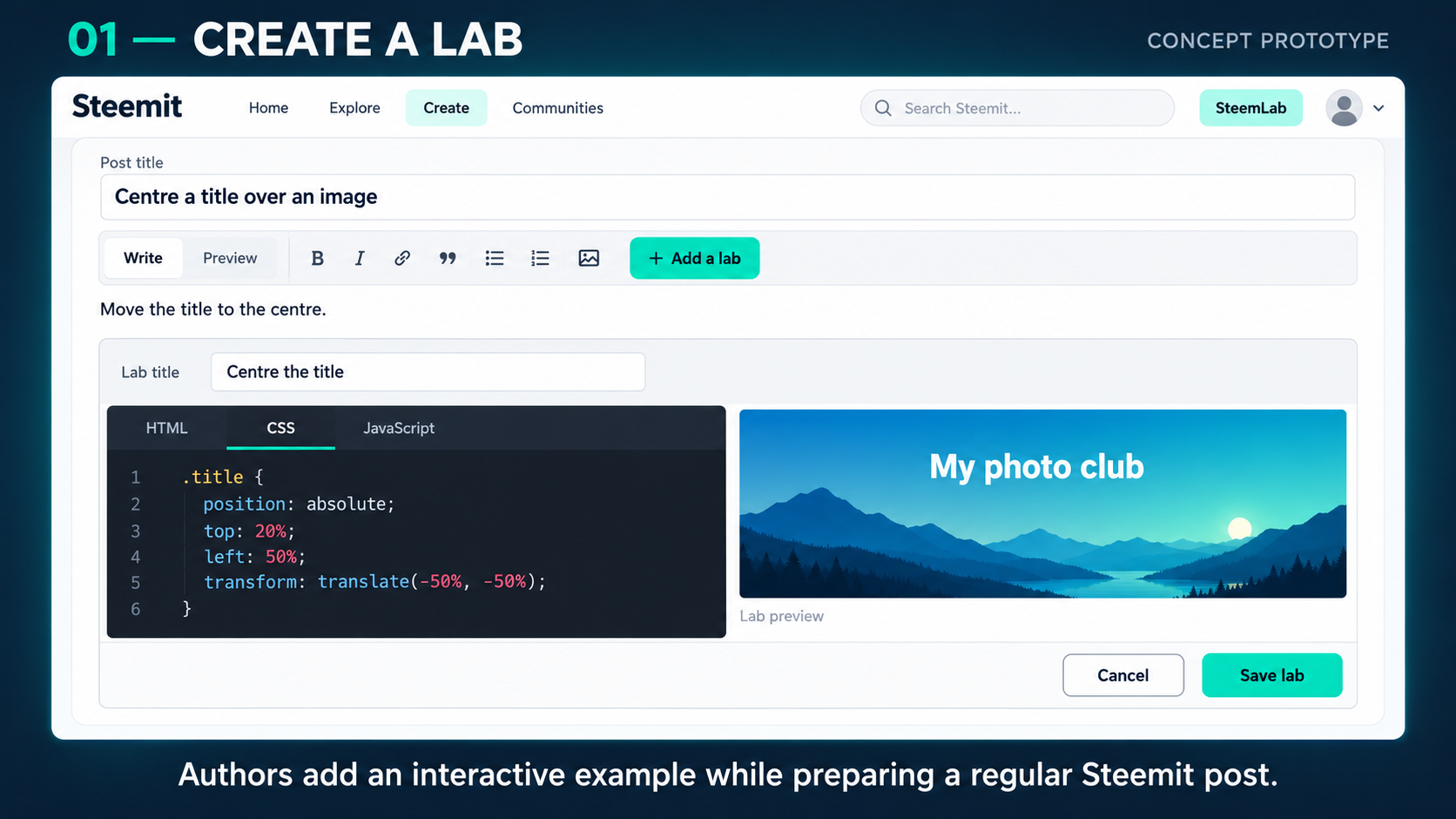
When preparing a post, the author would have an “Add a lab” option in the editor. They would insert a short example, give it a title and explain what the reader could try. The first version could support HTML, CSS and JavaScript, keeping the project focused on small web exercises.
Inside the published post, the reader would see the example with three clear controls: Edit, Run and Reset. Editing would create a personal working copy. The author's example would stay as it was, and Reset would let the reader begin again whenever an experiment went a little too far. I suspect that button would get plenty of use, including from teachers.
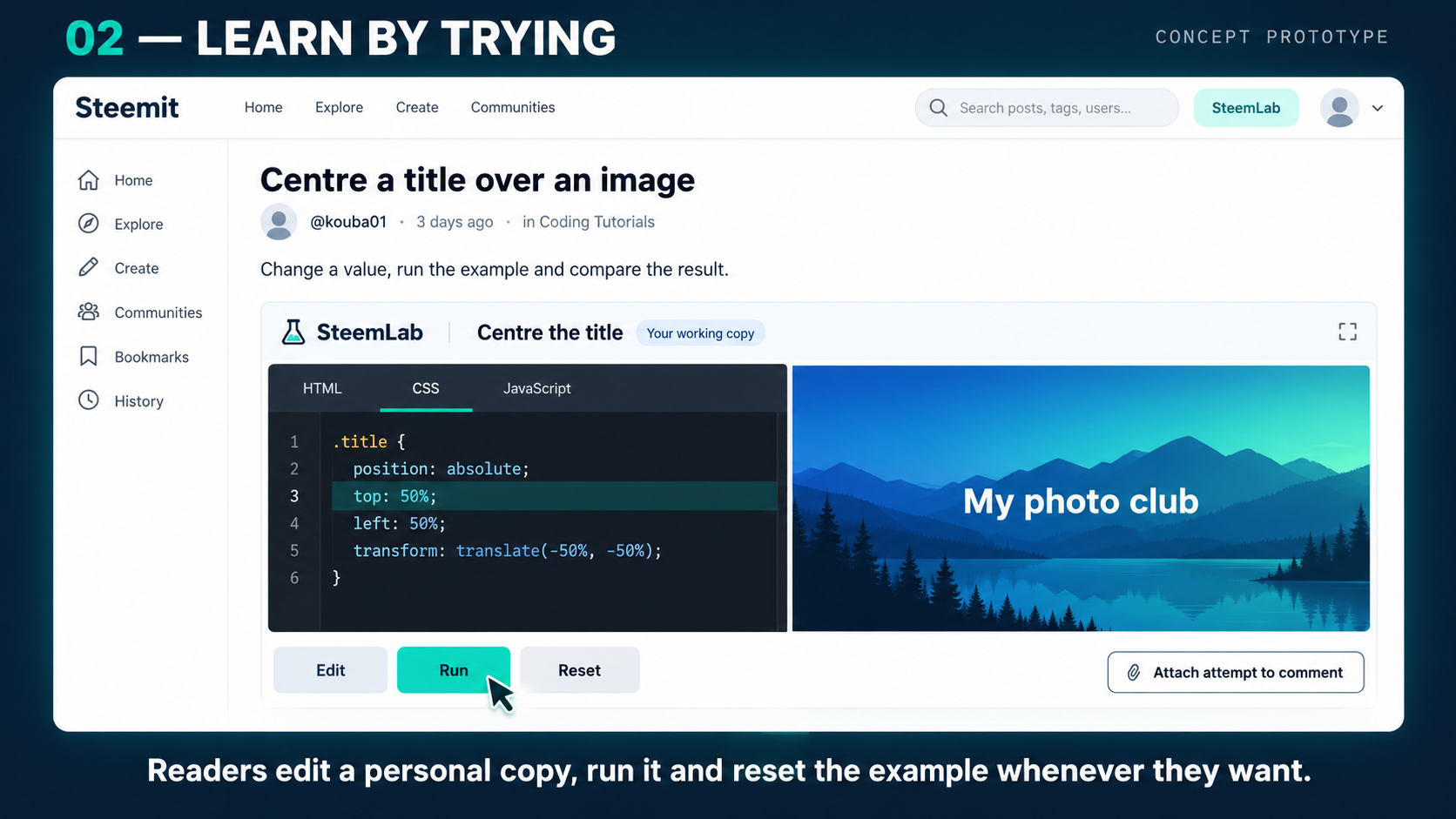
For a lesson on CSS, I could ask readers to centre a title over an image. They could change a value, run the example and see where the title moves. I could also leave a small error for them to find, with a hint they could open if they got stuck. That would give the explanation a practical companion, all within the same page.
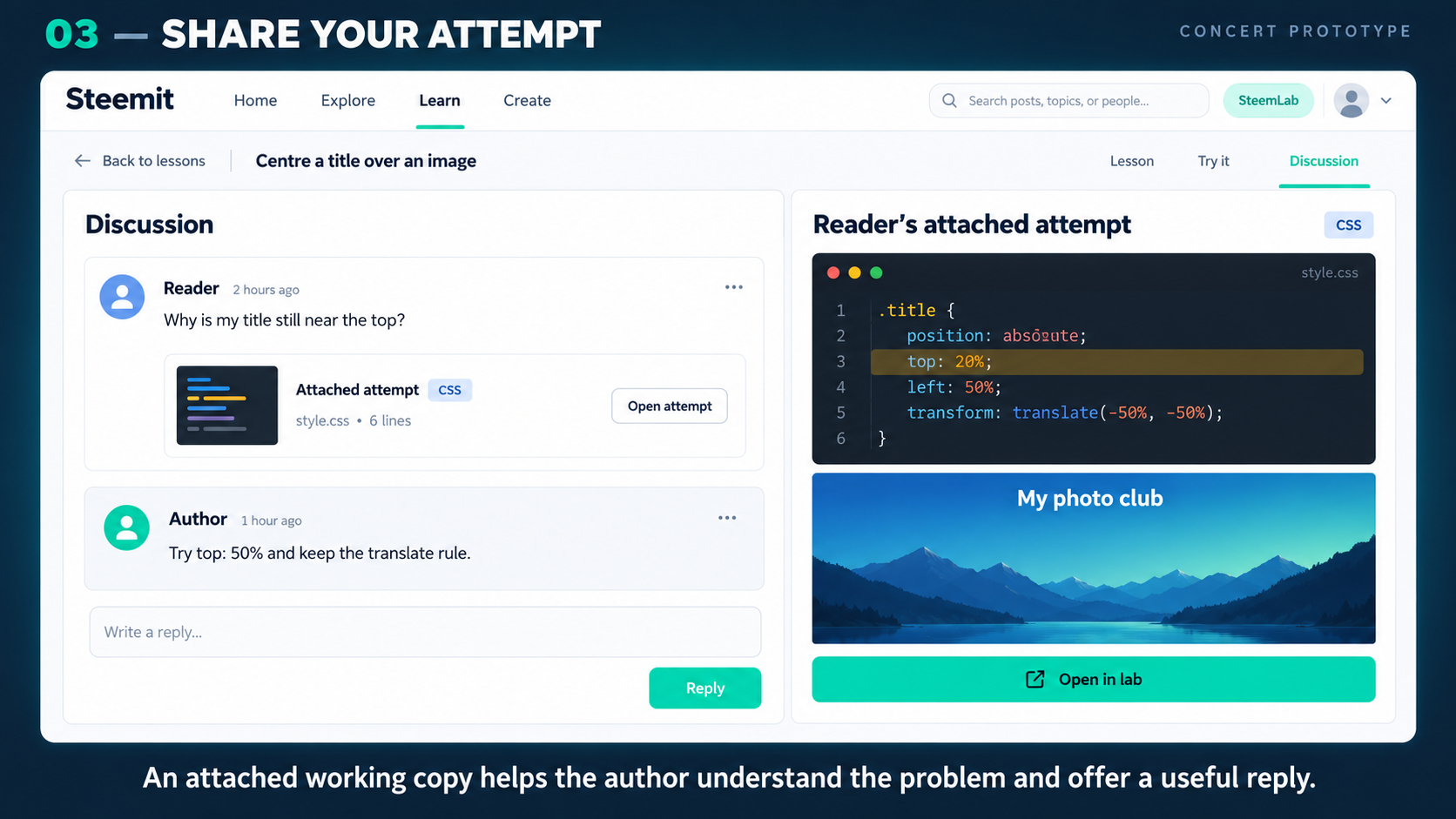
I would also like readers to be able to attach their attempt to a comment. Alongside a question such as “Why does my title move outside the picture?”, they could share the version they were testing. The author could open that copy, see the problem and reply with a more useful explanation. Other readers could follow the exchange and learn from it too.
Trying an example should be possible without signing in. Posting a comment or sharing an attempt would use the normal Steemit account process. That would let a visitor arriving through a shared lesson explore it straight away.
On a phone, the code and result could appear in separate tabs so the screen stays usable. The lab would load when the reader opens it, keeping the rest of the post comfortable to read. These details would matter to me as much as the editor itself, because a practical tool only helps if people can use it on the devices they have.
Who could build this feature?
A community developer could prepare a prototype, while integration into steemit.com would need the people maintaining the website to review and adopt it. Developers with experience in browser security and educational tools would be especially useful. Interactive coding editors already exist, including the MDN Playground, so there are working examples from which to learn.
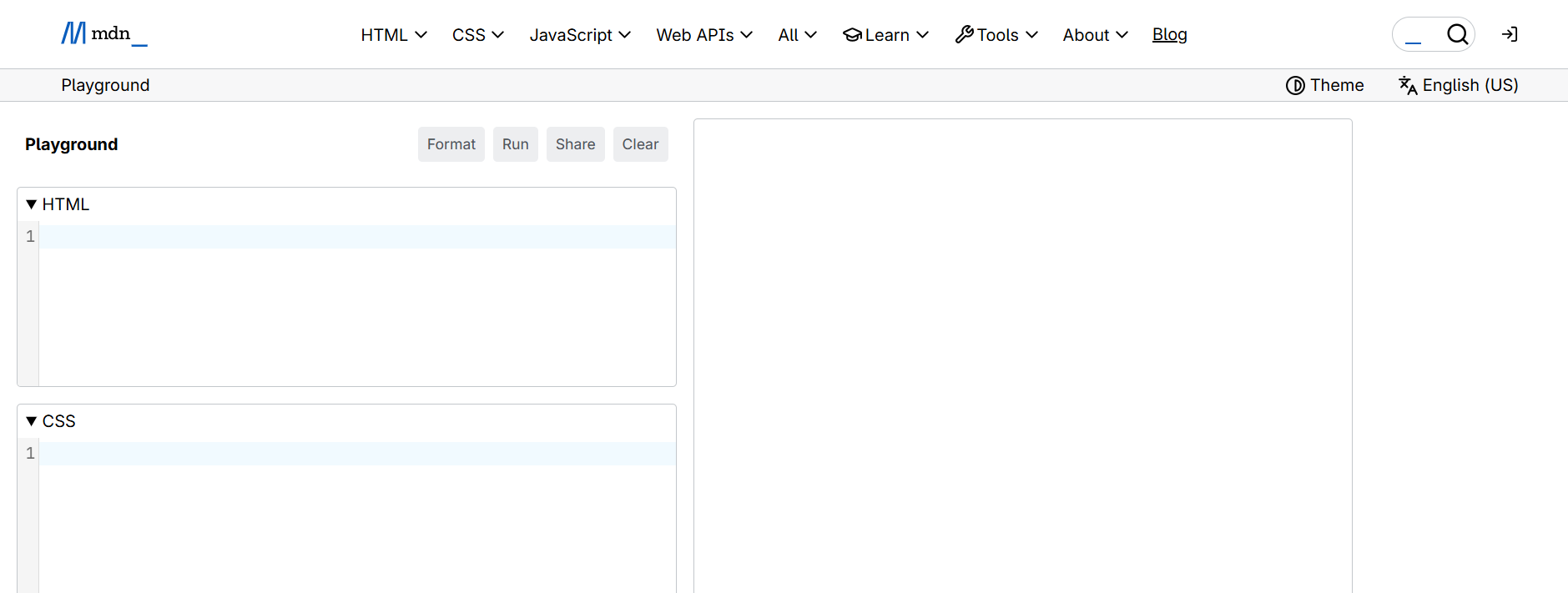
MDN Playground Interface
The practice area would need careful isolation from account and wallet functions. Code shared by an author would run in a restricted preview, with clear limits on what it could access. I would treat that as a central part of the development work. My proposed design would keep experiments in the browser and use ordinary posts and comments for sharing, leaving the reward rules as they are.
I would start with a small pilot involving teachers, learners and a few short lessons. From my side, I could contribute classroom examples, prepare activities and help check whether the instructions are clear. Watching someone use the prototype would probably reveal improvements that would be easy to miss while discussing the idea on paper.
Would many people use it?
I think its first audience would be people who already write or follow educational posts, especially web development lessons. That is a useful place to begin, because they would have an immediate reason to try it. During a learning challenge, a teacher could place an example in the lesson and use the discussion underneath to help participants work through their attempts.
There would also be room for simpler tools that readers could use without knowing how to program. A cooking author could reuse a starter lab, with credit, to let readers adjust ingredient quantities for a different number of guests. Someone writing about a household budget could offer a small calculator where readers enter their own quantities and prices. The author would explain the calculation and its assumptions in the post.
Over time, shared starter examples could make these labs easier to create. I would judge the early results by whether people return to use them, share attempts and ask questions that lead to helpful replies. That would tell us much more about their usefulness than an enthusiastic launch announcement.
Could it bring new people to Steemit?
Yes, I can see a practical route for that. A teacher could share a lesson with students, a beginner could discover an example through a search, or someone could send a useful calculator to a friend. Each visitor would arrive with something they wanted to understand or do.
They could read the post and try the example immediately. If they wanted help, they would find an author and a conversation on the same page. Creating an account would then give them a way to ask a question, share their work and continue learning with other people.
For existing members, it could make educational discussions more concrete. A reader could show the change they made and explain what surprised them. An author could see where people were struggling and improve the next lesson. Those exchanges are a good reason to return, especially when someone remembers your question and helps you take the next step.
Its growth would depend on having useful lessons, patient authors and a tool that works well on everyday devices. As a teacher, I would be happy to see a modest beginning that people actually find helpful. A few good examples could give other authors ideas for what they might build into their own posts.
What attracts me most is the possibility of a conversation beginning with “I tried this, and here is what happened.” There is often a great lesson waiting after that sentence. I would enjoy seeing more of those moments on Steemit.
If you could add one small experiment or interactive tool to a Steemit post, what would you want your readers to try?
Que excelente esta propuesta, tienes conocimiento de programación y te permite estructurarla muy bien, me gusta que toques el tema educativo, hace ratito Sammy me comentó de tu propuesta Steemlab y me motivó a leerla y captar aspectos como:
Editar, Ejecutar e Iniciar son claves, busca la interacción y sería de gran ayuda si la implementan. Podría uno experimentar con solo un click, funcional en dispositivos 😀👍es genial porque cualquiera ahorita tiene celular, es una herramienta indispensable.
Que nos permita acceder al autor y la conversación en la misma página 👍👍👍. Esta propuesta generaría un espacio de aprendizaje en Steemit donde podamos encontrar ayuda, experimentar,compartir contenidos interesantes,educativos, me encanta 🤗👍
Me gustaría usar Steemlab en cuanto a contenidos de cocina, costura,crochet,escritura creativa, sería interesante probarla.
#s34encuentro
0.00 SBD,
28.84 STEEM,
28.84 SP
Gracias por venir a leerlo, @marito74, y qué bueno que Sammy te haya hablado de la propuesta. Me alegra que hayas imaginado esos otros usos. En cocina, un pequeño calculador podría ajustar las cantidades de una receta según las porciones. Para costura o crochet, el autor podría preparar una actividad sobre medidas y materiales. En escritura creativa, imagino un relato donde el lector elija cómo continúa la historia. Unas plantillas sencillas ayudarían a los autores a empezar. ¿Cuál de esas actividades te gustaría probar primero? #s34engagement
0.00 SBD,
20.60 STEEM,
20.60 SP
Me gustaría probar primero con la cocina, hay muchos usuarios en Steemit a los que les encantaría también 😃👍
Saludos apreciado amigo. Realmente eres un informático. Las ideas te surgen solas porque el ingenio te acompaña en todo momento. Me parece maravilloso tu idea y creo que atraería mucho más personas a la plataforma, me hiciste recordar las tantas veces que uno encuentra cosas en internet y hay un eslogan muy efectivo que dice: "pruébalo gratis" y creo que de eso se trata. Sería una verdadera herramienta de aprendizaje que de transformaría en usuarios posteriormente. Bendiciones para ti. #s34engagement
0.00 SBD,
22.44 STEEM,
22.44 SP
Muchas gracias, @elider11. Lo de «pruébalo gratis» encaja muy bien con la idea: que alguien abra un ejemplo y pueda experimentar enseguida, sin tener que registrarse primero. Si después quiere compartir lo que hizo o preguntar al autor, ya tendría un motivo concreto para crear su cuenta. Me gustaría que ese primer contacto fuera una experiencia sencilla y útil, que le dejara ganas de seguir aprendiendo. Un abrazo y bendiciones para ti también. #s34engagement
0.00 SBD,
20.53 STEEM,
20.53 SP
Hi! I love your idea. You see, my little brother is thinking about studying computer science, and I told him to learn some basic concepts through the Steemit courses. But one of the questions he asked me was, “If I don’t understand something or make a mistake, how will they help me figure it out?” He was implying that he wouldn’t have that kind of help from a teacher, as he would in a face-to-face class, but with this idea you’re proposing, learning with Steemit would be much better.
“I could also leave a small mistake for them to find, with a hint they could check if they get stuck.”
I think that’s great!!! It would make learning more fun, and the fact that the author can see the student’s work is incredible. I hope this becomes a reality!!!!!
#s34engagement
0.00 SBD,
22.37 STEEM,
22.37 SP
Thank you, @sammy1109. Your brother’s question gets right to the reason behind this idea. When someone gets stuck, being able to show the exact example they tried would give the author something concrete to work with. I’d want the hints to help him take the next step while leaving him room to discover the answer himself. Has he already tried creating a small webpage? Please pass on my encouragement to him. That curiosity is a lovely starting point. #s34engagement
Upvoted! Thank you for supporting witness @jswit.