Decoding Ingress Protection: Why Waterproof Batteries Matter for Real-World Off-Grid Engineering
When we talk about the hardware resilience of our off-grid systems, we often obsess over cell chemistry, BMS intelligence, and cycle life. We debate the merits of lithium iron phosphate over traditional lead-acid, review low-temperature charging thresholds, and fine-tune our solar inverter configurations. Yet, a system can have the most advanced internal architecture in the world, and it will still fail catastrophically if moisture or particulate matter breaches the casing.
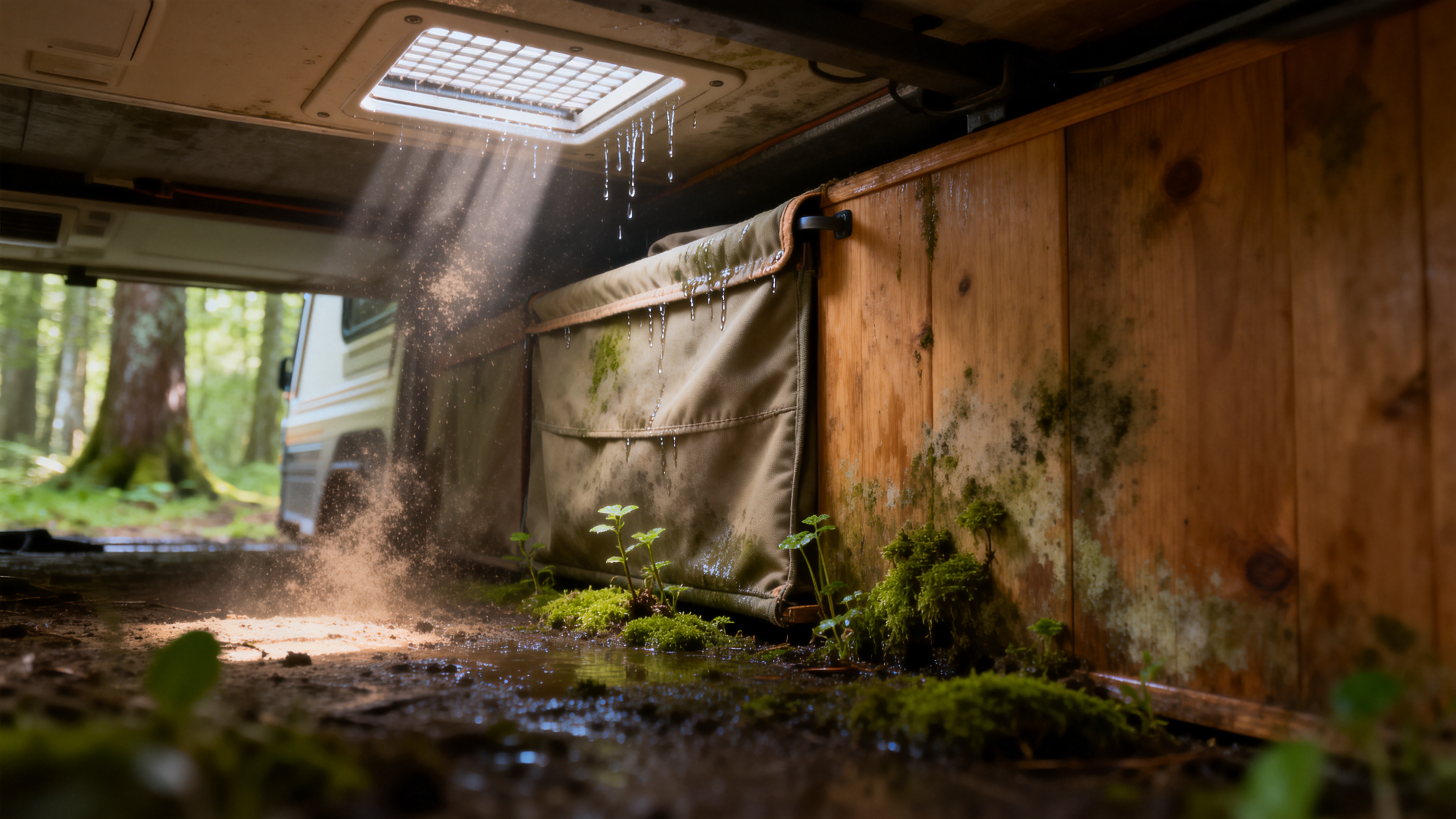
Living and working in demanding environments—whether you are operating a marine setup along the damp coastlines of Northern Europe, running a remote agricultural node, or building a weather-exposed camper rig—exposes electronic hardware to relentless environmental stressors. Water ingress is the silent killer of outdoor energy storage.
Understanding how enclosure engineering actually works, and parsing the exact differences between ingress protection standards, is just as important as reading a battery's spec sheet.
The Reality of Enclosure Ratings: Beyond Marketing Labels
When manufacturers stamp a rating onto a battery housing, it is rarely a vague suggestion. It follows a strict international standard governed by the IEC (International Electrotechnical Commission) under the format of IP followed by two digits. The first digit measures solid particle protection (dust, dirt, and debris), while the second digit dictates liquid resistance.
However, consumers frequently confuse basic splash resistance with total immersion capabilities. In real-world field applications, an enclosure faces dynamic pressures: heavy downpours, high-humidity condensation cycles, accidental submersion in bilge water, or fine wind-blown dust in dry, rugged terrains.
To make sense of how different build qualities handle these extremes, I recently reviewed a thorough breakdown that contrasts the operational realities of various enclosure tiers: https://hoolike.com/blogs/blog/comparing-ip67-ip65-and-ip68-ratings-in-hoolike-batteries-understanding-water-and-dust-protection
Breaking Down the Standards: IP65 vs. IP67 vs. IP68
If you are evaluating power storage designed for harsh environments, you will typically encounter three distinct protection tiers. Each serves a very different architectural purpose.
- IP65: The Dust-Tight and Splash-Proof Baseline
An IP65-rated casing is fully protected against solid objects and dust ingress, and it can withstand low-pressure water jets coming from any direction.
The Best Use Case: Protected utility boxes, indoor workshops, or enclosed camper interiors where moisture is occasional (like a spilled drink or mild condensation) but direct weather exposure is blocked.
The Limitation: It is not built to survive heavy, driving rainstorms or submersion. If water pools around the terminals during a storm, an IP65 housing can eventually experience seepage.
- IP67: The Standard for Rugged Outdoor Mobility
Stepping up to IP67 changes the game for field operations. The first digit (6) remains dust-tight, but the second digit (7) means the enclosure can withstand complete immersion in water up to 1 meter deep for up to 30 minutes.
The Best Use Case: Marine applications, off-road vehicle beds, exterior tongue-boxes on trailers, and remote research stations where sudden flooding or torrential downpours are a genuine operational hazard.
Why It Matters: An IP67 battery gives you psychological and physical breathing room. If your camper takes on water or your exterior storage compartment floods during a flash storm, your energy storage remains structurally sealed and safe.
- IP68: Maximum Submersion and Long-Term Sealing
IP68 takes environmental sealing a step further. While the "6" guarantees dust-tight integrity, the "8" specifies continuous submersion under pressure beyond 1 meter, with exact depth and duration parameters defined by the manufacturer.
The Best Use Case: Specialized industrial deployments, deep bilge environments in maritime vessels, or severe subterranean installations where moisture is a constant, unyielding factor.
Why Environmental Sealing Changes System Design
When you choose an appropriately sealed battery bank, it fundamentally alters how you design your auxiliary space. In traditional setups, builders go to great lengths to construct elaborate, dry, ventilated wooden boxes to keep every drop of moisture away from standard batteries.
With properly rated, ruggedized prismatic packs—such as those engineered by Hoolike—the physical footprint becomes far more flexible. You can mount your storage closer to the load, reduce long cable runs that cause voltage drop, and deploy energy banks in semi-exposed environments without losing sleep every time a heavy storm rolls across the horizon.
Reliability isn't just about what happens inside the cells; it's about building a fortress that can survive the world outside. Choose your enclosure ratings wisely, match them to your actual climate risks, and ensure your power system stays dry no matter what nature throws your way.