Why Concrete Mix Quality Matters for Structural Strength
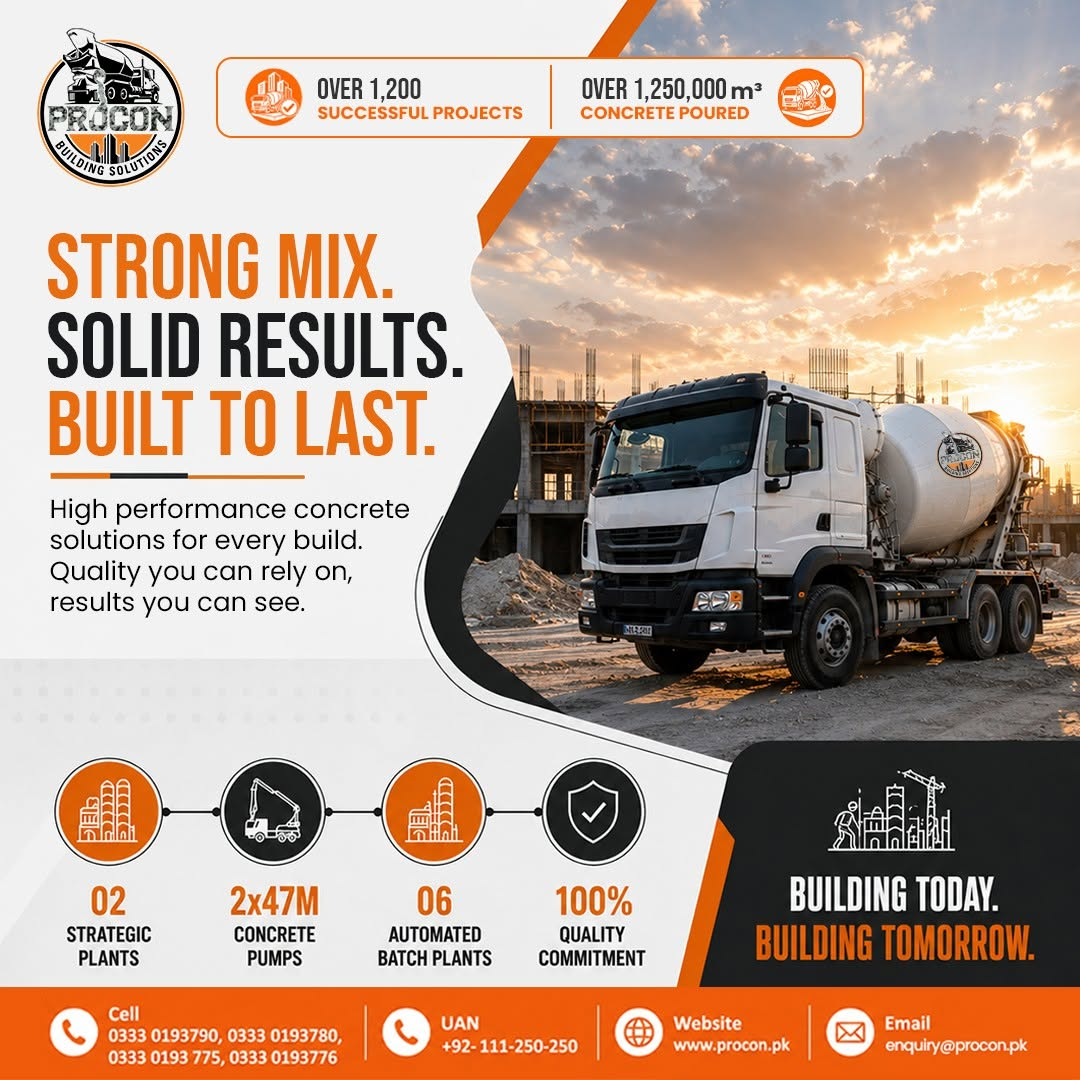
Concrete is the foundational element of modern civil engineering, forming the primary load-bearing structure for skyscrapers, residential complexes, bridges, and industrial plants. While concrete appears simple on the surface, it is a highly engineered composite material whose final compressive strength, density, and durability depend entirely on the precision of its mix design. A poor or inconsistent mix can lead to micro-cracking, internal voiding, high permeability, and catastrophic structural failure over time. For developers, contractors, and structural engineers, sourcing computer-batched, certified formulations through trusted providers of ready mix concrete in Pakistan ensures that every structural element achieves its specified load-bearing capacity and long-term durability.
1. Precision Proportioning and Water-Cement Ratio Control
The water-cement ratio is the single most critical factor determining the ultimate strength and density of hardened concrete:
- Hydration Balance: Cement requires a precise amount of water to complete the chemical hydration reaction. Excess water creates capillary pores as it evaporates, drastically reducing compressive strength.
- Computerized Weigh-Batching: Modern ready-mix plants utilize digital scales to weigh cement, sand, aggregates, and water to exact tolerances, eliminating the human errors common in manual site-mixing.
- Automated Moisture Compensation: Sensors in aggregate bins measure raw material dampness in real time, automatically adjusting added water to preserve target workability without weakening the mix.
2. Aggregate Selection, Grading, and Matrix Density
Aggregates make up roughly 60% to 75% of total concrete volume, serving as the structural skeleton within the cement paste:
- Optimized Sieve Grading: Combining coarse and fine aggregates in proper size distribution ensures smaller particles fill the voids between larger stones, producing a dense, highly compact matrix.
- Cleanliness and Silt Control: Impurities, organic matter, or excess silt in unwashed sand prevent cement paste from bonding properly to aggregate surfaces, creating weak internal planes.
- Aggregate Soundness and Shape: Utilizing cubical, hard aggregates enhances interlocking mechanical strength and resists crushing under severe structural loads.
3. Chemical Admixtures and Advanced Mix Engineering
Modern structural designs often require specific performance characteristics that basic cement-water-aggregate mixtures cannot achieve alone:
- High-Range Water Reducers: Superplasticizers increase mix fluidity for easy pumping through dense rebar cages without adding extra water, maintaining high compressive strength.
- Hydration Control and Retarders: Chemical retarders manage setting times during hot weather or extended transport, preventing cold joints during continuous mass pours.
- Micro-Silica and Mineral Additives: Incorporating supplementary cementitious materials seals microscopic pores, increasing early strength and resisting subterranean chemical attacks.
4. Reducing Structural Defect Risks and Maintenance Costs
Inconsistent or low-quality concrete mixes introduce immediate job-site hazards and severe long-term financial liabilities:
- Eliminating Honeycombing: Properly proportioned, cohesive mixes flow smoothly into formwork, eliminating air pockets, voiding, and honeycombing around steel reinforcement.
- Corrosion Protection for Rebar: Dense, low-permeability concrete shields embedded steel rebar from water ingress, carbonation, and chemical spalling.
- Compliance with Building Codes: Certified mix quality guarantees passing standard 7-day and 28-day cylinder compressive break tests required for structural sign-off.
Conclusion
The quality of a concrete mix directly governs the structural safety, load capacity, and operational lifespan of any modern building. By replacing manual volumetric site-mixing with computerized plant precision, optimized aggregate grading, and specialized chemical admixtures, builders protect their structures against internal defects and environmental degradation. Investing in pre-tested, factory-controlled mix designs safeguards financial investments and ensures full compliance with international engineering standards. To review technical mix specifications, certified strength grades, and reliable plant supply for upcoming structural builds, learn more about ready mix concrete in Pakistan today.
Survey No. 423, Ibrahim Hydri, behind Bol head quarter, Korangi creek road, Karachi-74900
+92 21 111 250 250