Procurement Management Software in Saudi Arabia | Smarter Purchasing & Vendor Control
Procurement has become a strategic business function in Saudi Arabia. As organizations expand operations, manage larger supplier networks, and control increasingly complex purchasing requirements, spreadsheets and disconnected approval processes can quickly become difficult to manage.
A modern procurement management solution gives businesses a centralized way to manage purchasing activities, supplier information, approvals, purchase orders, and procurement records. Instead of relying on emails, spreadsheets, and manual follow-ups, procurement teams can create a more structured purchasing process with better visibility and control.
For companies operating across Saudi Arabia, this matters because procurement is not simply about buying products at the lowest possible price. It involves supplier evaluation, budget control, purchasing compliance, approval workflows, documentation, and maintaining reliable relationships with vendors.
What Is a Procurement Management Solution?
A procurement management solution is software designed to organize and automate the purchasing lifecycle, from identifying a requirement to selecting a supplier, creating a purchase order, receiving goods or services, and maintaining procurement records.
A typical procurement workflow may include:
Purchase requisition creation
Internal approval
Supplier or vendor selection
Quotation comparison
Purchase order creation
Order tracking
Goods or service receipt
Invoice and payment coordination
Procurement reporting
Without a centralized system, each stage may be handled through separate spreadsheets, emails, documents, or accounting tools. That creates gaps in visibility and increases the possibility of errors.
Procurement software connects these activities into a more structured workflow, allowing purchasing teams and management to see what has been requested, approved, ordered, received, and spent.
Why Saudi Arabian Businesses Need Better Procurement Control
Saudi businesses across construction, manufacturing, retail, healthcare, distribution, hospitality, and professional services may deal with multiple vendors and purchasing requirements simultaneously.
As purchasing volumes increase, manual procurement processes create several operational problems.
A purchase request may remain in an employee's email inbox waiting for approval. A procurement officer may need to compare supplier quotations manually. Management may not have immediate visibility into outstanding purchase orders. Vendor information may be stored across different spreadsheets.
These problems may appear small individually, but together they can slow down procurement operations and make spending more difficult to control.
A centralized procurement management solution addresses this by bringing purchasing information into one controlled environment.
For example, imagine a Saudi-based company purchasing materials from 30 different suppliers. Without centralized procurement software, the purchasing team may maintain separate supplier records, quotation files, purchase orders, and approval emails.
With a structured procurement system, the same organization can establish standardized workflows, maintain vendor information centrally, track purchase requests, and monitor purchasing activity from one platform.
The objective is not simply automation. The objective is better control.
Key Features of Procurement Management Software
The value of procurement software depends on how well it supports the actual purchasing process. Businesses should look for capabilities that solve operational problems rather than selecting a system based only on the number of features listed on a product page.
Purchase Requisition Management
Employees can submit purchase requests through a defined workflow instead of sending informal requests through email or messaging applications.
The procurement team can review the requirement, verify the necessary information, and route it for approval.
This creates a clearer record of who requested the purchase and when the request was approved.
Approval Workflows
Procurement often involves multiple levels of authorization.
For example, a small office purchase may require one approval, while a high-value equipment purchase may require approval from department management and senior leadership.
Configurable approval workflows can help businesses apply appropriate authorization rules based on factors such as department, purchase value, or organizational structure.
Vendor Management
Supplier information is one of the most important components of procurement operations management.
A procurement system can maintain centralized vendor records, helping teams organize information such as supplier details, contact information, purchasing history, and relevant documentation.
Instead of searching through multiple files to find vendor information, procurement teams can work from a centralized record.
Quotation and Supplier Comparison
Selecting a supplier should not depend solely on the first quotation received.
Procurement teams may need to compare price, delivery timelines, product specifications, payment terms, and supplier reliability.
A structured procurement process makes these comparisons easier to document and review.
Purchase Order Management
Purchase orders provide a formal record of what the organization intends to purchase.
Procurement software can help create, track, and manage purchase orders throughout their lifecycle.
This gives purchasing teams better visibility into open orders and helps reduce confusion between requested, approved, and ordered items.
Procurement Reporting
Management needs more than a list of purchase orders.
Useful procurement reports can help answer questions such as:
How much has each department spent?
Which suppliers receive the highest purchasing volume?
Which purchase orders are still open?
Which vendors are used most frequently?
Where are procurement delays occurring?
How is purchasing activity changing over time?
These insights can support better procurement decisions and budgeting.
Procurement Operations Management: From Transactions to Visibility
Procurement operations management focuses on making the purchasing process consistent, measurable, and controllable.
Consider two companies purchasing similar materials.
Company A handles purchasing through email, spreadsheets, and individual files. Company B uses a centralized procurement workflow.
When management asks, "How much did we spend on this category last quarter?" Company A may need several hours to consolidate information. Company B can potentially retrieve the information from its procurement records much faster.
That difference becomes increasingly important as the business grows.
Effective procurement operations management should therefore focus on three areas:
Process: Are purchasing activities following a defined workflow?
Visibility: Can decision-makers see purchasing activity and outstanding commitments?
Control: Are purchases being made according to internal authorization and supplier policies?
Procurement software can provide the digital infrastructure needed to manage these areas more consistently.
The Role of Procurement in Strategic Procurement and Supply Chain Management
Procurement should not operate as an isolated administrative department.
It directly influences inventory availability, supplier relationships, operating costs, project timelines, and broader supply chain performance.
This is where strategic procurement and supply chain management becomes important.
A strategic approach looks beyond individual transactions and asks larger questions:
Which suppliers are strategically important?
Can supplier concentration create operational risk?
Where can purchasing costs be optimized?
Which vendors consistently meet delivery expectations?
Can purchasing data support better forecasting?
Are procurement policies being followed consistently?
For example, a manufacturer may discover through procurement data that multiple departments are purchasing similar materials from different suppliers. Consolidating purchasing volumes could create an opportunity to negotiate better commercial terms.
The software does not make the strategic decision automatically. It provides the data and visibility needed for procurement professionals to make better decisions.
Procurement and Management: Why Leadership Visibility Matters
Procurement decisions directly affect financial performance.
This makes procurement and management closely connected.
Business leaders need visibility into purchasing commitments, supplier dependencies, department-level spending, and procurement performance. At the same time, procurement teams need clearly defined policies and approval structures from management.
A centralized procurement platform can create a common source of procurement information for both groups.
For example, management can review procurement reports while procurement officers manage daily purchasing activities. Finance teams can also use procurement records to improve coordination between purchasing and financial processes.
The result is a more connected approach to business spending.
Procurement Management Software in Saudi Arabia vs. Manual Procurement
Manual procurement can work for a small business with limited purchasing activity. The problem begins when the organization outgrows the process.
Manual Procurement
Procurement Management Software
Spreadsheet-based tracking
Centralized procurement records
Email-based approvals
Structured approval workflows
Scattered vendor information
Centralized vendor management
Manual quotation comparison
Organized supplier comparison
Difficult purchase-order tracking
Real-time workflow visibility
Time-consuming reporting
Automated procurement reports
Higher dependence on individuals
Standardized processes
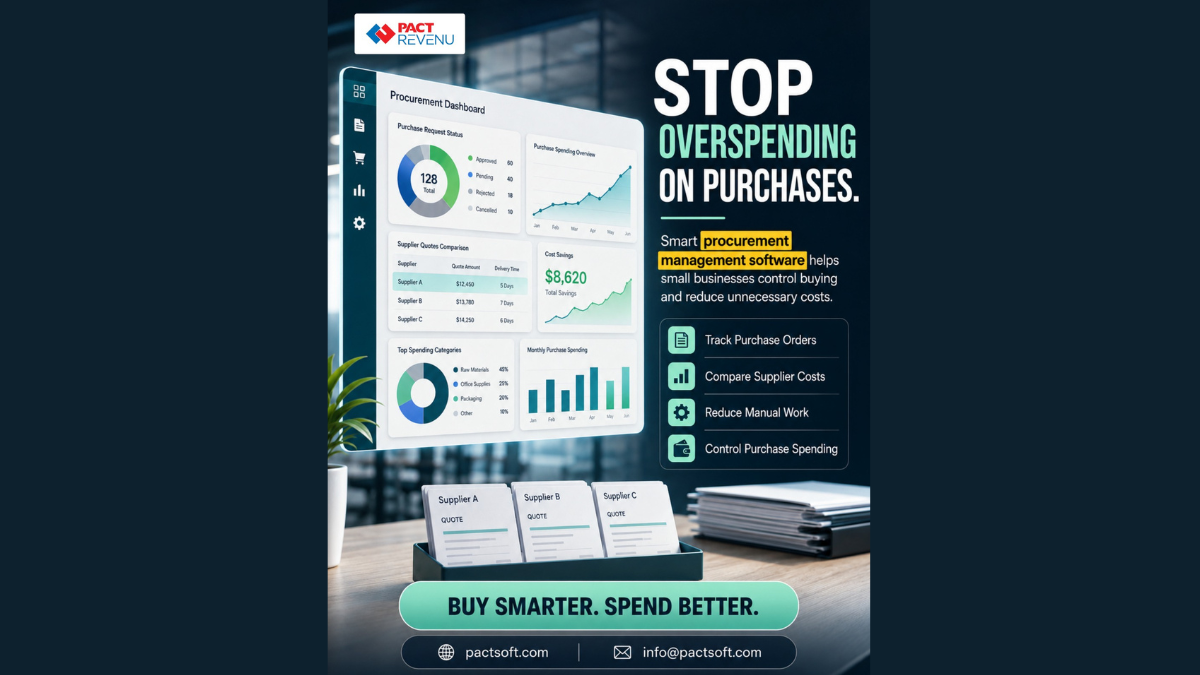
The important point is that software should not be implemented simply because "digital transformation" sounds impressive.
If the underlying procurement workflow is poorly designed, software can simply digitize a bad process.
Businesses should first understand how purchasing currently works, identify bottlenecks, establish approval requirements, and then configure technology around those needs.
How to Choose the Right Procurement Management Solution
Saudi businesses evaluating procurement software should consider more than price.
First, examine whether the platform supports the organization's actual purchasing workflow. A system that requires extensive workarounds may create more operational friction than it removes.
Second, evaluate integration capabilities. Procurement rarely operates independently from finance, inventory, accounting, and other business functions.
Third, consider reporting. Decision-makers should be able to obtain useful purchasing insights without manually consolidating data from multiple sources.
Fourth, assess scalability. The solution should be capable of supporting increased suppliers, users, transactions, departments, and purchasing complexity as the organization grows.
Finally, consider usability. A procurement system is only useful if employees and procurement teams actually use it consistently.
Businesses operating across the Gulf may also compare solutions designed for different regional requirements, including procurement management software in UAE and Saudi Arabia. However, the correct choice should ultimately depend on the organization's workflow, operational requirements, and business environment rather than simply the country in which the software is marketed.
How PACT REVENU Can Support Smarter Procurement
Choosing procurement software is only the first step. The real value comes from creating a procurement process that improves visibility, control, and operational efficiency.
PACT REVENU provides businesses with an ERP-based approach to managing core business operations, including procurement-related processes. By connecting procurement with broader business functions, organizations can reduce dependence on disconnected tools and create a more coordinated operational workflow.
For a Saudi business evaluating procurement digitization, the practical starting point is to map the existing purchasing process, identify approval and vendor-management gaps, and determine which activities should be automated.
If your procurement team is still managing purchase requests, approvals, vendors, or purchase orders across disconnected spreadsheets and emails, it may be time to move to a centralized procurement management solution with PACT REVENU.
Frequently Asked Questions
What is procurement management software?
Procurement management software is a digital system used to manage purchasing activities such as purchase requests, approvals, supplier management, quotations, purchase orders, order tracking, and procurement reporting.
Why is procurement software important for businesses in Saudi Arabia?
As purchasing operations become more complex, businesses need better visibility over suppliers, purchase orders, approvals, and spending. Procurement software can help standardize these processes and provide centralized procurement information.
What is procurement operations management?
Procurement operations management refers to the day-to-day planning, execution, monitoring, and control of purchasing activities. It includes processes such as requisitions, approvals, supplier coordination, purchase orders, and procurement reporting.
How does procurement software improve vendor management?
A centralized procurement system can organize supplier information, purchasing history, quotation records, and other vendor-related data, making it easier for procurement teams to manage supplier relationships and evaluate purchasing decisions.
Can procurement software support strategic procurement?
Yes. Procurement software can provide purchasing data and reports that help organizations analyze suppliers, spending patterns, purchasing volumes, and procurement performance. This information can support strategic procurement and supply chain management decisions.
Is procurement software suitable for small and medium-sized businesses?
Yes, provided the solution matches the company's size and requirements. SMEs can benefit from standardized purchasing workflows, better approval control, centralized vendor information, and improved procurement visibility without relying heavily on spreadsheets.
Conclusion
Procurement is no longer just a back-office purchasing function. It influences cost control, supplier relationships, operational continuity, and supply chain performance.
For businesses in Saudi Arabia, moving from fragmented purchasing processes to a centralized procurement management solution can create better visibility across the purchasing lifecycle.
The strongest approach is not to automate everything blindly. It is to identify where procurement is losing time, where approvals are unclear, where supplier information is fragmented, and where management lacks visibility.
Once those gaps are understood, procurement technology can become more than a purchasing tool. It can become part of a broader system for procurement and management, helping organizations build more controlled, measurable, and scalable operations.
For businesses looking to modernize procurement while connecting it with wider ERP operations, PACT REVENU offers a practical platform to bring purchasing and business processes into a more connected digital workflow.