Rogue Network: A Blockchain Ecosystem Bridging Infrastructure, Mining, and MMORPG Play
The world of digital assets often feels divided. On one side, you have technical infrastructure projects that focus solely on hash rates and block times. On the other, you have gaming projects that often lack a robust, independent foundation. Rogue Network attempts to bridge this gap by creating a unified environment where high-level blockchain security meets an engaging pirate-themed MMORPG.
Instead of launching a standalone token with no clear home, this project has built an entire ecosystem from the ground up. It combines the security of traditional mining with the flexibility of modern smart contracts, all while hosting a digital world called Rogue Isles where users can put those technologies to work. It is an approach that values long-term stability and practical use over temporary hype.
To understand why this matters, let's look at what the project is building. Rogue Network is an EVM-compatible Proof-of-Work (PoW) blockchain that serves as the technological foundation for the Rogue ecosystem. Its purpose is to provide a reliable layer where transactions, gaming assets, and decentralized applications can coexist. By using a native asset called RGN, the project connects mining, staking, and gameplay into a single economic flow. This is not just a game or a simple ledger; it is a multi-component environment designed to grow alongside its community.
The Technical Foundation of the Rogue Network
At the heart of the project is a custom blockchain designed to handle both heavy-duty security and complex application logic. By choosing a specific combination of technologies, the developers have created a middle ground that appeals to old-school miners and modern application developers alike.
The Power of Proof-of-Work and Scrypt
The network uses a Proof-of-Work consensus mechanism, which is the same fundamental concept that secures Bitcoin. Participants contribute computational power to verify transactions and secure the network.
Choosing the Scrypt Algorithm
By utilizing the Scrypt algorithm for mining, the project taps into a well-established hardware ecosystem. Scrypt is known for being accessible to a variety of hardware setups, allowing for a broader base of participants to help secure the network. This choice ensures that the network's security is decentralized and resistant to some of the centralization issues seen in other consensus models.
Block Times and Network Continuity
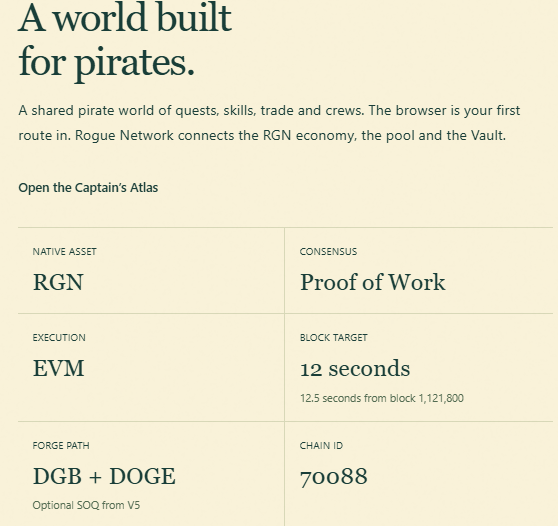
The network aims for a steady heartbeat. Initially set at 12 seconds, the block-time target was slightly adjusted to 12.5 seconds following the activation of the FORGE V5 system. What makes this technical evolution interesting is how the project handles upgrades. When the V5 transition happened at block 1,121,800, the chain didn't restart. Every account balance, smart contract, and transaction history stayed intact. This preservation of history is vital for building trust with users and developers.
EVM Compatibility and Smart Contracts
While mining provides the security, EVM compatibility provides the brainpower. Being "EVM-compatible" means the network can run the same smart contracts that work on Ethereum.
Why Compatibility Matters
For developers, this is a huge advantage. They don't have to learn a new, obscure programming language to build on Rogue Network. They can use familiar tools like Solidity and deploy applications that people already know how to use, such as decentralized exchanges or NFT marketplaces.
The Role of Chain ID 70088
Every blockchain needs a unique identifier to ensure transactions are sent to the right place. For this network, that identifier is Chain ID 70088. This technical detail allows wallets like MetaMask to connect directly to the infrastructure, giving users a seamless way to interact with their RGN balances and the various apps in the ecosystem.
FORGE: Redefining Mining Economics
One of the most innovative parts of the project is the FORGE system. It moves beyond the traditional "mine and sell" loop by creating a more complex relationship between network security and economic value.
Coordinating External Mining Revenue
FORGE is a coordination system that connects the network's native mining activity with external Proof-of-Work sources. It specifically looks at networks like DigiByte (DGB) and Dogecoin (DOGE), and more recently, SOQ.
The Certification Process
The system uses a structured approval mechanism to ensure everything is legitimate. There are four authorized mining signers, and at least two of them must certify mining templates. This quorum ensures that only verified work is processed, and RGN validators then check these signatures before the state of the blockchain is updated.
Treasury Routing and Revenue
When mining rewards are generated and matured on external chains, the FORGE system directs these native rewards toward treasury destinations. This is where the project's long-term sustainability comes into play. The treasury doesn't just sit on these assets; it has a specific goal tied to the health of the RGN token.
The Buyback and Burn Strategy
The design of FORGE includes a mechanism where external treasury revenue can be used to purchase RGN from the open market.
How It Impacts Supply
Once RGN is purchased using these external funds, those tokens can be permanently removed from circulation, a process known as "burning." By reducing the total number of tokens available, the project aims to create a more sustainable economic environment.
Manual Execution and Transparency
It is important to note that this is not an automated, "black box" process. Buybacks and burns require operational transactions that are recorded publicly. This transparency allows the community to verify that the treasury is acting according to the project's stated goals. It distinguishes the project from others that might make vague promises about "token utility" without a clear, verifiable mechanism.
Understanding RGN Tokenomics
The economic heart of the Rogue Network is the RGN token. It isn't just a digital coin for trading; it is the fuel for the entire ecosystem.
A Balanced Block Subsidy
The way new RGN is created and distributed is designed to reward all types of participants, not just those with the most powerful computers. Every time a block is produced, the subsidy is split into four specific directions.
Supporting Miners and Stakers
The largest portion, 40%, goes to the miners who provide the computational security. Another 30% is directed toward the staking contract, rewarding those who hold their tokens and commit them to the network's stability.
Funding Play-to-Earn and the Treasury
To keep the ecosystem growing, 20% is reserved for play-to-earn rewards in the Rogue Isles game, while the final 10% goes to the treasury for ongoing development and operations. This 40/30/20/10 split ensures that every pillar of the project has the resources it needs to function.
The Lifetime Issuance Ceiling
Transparency is key to any financial model. The project has established a lifetime gross issuance ceiling of 10.7 billion RGN.
Breaking Down the Supply
This total cap is divided into three main buckets:
- 1.44 billion RGN that was issued before the FORGE system went live.
- 2.1 billion RGN set aside as reserved special credits for specific ecosystem needs.
- 7.15 billion RGN dedicated to normal FORGE subsidies over the life of the network.
The Difference Between Gross and Circulating Supply
It is crucial for newcomers to understand that "gross issuance" is the maximum that will ever exist, but it isn't the same as what is currently in people's wallets. Burned tokens reduce the supply, and locked or treasury-held tokens aren't actively trading. By maintaining a hard cap and using burns, the project provides a clear roadmap for its monetary future.
Exploring the Rogue Isles Gaming World
While the technical side of the project is robust, the gaming side is where the personality of the ecosystem truly shines. Rogue Isles is more than just a distraction; it is a persistent world designed to give the RGN token a physical (or digital) purpose.
A Pirate-Themed MMORPG
Rogue Isles is an interactive world that players can access through their browsers. This low barrier to entry means you don't need a high-end gaming PC to start your life as a digital pirate.
Developing Your Pirate Skills
Progression in the game isn't just about fighting. It’s about building a life on the high seas. Players can develop a wide range of skills, including:
- Navigation: Better control over your vessel and the ability to reach distant lands.
- Swordsmanship and Combat: Essential for defending your loot and competing in naval battles.
- Resource Gathering: Skills like fishing, mining, and cooking allow players to sustain themselves and trade with others.
- Crafting: Turning raw materials into useful items for your ship or crew.
Ships, Crews, and Clans
Ships are the most important assets in the game. Players can work their way up from small boats to powerful vessels capable of dominating the ocean. The game also encourages community through crews and clans, making it a social experience where people can work together to achieve large-scale goals or discover hidden secrets.
The Play-to-Earn Vision
The project integrates gaming rewards directly into its economic model. Because 20% of the block subsidy is earmarked for gaming, the "Play-to-Earn" aspect is a fundamental part of the network's operation.
Treasure Seasons and Quests
Rather than just handing out tokens for logging in, the project plans "Treasure Seasons." Players will need to follow clues, solve puzzles, and explore remote islands to find hidden RGN rewards. This makes the earning process feel like an achievement rather than a chore.
The Future of Digital Ownership
One of the most anticipated features in the roadmap is private island ownership. This would allow players to own a piece of the game world, potentially creating new ways to gather resources or host community events. It’s a step toward a world where players truly own the fruits of their labor.
Tools for Interacting with the Network
A blockchain is only as good as the tools available to its users. The project has developed a suite of applications to make managing RGN and participating in the network as simple as possible.
The Rogue Vault for Staking
For those who want to support the network without running a mining rig, the Rogue Vault is the primary destination. It is a dedicated staking application that allows RGN holders to earn a portion of the block subsidies.
How Staking Works
The process is straightforward: you connect your wallet, deposit your RGN, and start accruing rewards. The Vault clearly separates your "active stake" from your "claimable rewards." If you decide to stop staking, there is a "cooldown period" before your funds are unlocked. This prevents sudden shocks to the network's liquidity and ensures a stable environment for all participants.
Deepwater Swap and Trading
Trading is an essential part of any digital economy. Deepwater Swap serves as the ecosystem's internal exchange.
Swaps and Liquidity
Users can trade supported assets within the network or provide liquidity to earn fees. It also provides tools for locking tokens, which is often used by developers to show long-term commitment to their projects.
The Solana Connection
RGN also exists as a token on the Solana network, where it can be traded on Raydium. However, the project is careful to remind users that the native RGN on the Rogue chain and the RGN (SPL) token on Solana are currently separate. While a bridge is planned for the future, users should always double-check which network they are using before making a transaction.
Wallets and Transparency Tools
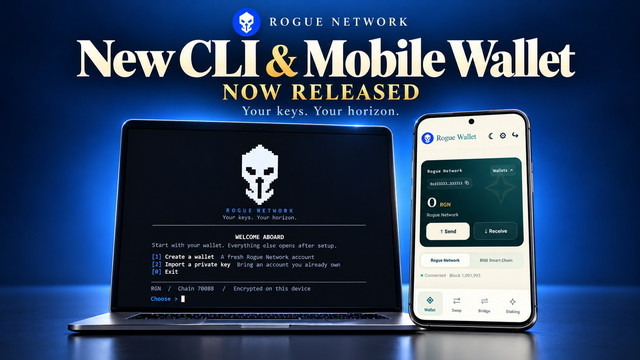
To give users full control, the project offers several wallet options. There is a mobile wallet for Android users, a desktop version for Windows, Linux, and macOS, and even a command-line interface (CLI) for those who are more technically inclined.
Rogue Scan: The Public Record
To keep everything honest, Rogue Scan provides a window into the blockchain. Anyone can look up a transaction hash, check a wallet balance, or see the latest blocks being mined. This level of transparency is non-negotiable in a decentralized project, as it allows users to verify everything for themselves.
The Captain's Atlas: A Knowledge Center
One of the most impressive parts of the project's presentation is the Captain's Atlas. It is a comprehensive documentation hub that covers every inch of the ecosystem.
A Resource for Everyone
Whether you are a miner looking for pool connection settings, a developer wanting to deploy a smart contract, or a player trying to figure out how to level up your fishing skill, the Atlas has the answer.
Why Good Documentation Matters
Many projects fail because they are too difficult to understand. By providing a structured, easy-to-navigate guide, this project lowers the barrier to entry. It shows a commitment to user education that is often missing in the blockchain space. The Atlas is updated as the network evolves, ensuring that the community always has access to the latest information.
Roadmap: The Horizon Ahead
The project has a clear vision for the future, moving in phases that build upon the existing infrastructure. While much has already been achieved, several key milestones remain on the horizon.
Infrastructure Milestones
The focus remains on refining the FORGE system and ensuring the bridge between the native network and other chains like Solana is robust and secure. Improvements to wallet accessibility and the development of more decentralized applications (dApps) are also high priorities.
Gaming and Community Expansion
For Rogue Isles, the focus is on moving from the Alpha stage into a more complete gaming experience. This includes the rollout of Treasure Seasons, the introduction of more complex quest systems, and eventually, the implementation of island ownership. Each of these steps is designed to increase the utility of the RGN token and the engagement of the player base.
How to Get Started with RGN
If you are interested in joining the ecosystem, the easiest way to start is by acquiring some RGN tokens. Currently, the most active market is on the Solana network through the Raydium exchange.
A Step-by-Step Guide to Buying
- Prepare a Solana Wallet: You will need a wallet like Phantom or Solflare with some SOL in it to cover transaction fees.
- Use the Official Link: Visit the official website and navigate to the "Buy RGN" section to ensure you are using the correct trading pair.
- Verify the Token Address: This is the most important step. Always confirm you are trading the correct asset by checking the official address:
Cn7pt6uUQt6qdYSASpWgvQHm4D9aStaujRu7AYMABray. - Swap and Confirm: Use Raydium to swap your SOL for RGN. Once the transaction is confirmed, the tokens will appear in your wallet.
Moving to the Native Network
Once you have RGN, you can keep an eye on the development of the native bridge. Eventually, you will be able to move those tokens to the native chain to participate in staking through the Rogue Vault or to use them within the Rogue Isles game.
To stay updated on the latest developments or to join the conversation, you can visit the official website. The community is active on Twitter, Telegram, providing plenty of ways to get involved and start your journey with the project today.
Concluding Perspectives on Rogue Network
The project stands out because it doesn't try to be just one thing. It is a blockchain, a mining coordinator, a staking platform, and a gaming world all rolled into one. By building on a foundation of Proof-of-Work and EVM compatibility, it ensures that it has the technical chops to survive in a competitive environment. Meanwhile, the pirate-themed MMORPG provides a layer of fun and engagement that makes the technology accessible to people who might not care about "block headers" or "hash rates."
The success of the ecosystem will ultimately depend on its ability to execute its roadmap and keep its community engaged. With the FORGE system providing a unique economic model and the Captain's Atlas providing a clear guide, the project has laid a very strong foundation. Whether you are a miner, a gamer, or someone interested in the future of decentralized finance, there is a place for you in this digital ocean.
Author
- Username: Alberank
- Sol wallet: EtHx1zzQwAVwrgikSQMEGRXut4MrFXoyBWnEH6HXGnjo