MLM Software Development: How to Build a Scalable Network Marketing Platform in 2026?
Starting a network marketing business requires more than a distributor registration system. Businesses need a reliable platform to manage compensation plans, track product sales, calculate commissions, handle payments, and monitor distributor performance. This is where MLM software development becomes important. A well-developed MLM platform brings these business operations together, reduces manual administration, and helps companies manage growing distributor networks.
In 2026, MLM software development is evolving with AI-powered automation, mobile applications, advanced reporting, and improved payment integrations. Whether you are launching a new network marketing company or upgrading an existing system, choosing the right development approach can make a significant difference in how efficiently your business operates.
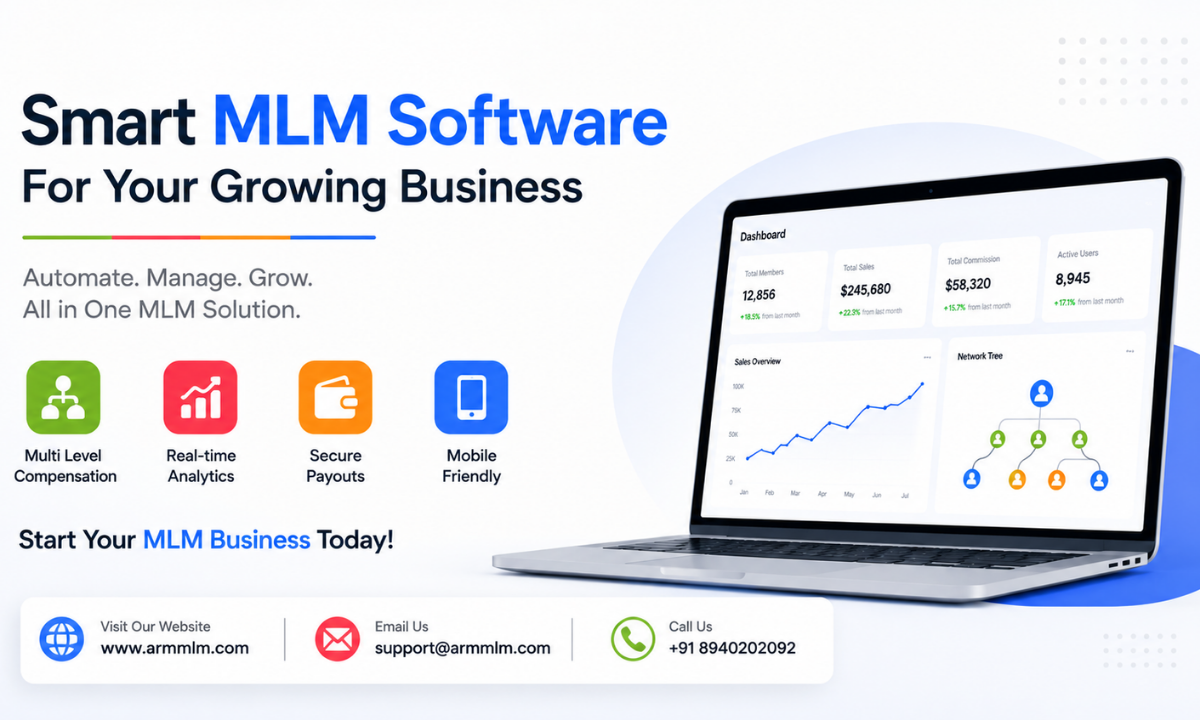
What Is MLM Software Development?
MLM software development is the process of designing and building a digital platform to manage the operations of a multi-level marketing business. It includes distributor management, genealogy tracking, compensation plan configuration, commission processing, product management, payment handling, and business reporting.
Unlike basic business management applications, MLM software must handle relationships between distributors and calculate commissions according to specific compensation rules.
For example, when a distributor introduces a new member, the system should record the referral relationship, update the genealogy structure, and apply the relevant commission rules when eligible sales occur.
The goal is to create a centralized platform where administrators and distributors can manage their business activities efficiently.
Why Do Network Marketing Businesses Need Custom MLM Software Development?
Every network marketing company has different products, sales strategies, distributor structures, and commission requirements. A standard software package may not always cover every business requirement.
Custom MLM software development allows businesses to configure their platforms according to their operational needs.
Some important advantages include:
- Flexible compensation plans: Configure commission rules based on the selected business model.
- Automated operations: Reduce manual work involved in commission calculations, registrations, and reporting.
- Distributor management: Maintain member profiles, referral information, and genealogy records.
- Payment management: Organize transactions, e-wallets, withdrawals, and payout records.
- Business monitoring: Give administrators access to sales reports and distributor performance.
- Scalability: Support additional distributors, products, and business operations as requirements grow.
Custom development is particularly useful when a company needs specific integrations, workflows, or compensation rules.
Which Compensation Plans Should MLM Software Support?
The compensation plan is one of the most important parts of an MLM business. It defines how distributors are organized and how eligible commissions are calculated.
A capable MLM software development solution should support the compensation structure selected by the business.
Binary MLM Plan
A Binary MLM plan organizes distributors into two teams, commonly called the left leg and right leg. Commissions are generally calculated using eligible business volume from both teams.
The software should manage member placement, matching volume, carry-forward conditions, payout limits, and commission eligibility.
Unilevel MLM Plan
A Unilevel MLM plan allows distributors to sponsor multiple direct members. The company can configure commission levels and qualifications according to its compensation structure.
The software should track the genealogy and calculate eligible commissions across the configured levels.
Matrix MLM Plan
A Matrix MLM plan uses a fixed width and depth, such as 3×3 or 5×5. The system manages available positions, distributor placement, spillover rules, and level-based commissions.
Hybrid MLM Plan
A Hybrid MLM plan combines two or more compensation structures. It is useful for businesses that need a more customized commission model.
The software must be configured carefully to prevent calculation conflicts and maintain accurate commission records.
What Are the Essential Features of MLM Software?
A network marketing platform needs more than a registration page and commission dashboard. It should include features that support everyday business activities for administrators and distributors.
1. Distributor Registration and Management
The registration module manages new member accounts, personal details, referral information, account status, and distributor profiles.
2. Genealogy Management
A genealogy tree displays the distributor network and helps administrators understand referral relationships, team structures, and member positions.
3. Automated Commission Calculation
The commission engine calculates eligible bonuses and commissions based on configured compensation rules, sales volume, and distributor qualifications.
4. E-Wallet and Payout Management
An integrated wallet helps distributors view eligible earnings, transaction histories, and withdrawal requests. Administrators can review and process payouts according to company policies.
5. Product and Order Management
Businesses can manage product details, pricing, inventory information, purchases, and order histories through a centralized system.
6. Payment Gateway Integration
Payment integrations help businesses process customer purchases and record transactions. Available gateways should be selected according to the company's operating countries and payment requirements.
7. KYC Verification
KYC workflows help businesses collect and review required identity information before enabling relevant financial or account activities.
8. Reporting and Analytics
Reports help administrators monitor sales, team performance, distributor activity, commission liabilities, and transaction records.
How Is AI Changing MLM Software Development in 2026?
Artificial intelligence is introducing new possibilities for network marketing businesses. Beyond traditional commission automation, AI-powered capabilities can help improve customer support, organize business information, and make operational data easier to understand.
Some useful applications include:
- AI chatbots for answering common distributor questions.
- AI knowledge hubs for accessing training materials and business documents.
- AI-powered insights for reviewing sales and operational trends.
- Automated workflows for repetitive administrative tasks.
- Intelligent search to help users find relevant information quickly.
For example, an AI knowledge hub can help distributors locate answers from available product guides, training documents, and company resources.
AI should work alongside reliable business rules and verified data. Commission calculations, financial records, and payout approvals still require accurate system logic and appropriate controls.
What Technologies Are Used in MLM Software Development?
The technology stack depends on the platform's functionality, integration requirements, security needs, and expected user traffic.
Common development technologies include:
- Frontend: ReactJS and Next.js for user interfaces and dashboards.
- Backend: Node.js, Laravel, and JavaScript-based development environments.
- Databases: MySQL and PostgreSQL for managing business and transaction records.
- Blockchain integration: Web3 technologies and smart contracts where a business has a genuine requirement for blockchain-based operations.
The development team should select technologies based on the project's architecture rather than adding tools simply because they are popular.
How Much Does MLM Software Development Cost?
MLM software development costs depend on the compensation plan's complexity, customization needs, number of integrations, mobile app requirements, security features, and ongoing support.
A basic MLM platform may require distributor registration, genealogy management, commission calculations, and administrative controls. More advanced solutions may include multiple compensation plans, mobile apps, AI-powered features, payment integrations, and custom workflows.
Before comparing prices, businesses should understand what is included in the software package. Development costs, licensing, customization, hosting, maintenance, and technical support may be charged separately.
Choosing software based only on its lowest price may lead to additional expenses when important features or integrations are missing.
How to Choose the Right MLM Software Development Company?
Selecting the right development partner is important because MLM software must handle business rules and financial calculations accurately.
Before choosing a company, evaluate these factors:
- Experience in developing different MLM compensation plans.
- Ability to customize commission rules and business workflows.
- Security measures for distributor and transaction information.
- Integration capabilities for payment gateways and external services.
- Mobile application and responsive dashboard support.
- Scalability and database management.
- Technical assistance, maintenance, and software updates.
Ask for a live demonstration and test the commission calculations using realistic business scenarios before making a final decision.
Why Choose ARM MLM Software for Network Marketing Operations?
ARM MLM Software provides solutions for businesses looking to manage and automate their network marketing operations.
The platform supports different compensation structures, including Binary, Unilevel, Matrix, and Hybrid plans. Businesses can explore features such as distributor management, genealogy tracking, automated commission processing, e-wallet management, payment integrations, and administrative reporting.
ARM MLM also offers AI-powered capabilities, including Magic AI, AI chatbot support, and an AI Knowledge Hub to help businesses organize information and improve user support.
Whether you are launching a new MLM company or upgrading an existing platform, ARM MLM Software offers solutions to explore according to your compensation plan and operational requirements.
Visit ARM MLM Software to explore its features and request a software demonstration.
Frequently Asked Questions About MLM Software Development
1. How long does it take to develop MLM software?
The development timeline depends on the compensation plan, customization requirements, integrations, testing, and mobile application requirements. A ready-made solution may be available sooner than a fully customized platform.
2. Can MLM software support multiple compensation plans?
Yes. Depending on the platform, MLM software can support Binary, Unilevel, Matrix, Hybrid, and other compensation structures.
3. Is custom MLM software development suitable for startups?
Yes. Startups can choose a solution based on their initial business requirements and expand its functionality as their operations grow.
4. Can MLM software integrate with mobile applications?
Yes. MLM platforms can provide mobile-friendly dashboards or dedicated Android and iOS applications, depending on the development package.
5. Is AI necessary for modern MLM software?
AI is not essential for every MLM business. However, features such as automated support, knowledge management, and data insights can improve the user experience and administrative efficiency.
6. What is the difference between MLM software and ordinary CRM software?
CRM software primarily manages customer relationships, leads, and sales activities. MLM software includes these types of business functions along with distributor genealogy, compensation plan management, commission calculations, and payout operations.
Conclusion
MLM software development plays an important role in helping network marketing businesses manage distributors, sales, compensation plans, and payments through a centralized platform. From automated commission calculations to AI-powered support, modern MLM solutions offer capabilities that go beyond basic member management.
Before investing in a platform, evaluate its compensation plan flexibility, essential features, security, integrations, scalability, and technical support. Choosing software that matches your business model can help simplify daily operations and support a more organized network marketing business.