How Long Does It Take to Install a Mobile Concrete Batching Plant?
Installing a mobile concrete batching plant involves more than transporting equipment to a construction site and connecting a few components. The actual installation period depends on equipment configuration, site preparation, transportation arrangements, available lifting machinery, and commissioning requirements. For contractors working under tight construction schedules, understanding each installation stage helps prevent delays and coordinate labor and resources more effectively. In many cases, a standard mobile concrete plant can be installed within a few days after arriving at the site, but the total time required before commercial production may be longer if electrical connections, material storage, or site preparation are incomplete.
What Is the Typical Installation Time for a Mobile Concrete Plant?
A standard mobile concrete plant may require approximately 1–7 days for on-site installation, depending on its configuration and the amount of preparation completed in advance. Compact integrated models generally require less assembly, while larger systems with separate cement silos, conveyors, and auxiliary equipment need additional installation work.
The following stages provide a practical reference:
- Site preparation: 1–3 days, depending on ground conditions and utility arrangements.
- Equipment unloading and positioning: Several hours to 1 day.
- Mechanical assembly: 1–3 days for typical configurations.
- Electrical connection and system inspection: 0.5–2 days.
- Testing and commissioning: 0.5–2 days.
These activities may overlap when sufficient workers and equipment are available. Therefore, the actual project schedule should be based on the manufacturer's installation plan rather than simply adding every estimated duration together.
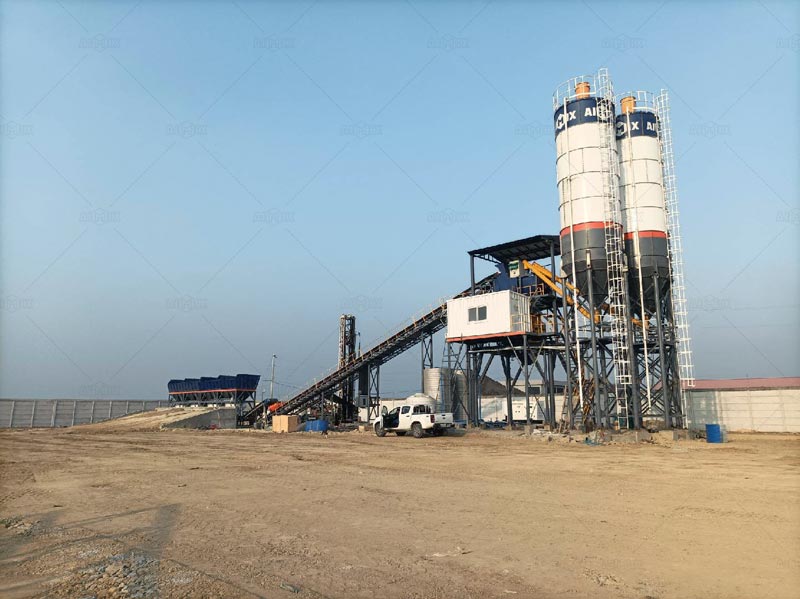
What Factors Affect Mobile Concrete Plant Installation Time?
Not every mobile concrete plant follows the same installation process. Several technical and site-related factors can significantly change the required working hours.
Equipment Configuration and Structural Design
Compact mobile batching plants with integrated components generally require less on-site assembly than systems with multiple independent modules.
For example, a configuration with an integrated aggregate batching system and mixing unit may be positioned and connected relatively quickly. However, separate cement silos, additional conveyors, and external material storage facilities can extend the installation period.
Before purchasing a concrete plant(planta hormigonera), contractors should request a detailed equipment layout and installation schedule to understand which components require on-site assembly.
Site Conditions and Accessibility
Ground conditions influence equipment positioning, lifting operations, and installation safety.
A site with a prepared, level, and sufficiently compacted surface allows installation teams to work more efficiently. Conversely, uneven terrain, poor drainage, narrow access roads, and limited working space may require additional preparation.
For remote construction projects, transportation access should also be checked before equipment shipment to avoid delays during unloading and positioning.
Availability of Installation Equipment and Personnel
Installation speed depends partly on whether the necessary resources are available when the equipment arrives.
These may include:
- Qualified installation technicians.
- Cranes or forklifts with suitable lifting capacity.
- Electricians and control system technicians.
- Welding and assembly tools, where required.
- Adequate labor for positioning and mechanical connections.
A shortage of lifting equipment or experienced personnel can delay the installation of an otherwise straightforward mobile concrete plant.
How to Prepare the Site Before Equipment Arrives
One of the most effective ways to shorten installation time is to complete site preparation before shipment arrives.
Contractors should coordinate with the supplier to confirm the following requirements:
- Ground and Foundation Conditions: Verify the required bearing capacity, levelness, drainage, and equipment support arrangements. Mobile configurations may reduce conventional foundation work, but they still require a suitable supporting surface.
- Transportation Access: Confirm road width, turning space, unloading areas, and access for heavy trucks.
- Electrical Supply: Prepare the required power connections, cables, grounding, and protection devices according to the equipment specifications.
- Water Supply: Ensure that water can be supplied at the required pressure and flow rate.
- Material Storage: Arrange aggregate stockpiles, cement storage, and delivery access before production begins.
Completing these preparations can prevent installation teams from waiting for basic site infrastructure.
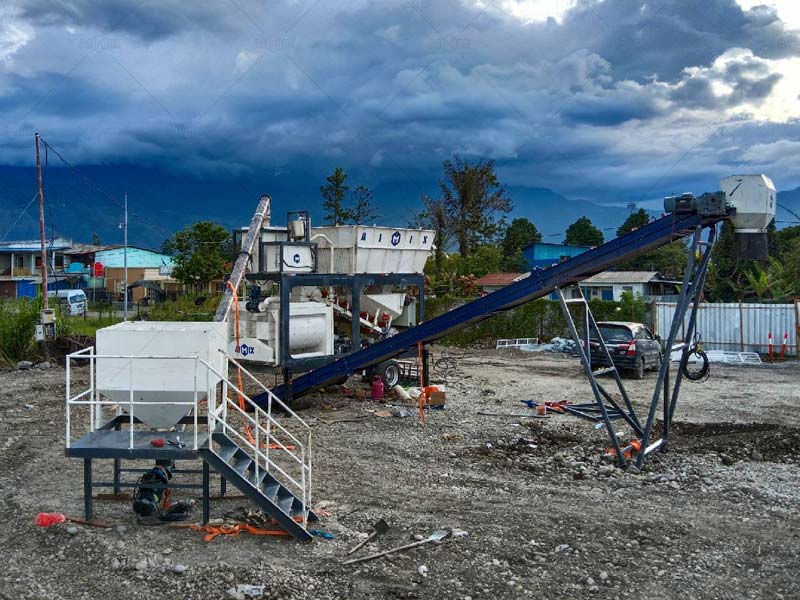
What Happens During Installation and Commissioning?
The installation process should follow a defined sequence to reduce unnecessary adjustments and avoid missing critical connections.
Mechanical Assembly and Positioning
Technicians first unload and position the main equipment modules according to the approved layout.
They then inspect structural connections, fasteners, support components, conveyors, and the mixing system. All connections should be checked before moving to electrical installation.
Electrical Connection and Control System Setup
The next stage involves connecting motors, sensors, weighing systems, and the central control cabinet.
Technicians verify wiring, motor rotation directions, signal transmission, and emergency stop functions. Incorrect connections can cause equipment malfunctions during initial operation.
No-Load and Load Testing
Before commercial production, the concrete plant should undergo functional testing.
- No-load testing: Check motor operation, conveyor movement, mixer rotation, and control system responses.
- Load testing: Test aggregate feeding, cement weighing, water measurement, and mixing performance using actual materials.
- Production verification: Evaluate batching accuracy, mixing consistency, and discharge operation.
A mobile concrete plant(planta de concreto móvil) should only enter regular production after all critical systems have passed the required inspections.
How Can Contractors Shorten the Installation Schedule?
Reducing installation time requires coordination before, during, and after equipment delivery.
Practical measures include:
- Request installation drawings and technical requirements before shipment.
- Complete site preparation while the equipment is being manufactured or transported.
- Confirm that lifting equipment and installation personnel will be available on arrival.
- Check the equipment packing list to ensure all components and accessories are included.
- Arrange electrical and water connections in advance.
- Schedule commissioning technicians before mechanical assembly is completed.
Contractors should also maintain communication with the supplier throughout the process. Early clarification of installation responsibilities can prevent disputes and unnecessary waiting time.
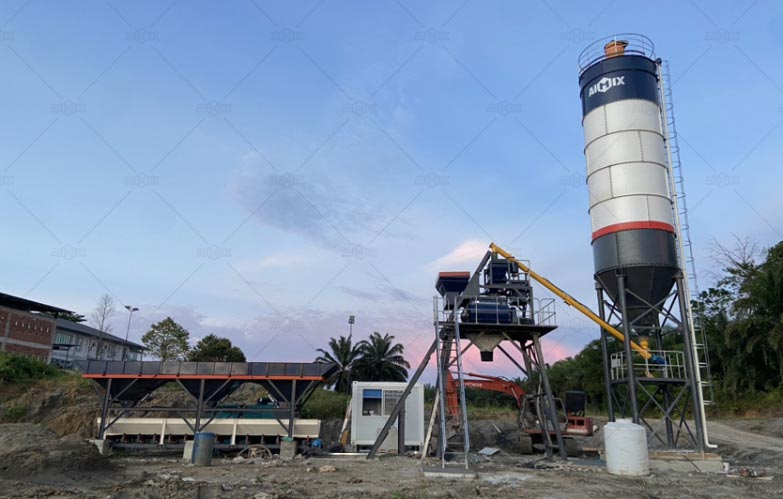
Plan the Installation Around Your Construction Schedule
The installation period of a mobile concrete plant depends on much more than its mobility. Equipment configuration, site readiness, transportation conditions, installation resources, and commissioning procedures all influence when production can begin.
For contractors planning a new concrete plant investment, the most reliable approach is to request a project-specific installation schedule that clearly separates site preparation, mechanical assembly, electrical connection, and testing. With proper coordination, a mobile concrete plant can be installed efficiently and start supplying concrete without unnecessary delays. Ultimately, preparing the site and organizing installation resources in advance are often just as important as choosing equipment designed for quick installation.