The most direct competitor to the Tesla Roadster

The most direct competitor to the Tesla Roadster
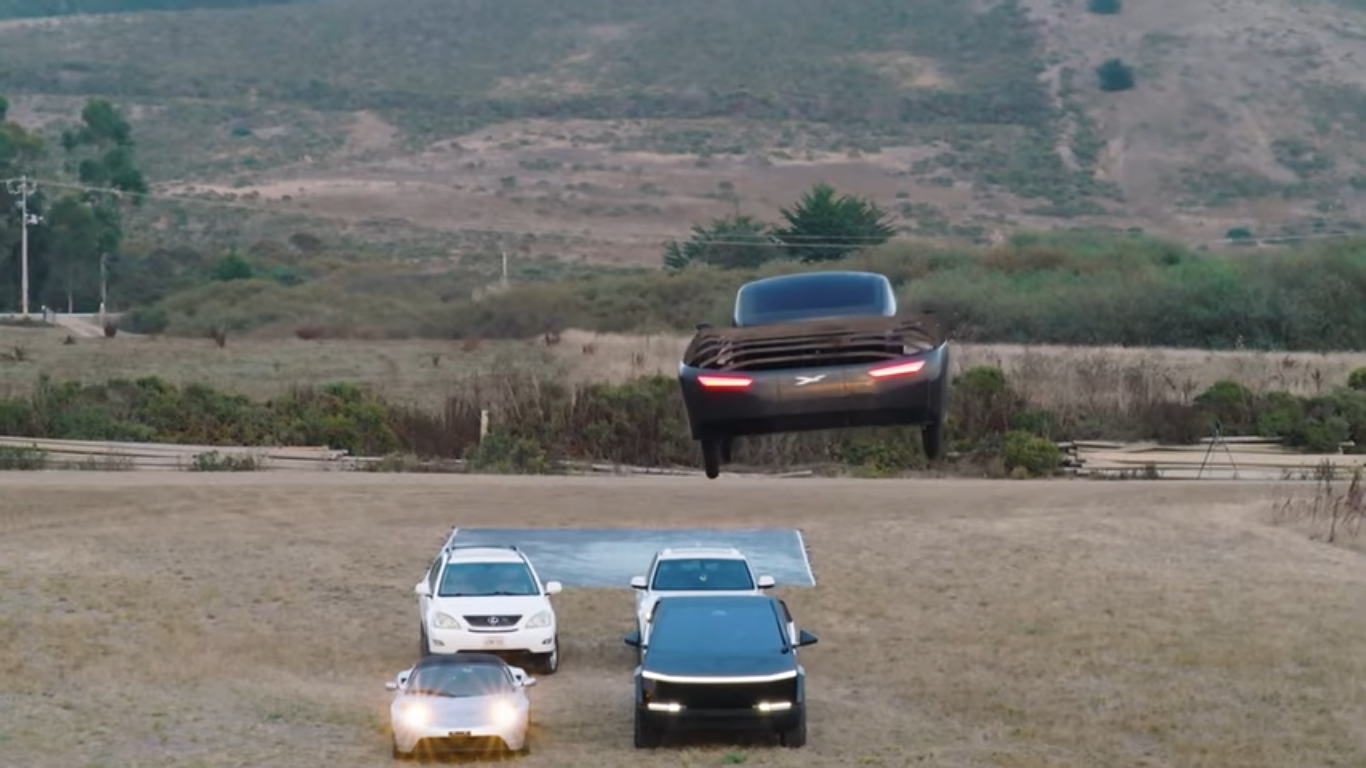


Around the same time the Tesla Roadster was dominating social media, the American company Alef Aeronautics unveiled a demonstration that appears to be a direct response to Elon Musk. In the footage, an unusually designed vehicle approaches a Tesla Roadster; instead of using a ramp to jump, it begins to ascend vertically, lifting off the ground, gaining altitude, and passing directly over the Tesla.


According to Alef Aeronautics, this demonstration marked their thousandth recorded flight. The company also took the opportunity to note that it has been developing flying cars for over a decade—but what sets their project apart? From its inception, the Alef Aeronautics vehicle was conceived to serve a dual purpose: it is designed to travel on conventional roads while also being capable of vertical takeoff, eliminating the need for an airport runway. To achieve this, it utilizes a distributed electric propulsion system with integrated propellers.


Unlike the Tesla Roadster, which relies on bursts of compressed gas to execute brief aerial maneuvers, the Alef Aeronautics project uses airflow to generate lift. This distinction is fundamental: while the Tesla’s thrusters are designed to deliver intense force over short, limited bursts, the rotors on the Alef Aeronautics vehicle are engineered to sustain the craft in the air throughout its flight.


The company developed a rather unusual solution for the transition between these two modes of transport. Its design entails the vehicle's external structure changing orientation during flight, while the passenger cabin remains positioned to maintain the proper orientation; in the aerial configuration, parts of the bodywork take on an aerodynamic function.


Alef Aeronautics’ proposal involves allowing the vehicle to utilize lift generated by airflow—rather than relying exclusively on rotors throughout the entire journey. While visually striking, this concept also presents significant challenges regarding stability, control, and energy efficiency. For its "Model A," Alef Aeronautics has announced a projected ground range of approximately 350 km and an aerial range of about 177 km; these figures are design targets released by the manufacturer and do not represent distances verified in the recent video.


The company has also announced an estimated starting price of $299,999, meaning that even if the vehicle reaches its first buyers, it will be far from an accessible alternative to a conventional automobile. Furthermore, there is the matter of regulation: Alef Aeronautics has received special authorization from the U.S. Federal Aviation Administration (FAA) to conduct specific test operations, but this authorization does not constitute the full certification required to freely sell and operate a passenger aircraft.


The first vehicles intended for customers will need to be used under controlled conditions, precisely to continue the evaluation of the technology. In this regard, Alef Aeronautics represents a different approach than Tesla’s; it is not merely attempting to make a sports car perform extraordinary maneuvers, but rather to build a vehicle capable of operating both on the streets and in the sky—a concept that, while seemingly pulled from a futuristic film, has a history far older than one might imagine.


Sorry for my Ingles, it's not my main language. The images were taken from the sources used or were created with artificial intelligence
