Non-humanoid robots in large companies

Non-humanoid robots in large companies
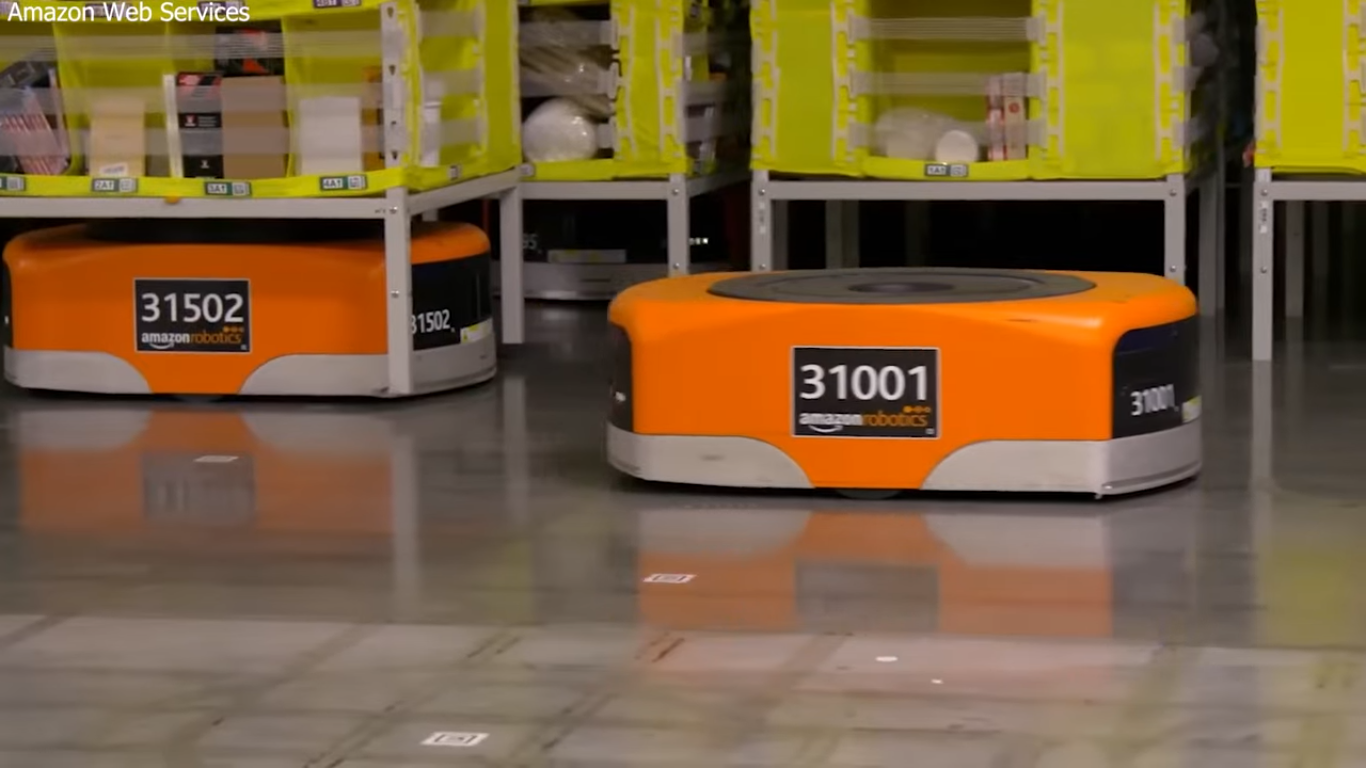


While technology companies showcase humanoid robots working in factories, hotels, and commercial establishments, an even greater transformation is quietly taking place in distribution centers around the world. In this case, we are not talking about prototypes: Amazon has already deployed over a million robots across its logistics network. Most of these lack arms, legs, or a human-like appearance; they are mobile platforms and specialized equipment that transport goods and organize items across different areas.


Some systems bring shelving units directly to employees, eliminating the need for long walks throughout the warehouse. Others use mechanical arms and sensors to identify, grasp, and arrange objects. One example is Proteus, an autonomous mobile robot designed to transport loads while navigating areas shared with human workers. Meanwhile, Vulkan uses force sensors to detect contact with objects and adjust its movements accordingly. This transformation is also unfolding in Brazil: Mercado Libre employs hundreds of robots in its distribution centers. In Cajamar, located in the interior of the state of São Paulo, mobile units transport shelving units and assist in organizing products. A second generation of robots has also begun operating to help sort orders containing multiple items; according to the company, this technology can process up to 105,000 items per day and reduce the time required for certain operations by as much as 25%.


Other examples demonstrate that robots do not need to have a human appearance to transform a company; in fact, for many tasks, wheels, conveyor belts, and mechanical arms remain simpler and more efficient solutions. However, humanoids can broaden this landscape, offering a significant potential advantage: the ability to operate in environments designed for people, utilizing existing tools, corridors, and equipment.


Imagine a factory where mobile robots transport materials, while industrial arms perform repetitive tasks and handle activities requiring greater flexibility. Meanwhile, human professionals oversee the operation, address unexpected situations, perform maintenance, and make decisions. This model is already beginning to emerge in various pilot projects, though it does not yet represent the reality for all companies.


Furthermore, there is an issue that cannot be ignored: the impact on jobs. While automation can reduce physically demanding labor, improve safety, and create opportunities in areas such as maintenance, programming, and systems supervision, it can also decrease the need for workers in certain roles, necessitate new skill sets, and increase pressure for higher productivity.


There is no guarantee that every job transformed by automation will be replaced by an equivalent new opportunity. Therefore, how companies and governments prepare the workforce will be just as important as the evolution of the machines themselves.


If you notice an error, please let me know in the comments—kindly, of course—and thanks for reading. The images were taken from the sources used or were created with artificial intelligence
