What is known about the new Alzheimer’s vaccine?

in Popular STEM • 4 hours ago

What is known about the new Alzheimer’s vaccine?


AI


Today, we are going to discuss the much-talked-about—though not yet on the market—"vaccine" for Alzheimer’s disease. Many of you have likely seen it mentioned in press articles, magazines, and elsewhere. It is worth covering several points regarding this product: how it works, what is currently known, and the truth behind the claims. Development is quite advanced; in fact, it is currently in the phase of determining the appropriate dosage—meaning it is in the final stages of development—and it is very possible that the product could reach the market within the next two to three years.

This represents another step toward a potential breakthrough for humans: if not an absolute cure, then at least a complete halt to the disease, preventing any further progression—a point I will explain in more detail later.


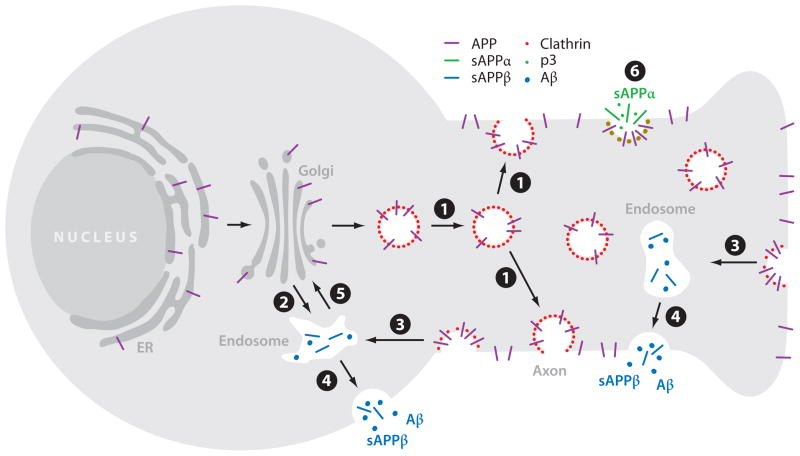
To begin, let’s look back at a condition that appeared in Europe some years ago—one that was remarkably similar, if not nearly identical, to Alzheimer’s. I am referring, as you might guess, to "mad cow disease"—or, in humans, variant Creutzfeldt-Jakob disease (vCJD). Alzheimer’s shares many similarities with this condition. In the case of mad cow disease—scientifically known as bovine spongiform encephalopathy—what essentially occurred was that certain proteins, located in the space between neurons, began to precipitate and form tiny crystals.


Souce


And because these crystals are pointed—as you can see when looking at them under an electron microscope—they tear through the tissue, acting like tiny knives that destroy the tissue between the neurons. If you examine the brain under a microscope, you can see that it has come to resemble a sponge—a sponge full of holes. Alzheimer’s disease is very similar—strikingly so. It also involves the precipitation of a protein—known as Tau—within the intercellular and extracellular spaces (both inside and outside the neurons). Instead of forming crystals, this protein aggregates into tangles. Over time, these tangles inevitably impair neuronal function, leading to the symptoms characteristic of Alzheimer’s disease, such as memory loss, the inability to recognize others, and so on.

The disease is progressive, worsening over time until the damage becomes so severe that it disrupts the proper functioning of vital organs, ultimately resulting in the patient's death. The initial, hallmark observation is a very significant degree of cognitive decline. Recently, new treatments— monoclonal antibodies — have emerged; some are already being marketed in certain countries. These antibodies target the Tau protein tangles, effectively inactivating them. I am referring to medications such as lecanemab (Leqembi) and donanemab (Kisunla).


These are monoclonal antibodies—that is, antibodies that target the TAU protein tangle (upon which amyloid also deposits)—inactivating it and effectively bringing it to a standstill.


Souce


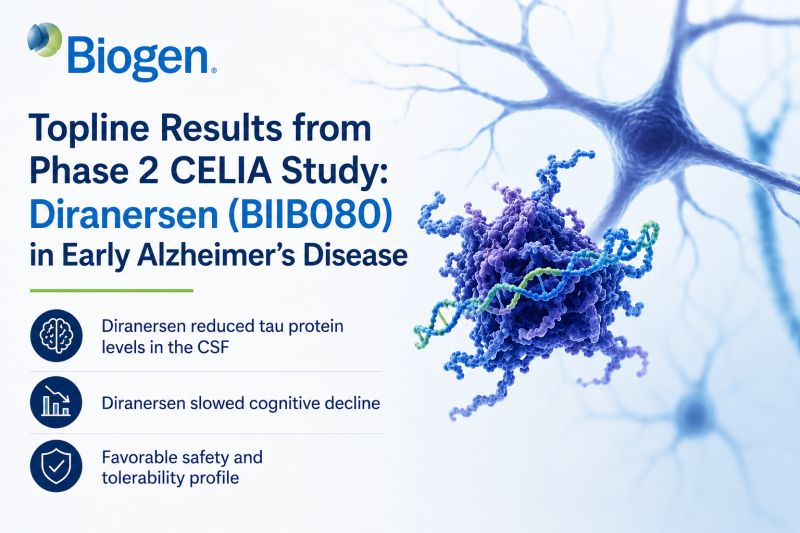
A new approach has now been discovered that, rather than acting directly on Tau protein tangles, aims to prevent the production of this protein altogether—much like the old saying, "get rid of the dog, and you get rid of the rabies." This has already been successfully demonstrated in experimental animals; the scientists involved were incredibly excited because the approach doesn't just halt the disease—it could potentially cure it. This represents a significant leap forward: we are no longer talking merely about slowing the progression of the disease—which is what previous medications achieved—but about bringing it to a complete standstill. With no Tau protein being produced, there is no protein to aggregate into tangles.


Essentially, the production of both amyloid and the Tau tangles—as well as the amyloid that accumulates alongside them—is stopped at the source. This approach is currently being evaluated in an international clinical trial known as the "Celia study," which is focused on determining the most effective dosage. Having reached the stage of testing in human patients—moving beyond laboratory animals—the research is now in the final phase before potential commercialization, specifically assessing the optimal dosage and method of administration.


Everything suggests that the dosage would be 60 mg once every 6 months. However, be careful: this is not a vaccine in the traditional sense—not what we typically think of when we hear the word "vaccine." The issue with this particular "vaccine" is that it must be administered intrathecally. What does this mean? It means it has to be injected directly into the cerebrospinal fluid. Many women, for instance, may be familiar with an epidural—a type of anesthesia administered in the lower back. This is somewhat similar; in an epidural, the anesthetic is deposited around the area where a nerve exits the spinal column. In this case, however, the substance must be introduced into the fluid that circulates within the spinal canal—that is, the fluid surrounding the nerves that run through the vertebrae. In short, it is not a simple procedure, nor does it provide lifelong protection.


This is why I am somewhat reluctant to call it a "vaccine." Usually, a vaccine triggers the production of antibodies that provide protection for several years—if not for one's entire life—whereas this procedure is rather an ordeal. That said, the results are very promising—first in animals, and now in humans.


We shall see how it works; in a person with very advanced Alzheimer’s, even if you were to stop the production of amyloid plaques, TAU protein tangles, and amyloid deposits, I personally don’t believe a cure would be achieved—though that is just my own view. I suspect this could be a 100% effective vaccine—or something close to it—during the early stages of Alzheimer’s. Since Alzheimer’s is quite easy to detect early on, if we can halt the disease process once it’s identified, the impact on a person’s quality of life would be truly remarkable.


From my perspective, this is incredible, and I felt it was worth offering a glimmer of hope to those who may have a loved one in the early stages of the condition—though, in all honesty, it will likely take some time before this reaches the market.


Souce Souce Souce