And so it all ended
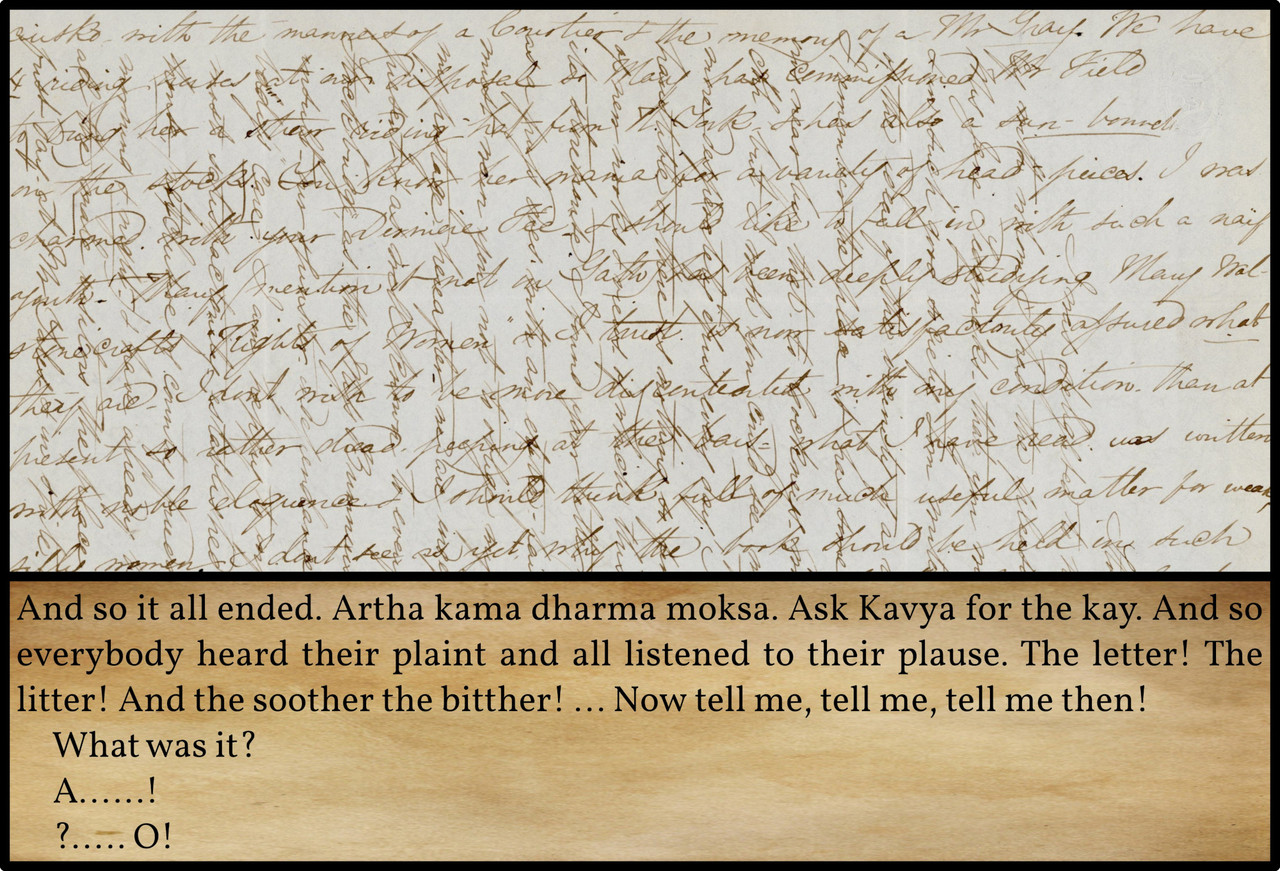
After the conclusion of Festy King’s trial, attention turns to ALP’s Letter. This page of text foreshadows both the following chapter (I.5: The Mamafesta), which is all about the Letter, and the final chapter of Book I (I.8: Anna Livia Plurabelle), which is all about ALP.
First-Draft Version
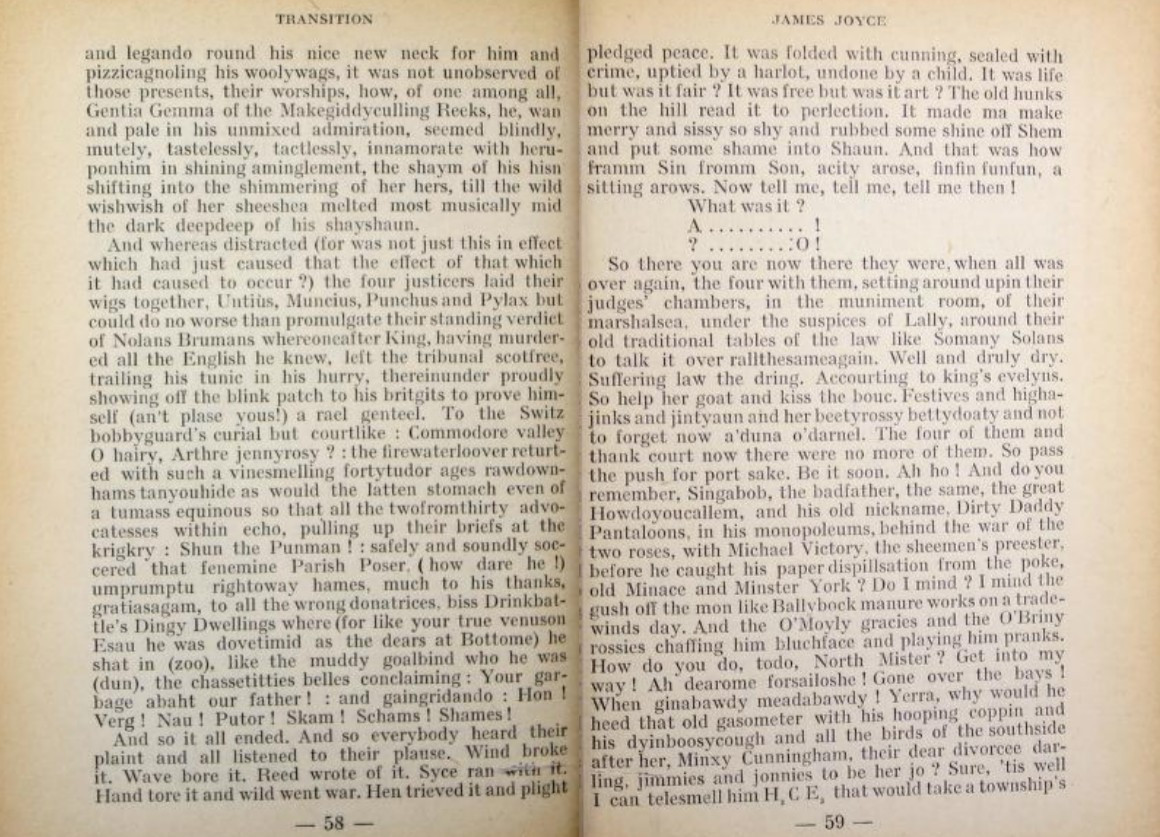
We usually begin our analysis by examining the first draft of the relevant passage as recorded by David Hayman in A First-Draft Version of Finnegans Wake (1963), but this is not possible, as this paragraph was only added in March 1927, over three years after Joyce wrote the first draft (November 1923). The earliest version of this paragraph, however, can be read on Danis Rose & John O’Hanlon’s James Joyce Digital Archive:
And so it all ended. And so everybody heard their complaint and all listened to their plause. The wind broke it. The wave bore it. The reed wrote it. The post ran with it. The old hunks on the hill read it. It made ma merry and shy and rubbed some shine off Shem and put some shame into Shaun. And that was how acity arose, finfin funfun, asitting arows. Now tell me, tell me, tell me then!
What was it?
A..........!
?......... O!
―JJDA I.4§1.4/2.4
Even in this inchoate form, the passage is clearly about the Letter. When Joyce later expanded it, the principal addition was a list of a dozen or so sources that contributed to the Letter’s text: from Dark Rosaleen a sigh and a weep, etc. Most of these sources are popular songs. In July 1927, between the first and final drafts, an intermediate version appeared in Number 4 of Eugene Jolas’s literary journal transition:
Sanskrit Poetry
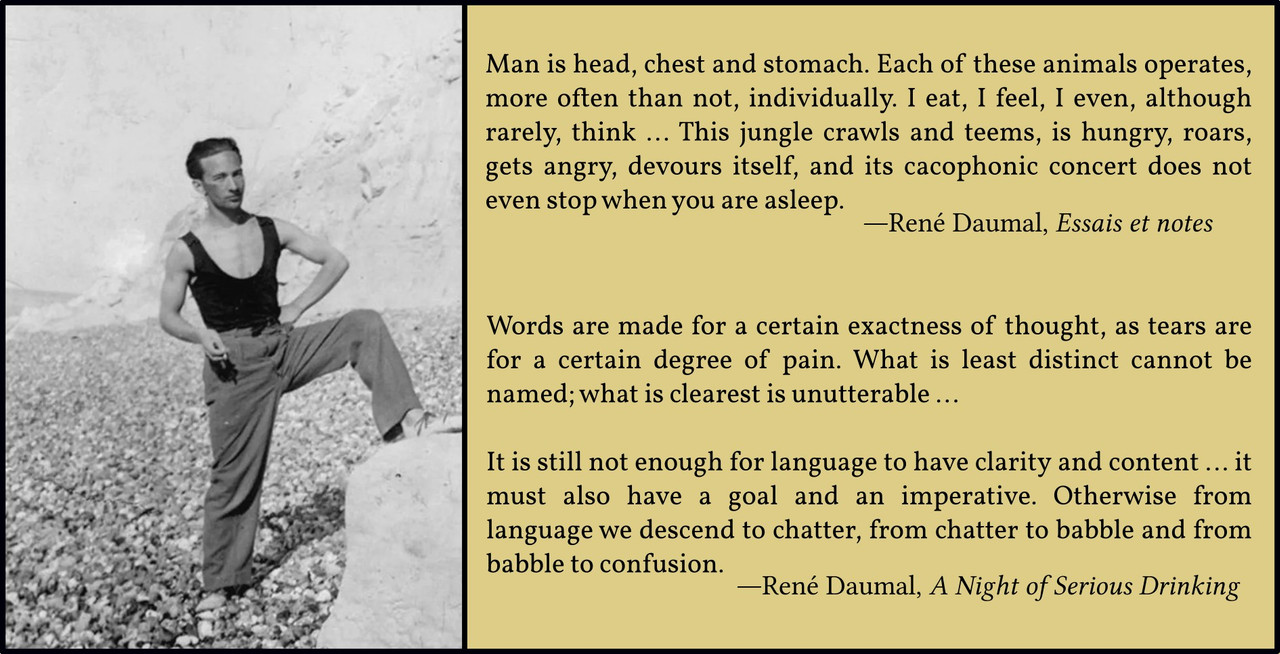
Artha kama dharma moksa In Hindu metaphysics these are the four ends of life: artha = success : kama = pleasure : dharma = duty : moksha = enlightenment. Joyce found these terms in René Daumal’s essay on Les pouvoirs de la parole dans la poétique Hindoue [The Powers of the Spoken Word in Hindu Poetry]. Daumal was quoting from a classical Sanskrit essay on the subject:
On trouve la même conception dans un traité classique de Poésie, le Miroir de la Composition, relativement récent mais de même tradition, qui nous servira de guide dans cette étude :
La Poésie est un moyen de rendre plus facile l’étude des quatre sortes de mobiles [de la conduite humaine]: artha, les biens matériels; kâma, plaisir-douleur, attrait-aversion; dharma, bien-mal, connaissance de la loi; enfin moksa, désir de la délivrance, effort pour se libérer des mobiles précédents.
We find the same idea in a classical treatise on poetry, the Mirror of Composition, relatively recent but of the same tradition, which will serve as our guide in this study:“Poetry is a way to make it easier to study the four kinds of motives: artha, material goods; kama, pleasure-pain, attraction-aversion; dharma, good-evil, knowledge of the law; finally moksa, desire for deliverance, effort to free oneself from the preceding motives.”
―Daumal 56–57
Although these are generally regarded as the four ends of life, Daumal introduces them as constituting the end of art.
Ask Kavya for the kay The Sanskrit word kāvyá is another of Joyce’s borrowings from Daumal:
Kâvya « poésie », kavi « poète » signifient aussi « sagesse, sage », de la racine ku, kav « chanter », ou de kû « diriger sa pensée ». ―Daumal 83:6
Kâvya “poetry”, kavi “poet” also mean “wisdom”, “sage”, from the root ku, kav “to sing”, or from kû “to direct one’s thoughts”.
There is also an obvious allusion to Kathe supplying the key of the Museyroom. In the opening chapter, the Museyroom episode, with its reenactment of the Battle of Waterloo, foreshadowed Festy’s trial. Joseph Campbell & Henry Morton Robinson’s comment adds another interpretation:
Kavya (“the poet”) will give the key; there is a suggestion here of Kathe (the poet’s muse!) who supplied the key to the museum, p. 8. ―Campbell & Robinson, _A Skeleton Key to Finnegans Wake 87
And so everybody heard their plaint and all listened to their plause This too echoes something Daumal wrote about Sanskrit poetry:
Le Théâtre est dit « Poésie visible », par distinction de la « Poésie audible [seulement] », à laquelle j’ai limité la présente étude. ―Daumal 83:6
Drama is called “visible poetry”, as distinct from “[purely] audible poetry”, to which I have limited the present study.
Later in chapter III.4_, HCE & ALP’s lovemaking will be dramatized and the performance will end with rounds of applause (RFW 459.40).
Borrowings
In writing Finnegans Wake, Joyce borrowed words, phrases, lines, and in at least one case an entire paragraph from other authors. ALP’s Letter is similarly indebted to several sources. Thirteen or so of these are explicitly identified in this paragraph:
James Clarence Mangan, Dark Rosaleen, a political song adapted from the 16th-century lyric Róisín Dubh, about the daughter of Hugh O’Neill, Earl of Tyrone, and her fiancé Red Hugh O’Donnell. In Mangan’s adaptation, it is clear that Dark Rosaleen is a metaphor for Ireland.
Thomas Moore, Lesbia Hat a Beaming Eye. French: louche = squint. There is also an allusion to Matthew 7:5: Thou hypocrite, first cast out the beam out of thine own eye.
James Joseph Callanan, Gougane Barra, a poem which opens with the lines: There is a green island in lone Gougane Barra Where Allua of songs rushes forth as an arrow. There may also be an allusion to the song Kevin Barry, about a teenager whose execution by the British in 1920 made him a hero of the Irish War of Independence.
John Kells Ingram, The Memory of Dead. This political poem about the United Irishmen’s Rebellion opens with the famous lines: Who fears to speak of Ninety Eight? Who blushes at the name?
Timothy Daniel Sullivan, God Save Ireland. This nationalist hymn is set to the music of Tramp! Tramp! Tramp!, a popular song from the American Civil War. His brother, A M Sullivan, was a nationalist politician and journalist.
Lady Dufferin, grand-daughter of the playwright Richard Brinsley Sheridan and author of The Lament of the Irish Emigrant, which begins: I’m sitting on the stile, Mary.
Frederick Crouch & Miss Crawford, Kathleen Mavourneen, another popular Irish ballad from the American Civil War. Mavourneen is a term of endearment, from the Irish: mo mhuirín = my beloved. The song’s refrain begins: It may be for years and it may be forever.
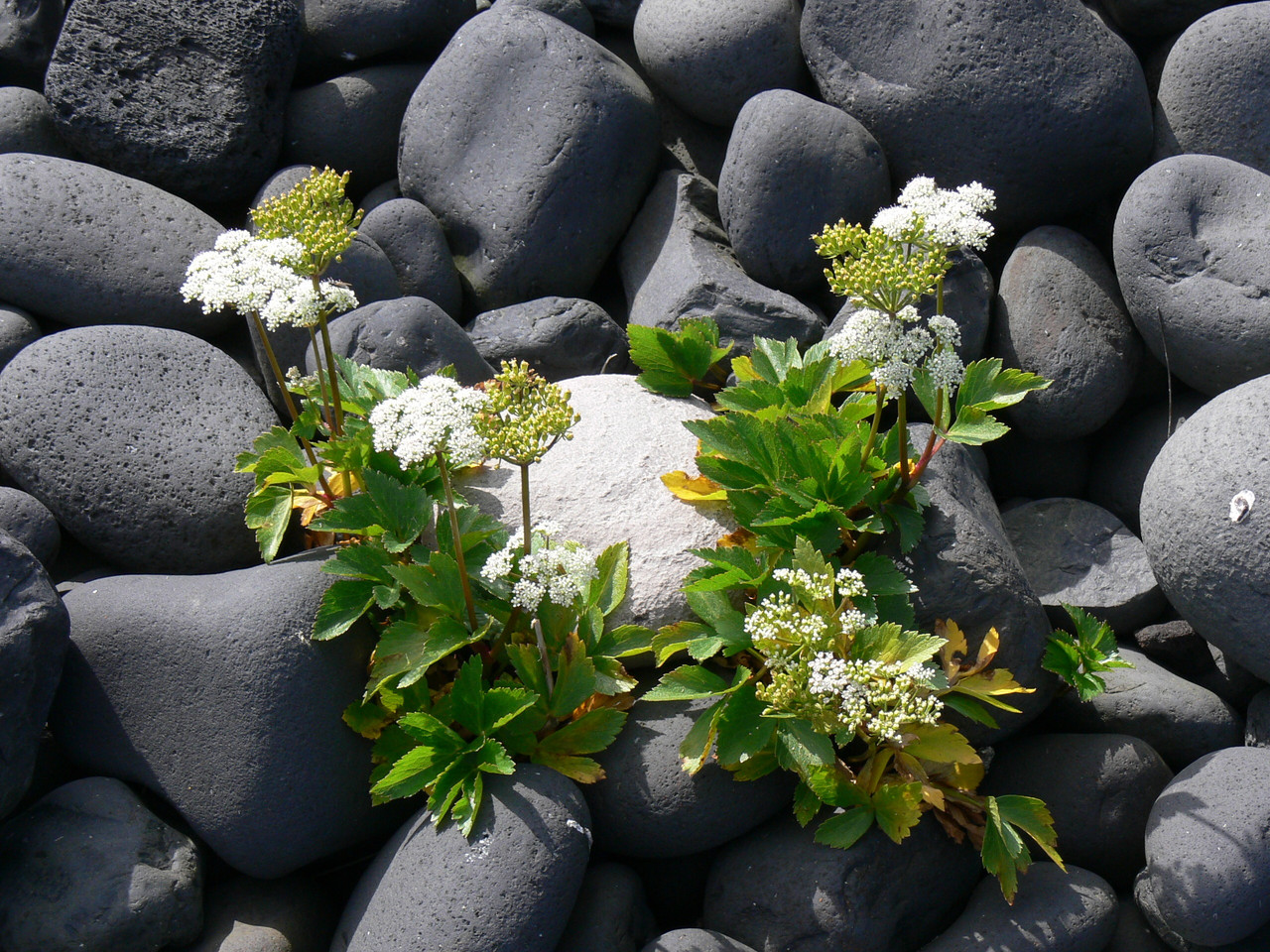
John Philpot Curran, Cushla Ma-Chree, a patriotic poem addressed to Erin, an emerald set in the ring of the sea. The title is another Irish term of endearment: cuisle mo chroí = pulse of my heart. Scotch lovage is a flowering plant. Irish: mo chréatúir = you poor thing!, which can convey both pity and contempt.
John Lundy, Off to Philadelphia in the Morning. This song was originally published in 1889 to words by John Lundy. A later version with Lundy’s words adapted by Stephen Temple and music adapted from a traditional Irish air by Battison Haynes became very popular. The opening line is: Oh, me name is Paddy Leary.
Samuel Lover, Molly Bawn & The Bowld Sojer Boy. Also, Charles Lever, the author of several popular novels, including Charles O’Malley. As a young man, Lever and his college mate Robert Boyle earned a precarious living singing ballads of their own composing, several of which later appeared in Lever’s novels.
Tim Finnegan’s Wake
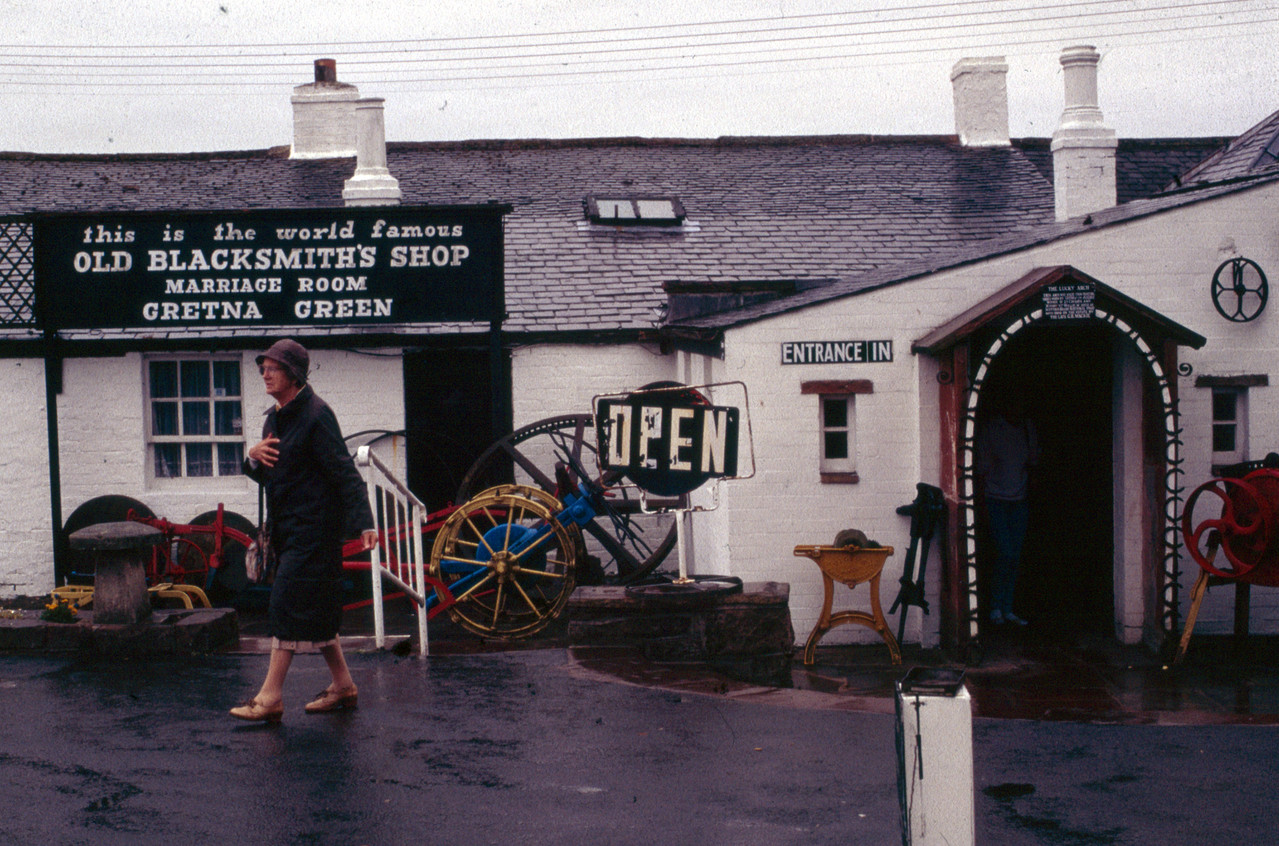
The Wearing of the Green, a patriotic song about the United Irishmen’s Rebellion of 1798. Dion Boucicault’s version is the best known. Gretna Green was the first village north of the England-Scotland border on the old London-Edinburgh road. After 1754, when it became illegal in England and Wales for people under the age of 21 to marry without their parents’ consent, young couples would elope across the border to Gretna Green, where legal marriages could even be officiated by local blacksmiths over their anvils. Willie’s wedding on the green is described in the Scottish reel Jenny Dang the Weaver.
Shortly after James Joyce and Nora Barnacle were officially married in London, Joyce wrote to his brother Stanislaus:
Having eloped with my present wife in 1904 she with my full connivance gave the name of Miss Gretta Greene which was quite good enough for il Cav. Fabbri who married us and the last gentleman in Europe il conte Dandino who issued the legitimate certificates for the offspring, but this full connivance voided the marriage in the eyes of English law see Hargreave’s Laws of England page 471-2 and the second ceremony was thought advisable to secure the inheritance under will. ―Richard Ellmann, James Joyce 638
The story of an earlier marriage in Italy is a whimsical invention. Nora’s pseudonym owes something to Gretna Green, to Gretta Conroy in Joyce’s short story The Dead, to Ireland the Emerald Isle, and perhaps also to Bowling Green, the name of the street in Galway where Nora grew up.
- Widecombe Fair, a Devon folk song about a man called Tom Pearce, whose horse dies after someone borrows it to travel to the fair in Widecombe. The refrain includes a list of the borrower’s travelling companions: Bill Brewer, Jan Stewer, Peter Gurney, Peter Davy, Dan’l Whiddon, Harry Hawke, Old Uncle Tom Cobley and all. The phrase like Muldoon’s picnic means chaotic or untidy. It may be related to The Mulligan Guard Picnic, a slapstick skit by the Irish-American comedian Edward Harrigan and his collaborator Tony Hart. Moate is a village in County Westmeath that grew up around an Anglo-Norman motte-and-bailey, though I don’t understand its relevance here. Edward Harrigan is perhaps best known today for his song Muldoon, the Solid Man, about an Irish-American politician with an elevated sense of his own importance. The success of both this song and Harrigan & Hart’s Mulligan Guard skits led to numerous imitations:
Harrigan’s famous character was also appropriated by other variety entertainers. The banjo-playing comedian William F Carroll (who later took to calling himself “William Muldoon”) performed for years in a sketch called Muldoon’s Picnic, which featured versions of Harrigan’s characters Michael and Ellen Muldoon.
In Joyce’s Dublin The Solid Man was the nickname of W J Ashcroft, an Irish music hall performer, who made the song his own. It was also the nickname of the famous American Greco-Roman wrestler William Muldoon. There is probably also an allusion here to Hamlet’s too, too solid flesh, which is often emended to too, too sullied flesh (Gordon 94.3).
Names and Numbers
Yet Una and Ita spill famine with drought and Agrippa, the propastored, spells tripulations in his threne
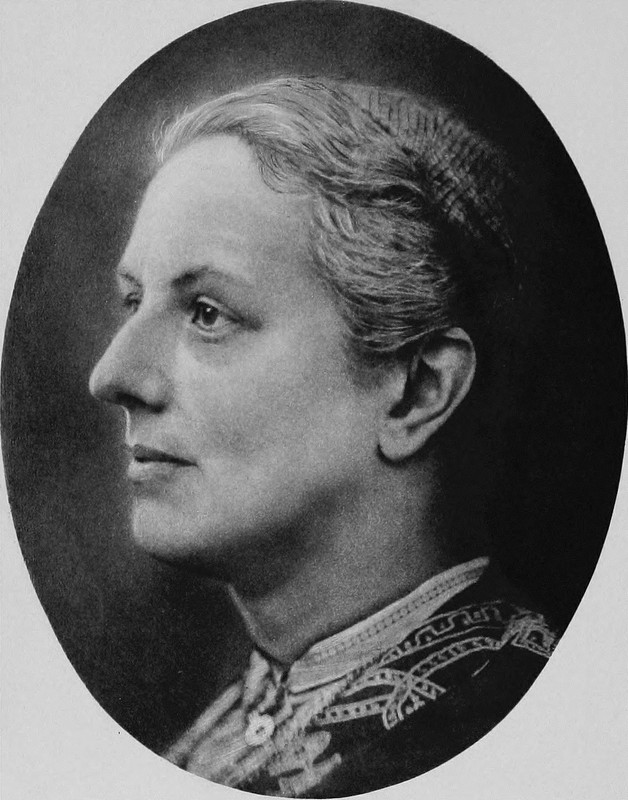
One of the reference works that Joyce had frequent recourse to when writing Finnegans Wake was Charlotte Yonge’s History of Christian Names:
The original proper names of men and women arose―
First, from some circumstance connected with the birth, such as Esau, hairy; Jacob, taking by the heel; Agrippa, born with the feet foremost ...
Also a few indicating a time of deep sorrow and distress, when the child was born, such as Beriah, son of evil, named when it went ill with his father Ephraim; Jabez, sorrow; Ichabod, the glory is departed. These being of ill omen, never prevailed among the joyous Greeks; but among the quick-feeling Kelts we find Una, famine, and Ita, thirsty, names recording, no doubt, times of sorrow ...
Agrippa was not well understood by the Romans themselves, though they settled that it meant one born with his feet foremost. The explanation we quote from Professor Aufrecht: “He (Gellius) ascribes to that preposterous birth all the calamities which befell the world through Agrippa’s ill-starred descendants. ‛To fall on one’s feet’ was therefore no auspicious event in Italy ―Yonge 1 ... 2 ... 156
In Finnegans Wake the best known Agrippa was Heinrich Cornelius Agrippa von Nettesheim, the 16th-century alchemist and occultist.
The literal meaning of preposterous is with the hinder part before. Professor Aufrecht’s preposterous birth is properly called a breech birth.
Latin: tripudium : a favourable omen in ancient Rome when the sacred chickens ate so hungrily that grains spilled from their beaks onto the ground : a religious war dance in triple time, in honour of the Roman god Mars. A threne is a dirge or song of mourning.
The closing lines of this passage also seem to encode several numbers. John Gordon noticed this but had no explanation:
for some reason, a barrage of numbers: “Una” (one), “tripulations” (triple: three), “threne” (three), “furchte fruchte” (perhaps forty-four), “Ena” (una: one), “milo” (million), “swee is too, swee is two when swoo is free” (three is two, three is two when two is three), “ana mala” (one, perhaps million), “pair” (two), “one,” “three.” Not including (if it is in fact present) forty-four, all would fit with the usual permutations of 1132. ―Gordon 94.12–18
As Joyce alludes here to Cain’s founding of the first city (FWEET: “from sin, from son, a city arose (according to the Bible, Cain was the first murderer, the first son, and the first city builder”), I can only surmise that there may be an intentional echo of a phrase from the opening page:
nor had topsawyer’s rocks by the stream Oconee exaggerated themselse to Laurens County’s gorgios while they went doublin their mumper all the time: ―RFW 003.06–08
And that’s as good a place as any to beach the bark of our tale.
References
- Joseph Campbell, Henry Morton Robinson, A Skeleton Key to Finnegans Wake, Harcourt, Brace and Company, New York (1944)
- René Daumal, Les pouvoirs de la parole, Essais et notes, Tome 2, Gallimard, Paris (1938)
- David Hayman, A First-Draft Version of Finnegans Wake, University of Texas Press, Austin, Texas (1963)
- Eugene Jolas & Elliot Paul (editors), transition, Number 4, Shakespeare & Co, Paris (1927)
- James Joyce, Finnegans Wake, The Viking Press, New York (1958, 1966)
- James Joyce, James Joyce: The Complete Works, Pynch (editor), Online (2013)
- Roland McHugh, Annotations to Finnegans Wake, Third Edition, The Johns Hopkins University Press, Baltimore, Maryland (2006)
- Danis Rose, John O’Hanlon, The Restored Finnegans Wake, Penguin Classics, London (2012)
- William York Tindall, A Reader’s Guide to Finnegans Wake, Farrar, Straus and Giroux, New York (1969)
- Charlotte M Yonge, History of Christian Names, New Edition, Revised, Macmillan and Co, London (1884)
Image Credits
- A Crossed Letter: Frances Appleton Longfellow (author), NPGallery, US National Park Service, Department of the Interior, Public Domain
- René Daumal: Anonymous Photograph, Public Domain
- Scotch Lovage: © Wolfgang Sauber (photographer), Creative Commons License
- The Old Blacksmith’s Shop in Gretna Green: © Gerd Eichmann (photographer), Creative Commons License
- Charlotte Mary Yonge: Duke Yonge (photographer), Public Domain
Useful Resources
- FWEET
- Jorn Barger: Robotwisdom
- Joyce Tools
- The James Joyce Scholars’ Collection
- FinnegansWiki
- James Joyce Digital Archive
- John Gordon’s Finnegans Wake Blog