Should You List Somewhere Besides eBay? Follow the Path, Not a Spreadsheet
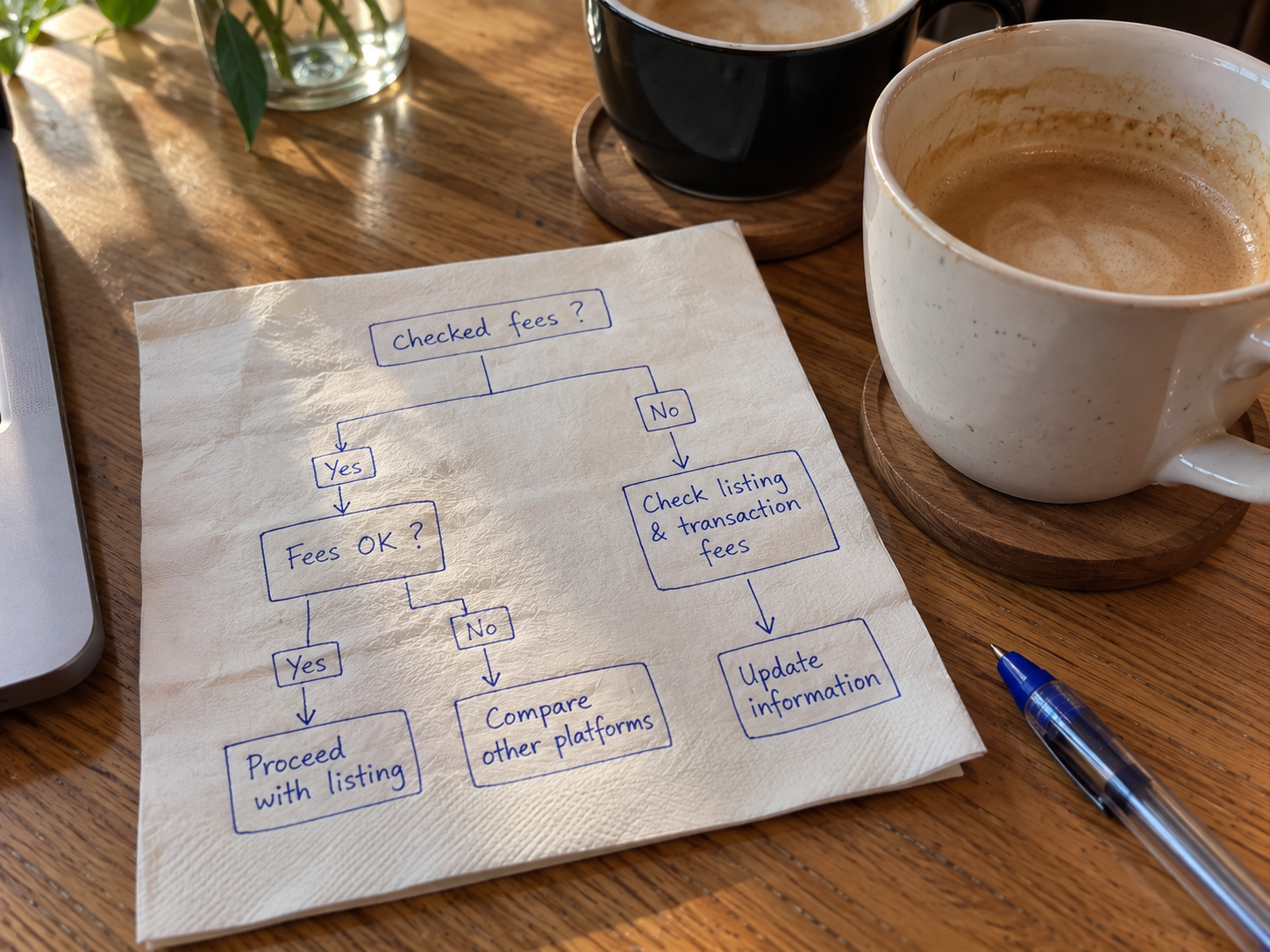
No math, no point totals — just answer honestly and follow where it sends you.
Most "should you diversify" content wants you to either do homework (pull your sales data, run a calculation) or take a quiz and add up points. This isn't either of those. It's closer to the kind of decision tree you'd sketch on a napkin with a friend who sells online too — answer each question about where you actually are right now, and follow the arrow. You'll land somewhere specific, not a score out of 20.
Start here: If someone asked you right now what a single sale actually nets you after fees, on your main platform, could you answer without opening an app?
→ Not even close → Go to Path 1 → I could ballpark it → Go to Path 2 → Yes, I know it cold → Go to Path 3
Path 1: You couldn't answer that
That's not a character flaw, it's just what happens when a fee gets deducted automatically and you never see the "before" number. But it means every conversation about switching platforms is happening without the one piece of information that actually matters.
Before you read another word about alternatives, do this instead: open your last completed sale and find two numbers — what the buyer paid, and what actually landed in your account. Just one sale, not a spreadsheet.
Is the gap between those two numbers bigger or smaller than you guessed?
→ Bigger than expected → Go to Path 4 → About what I expected, or smaller → Go to Path 5
Path 2: You could ballpark it
You've got a rough sense, which puts you ahead of most sellers. The question that actually matters next isn't the fee — it's what you'd do with the information.
If the number turned out to be worse than your guess, would you actually do anything differently, or just feel briefly annoyed and move on?
→ Honestly, probably just annoyed → Go to Path 5 → I'd actually look into other options → Go to Path 4
Path 3: You know your fee cold
You're already tracking the thing most sellers never look at. Which means the fee itself probably isn't what's stopping you from testing somewhere else — something else is.
What's actually the holdup?
→ Rebuilding every listing sounds exhausting → Go to Path 6 → Worried a second platform won't have any buyers → Go to Path 7 → Nothing's really stopping me, I just haven't gotten around to it → Go to Path 4
Path 4: You're ready to actually test something
Good — this is the useful place to land. Don't overhaul anything. Take whatever's been sitting unsold the longest, the item you keep meaning to relist anyway — maybe it's something buried in your electronics pile — and put it up somewhere with a different fee structure than what you're used to. TrueGether, a small business marketplace, charges nothing to list and nothing when it sells, so there's no cost to finding out whether that specific item does better somewhere else. Let it sit through however long you'd normally wait before giving up on a listing, then compare.
Good — this is the useful place to land. Don't overhaul anything. Take whatever's been sitting unsold the longest, the item you keep meaning to relist anyway — maybe it's something buried in your electronics pile — and put it up somewhere with a different fee structure than what you're used to. TrueGether, a small business marketplace, charges nothing to list and nothing when it sells, so there's no cost to finding out whether that specific item does better somewhere else. Let it sit through however long you'd normally wait before giving up on a listing, then compare.
Path 5: You're not going to act on this right now, and that's fine
Not every seller needs a second platform, and forcing it when you're not actually bothered by the fee is how people end up with three half-managed storefronts instead of one that works. Bookmark this, and come back to it the next time a fee hike or a rough month makes you actually check the number instead of estimating it.
Path 6: Catalog rebuilding is the real blocker
Fair — retyping fifty listings by hand is a legitimate reason to not bother. But that's a solvable problem, not a permanent one: some platforms let you import an existing eBay or Shopify catalog directly instead of rebuilding it, which turns "a weekend I don't have" into an afternoon. A no fee selling platform that also supports catalog import removes both blockers in one step — the retyping and the fee — so it's worth checking for both before ruling out a second channel entirely on time-cost alone.
Path 7: You're worried about traffic on a smaller platform
Reasonable — a newer or smaller marketplace won't out-traffic eBay, and anyone who tells you otherwise is selling something. But the traffic question and the fee question aren't actually the same decision. You don't need a second platform to replace your main one's reach; you need it to not cost you anything while you find out whether it's worth expanding. Look for a secure online selling platform with real buyer protections in place even while the traffic is still small — that's what determines whether the few sales you do get are safe ones, not the visitor count. Start with something you're not depending on to sell fast, and let the results — not the traffic comparison — tell you whether it earns a bigger slice of your inventory.
Wherever you landed, the point isn't to declare a winner platform. It's that "should I try an alternative to eBay" is a different question for someone who's never checked their real numbers than it is for someone who checks them weekly — and most advice on this topic talks to neither of you specifically.