What to Do If an Order Expires: A Practical User Guide
Expiration is not always the end of a transaction, but it changes what choices are available. The user’s next step depends on the service rules and on where the deposit is in the process.
The first practical point is that the exchange should be read as a process rather than as a single button. A user selects what is being sent, selects what is expected on the receive side, reviews the live estimate, chooses fixed or floating rate where relevant, enters the receiving address, and then funds the order generated by the interface. That sequence matters because each field has a different consequence, and most errors happen when two of those consequences are collapsed into one assumption.
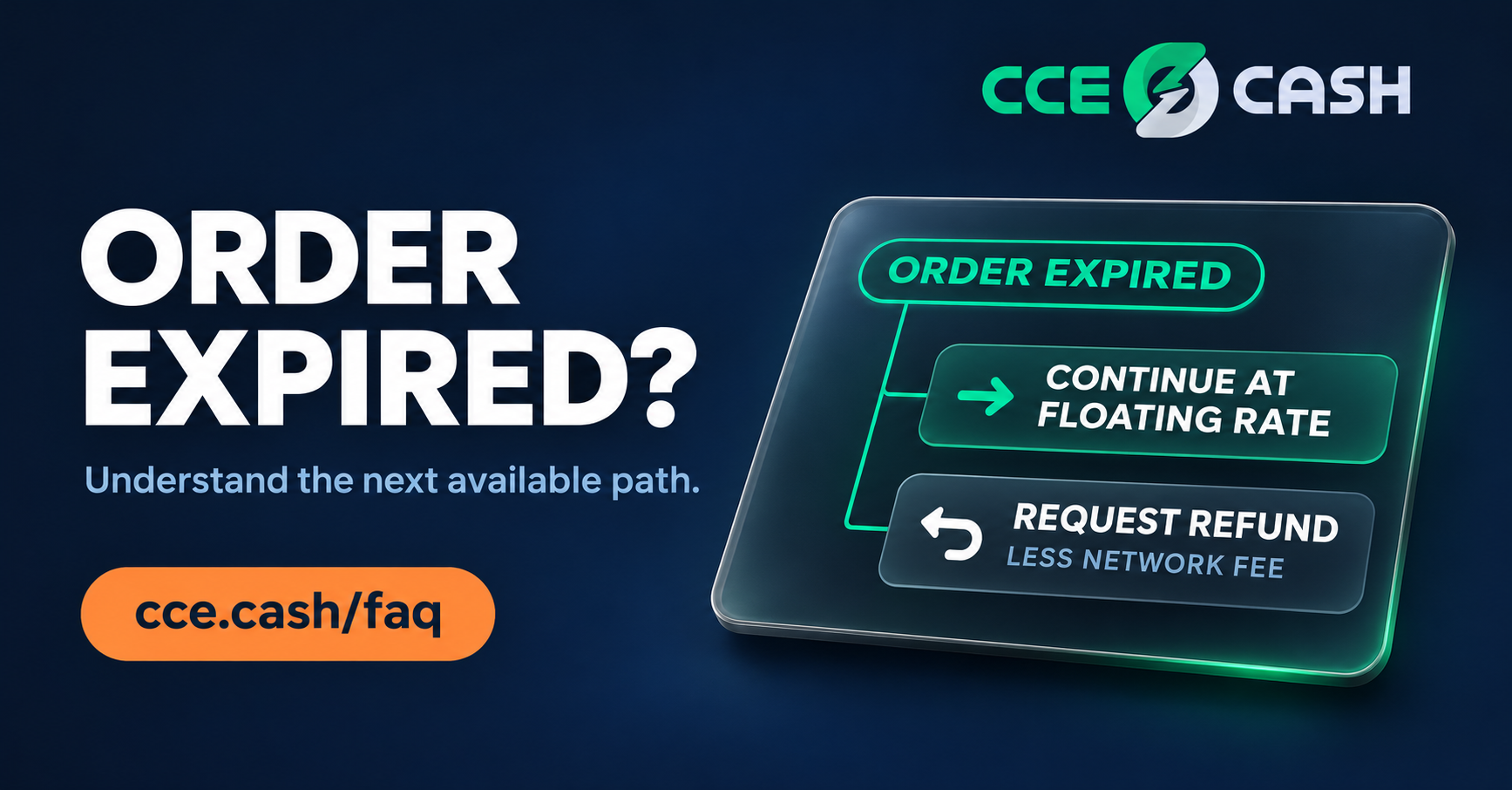
CCE Cash explains that if a transaction does not arrive before the order time passes, the user can contact customer service to continue at floating rate or request a refund minus network fee.
There is also a smaller but important support lesson here. An account-free workflow feels lightweight, but it still requires good transaction hygiene. Save the inquiry code, keep the transaction reference, and verify the destination details before the deposit is broadcast. If the pair uses a familiar ticker that exists on multiple chains, treat the network label as part of the asset name rather than as optional metadata.
The important point is to respond with order details and a clear understanding of which option best fits the situation.
From a product and SEO perspective, this topic works because it meets a user at the exact moment of intent. People searching for this kind of route are not looking for vague background information. They want to know what changes, what to verify, and what the order path actually looks like. That is why practical content outperforms generic “fast, simple, secure” copy. It explains the mechanism behind the convenience.
A final point worth keeping clear is that speed, privacy, and convenience all have operational boundaries. Network confirmations can still take time. Rate conditions still need to be read. Some transactions may still be screened under AML procedures. None of that weakens the product. It simply tells the user which parts are under the platform’s control and which parts remain attached to the blockchain or to compliance requirements.
For this route, the most useful workflow is simple: open the live page, confirm the exact pair and network, review the quote, create the order, keep the inquiry details, and fund the order only after the output path makes sense to you.
Landing page: https://cce.cash/faq
Tutorial: https://cce.cash/tutorial
FAQ: https://cce.cash/faq