Crypto & Money Basics #8: Dollar-Cost Averaging, Explained Simply

Every beginner in crypto faces the same impossible question: when is the right time to buy?
The price is up today and down tomorrow. The headlines swing from euphoria to panic in a single week. And every "expert" seems sure about a direction that turns out to be wrong half the time.
Dollar-cost averaging is the honest answer to that question — and it is surprisingly simple: buy a fixed amount, on a fixed schedule, no matter what the price is doing.

How Dollar-Cost Averaging Actually Works
Imagine you set aside $50 every Friday to buy Bitcoin. Some Fridays the price is high, so your $50 buys a little less. Other Fridays the price is low, so the same $50 buys a little more.
Over months, that routine smooths out your average buying price. You never buy everything at the top, because you were buying all along. You never miss the bottom entirely, because you were buying when the price dipped too.
A lump-sum buyer has to be right once, on one day, with all their money. A dollar-cost averager only has to be patient — and patience is a much easier skill to practise than prediction.
Why It Works in Volatile Markets
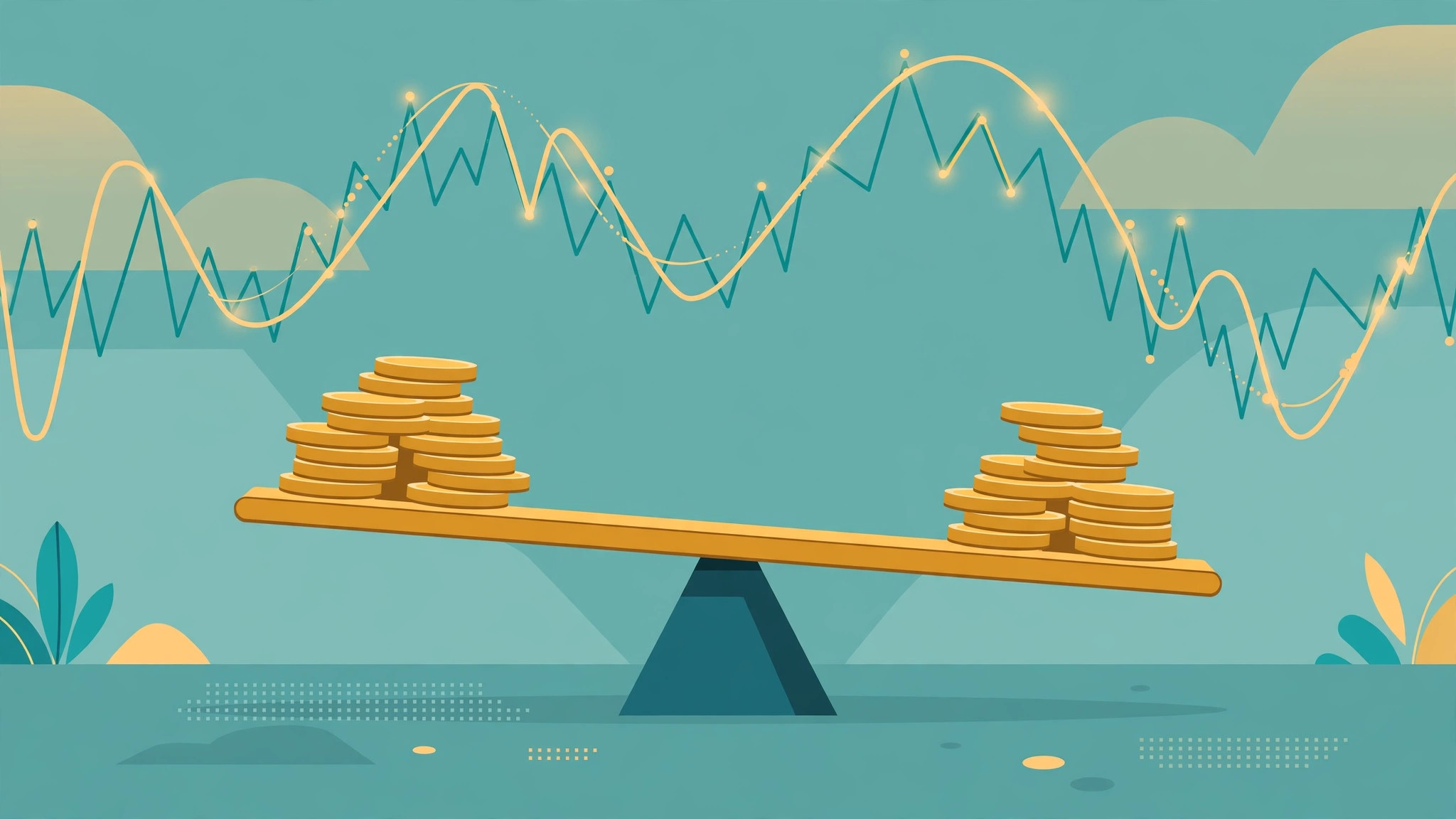
Crypto is one of the most volatile markets in the world, and that volatility is exactly what makes averaging work.
In a calm market, averaging barely matters — prices barely move, so every purchase costs about the same. In a wild market, the low weeks become your best friends: the same fixed amount buys noticeably more coins, and those cheap coins do the heavy lifting when the market recovers.
That is the whole trick. Averaging turns volatility from an enemy into a tool, as long as you keep buying through the red weeks instead of stopping when the chart looks scary.

The Three Rules That Make It Work
Averaging is simple, but it only works if you follow three rules.
First, fix the amount and the schedule, then automate it if you can. Pick an amount you can afford every week or every month without stress — money you will not need for rent or bills. Small and steady beats big and occasional, because the whole point is consistency.
Second, never skip a buy because the price fell. The falling weeks are the whole reason the strategy works. Skipping the dip is like planting a garden and refusing to water it on the dry days.
Third, think in years, not weeks. Averaging is a slow strategy by design. Its real power shows up over one, two, or three years of steady buying.
The Mistake That Breaks It
The most common way people break dollar-cost averaging is by turning it into market timing in disguise.
They buy on schedule while the price rises, then "pause" when it falls and wait for a better entry. That is not averaging — that is timing, with a nicer name. The paused buyer misses the cheap coins and ends up with a higher average price than the person who simply kept going.
The strategy works because it removes decisions. The moment you start making exceptions, you are back to guessing — and guessing is what averaging was supposed to replace.
The Bottom Line
Dollar-cost averaging will never make you the person who bought the exact bottom. That person mostly exists in hindsight.
What it will do is give you a plan you can actually follow: a fixed amount, a fixed day, and no daily decision about whether today is the day. In a market where most losses come from emotional timing, a boring plan followed faithfully is worth more than a clever prediction.
The best time to start averaging is not when the chart looks perfect. It is the day you decide on an amount you can afford — and then stick to it, week after week, red or green.
Do you buy on a fixed schedule, or do you wait for what looks like the right moment? Share your approach in the comments.