USDT or USDC? What Crypto Users Should Know Before Choosing
If you've spent time trading cryptocurrency, you've probably used USDT or USDC.
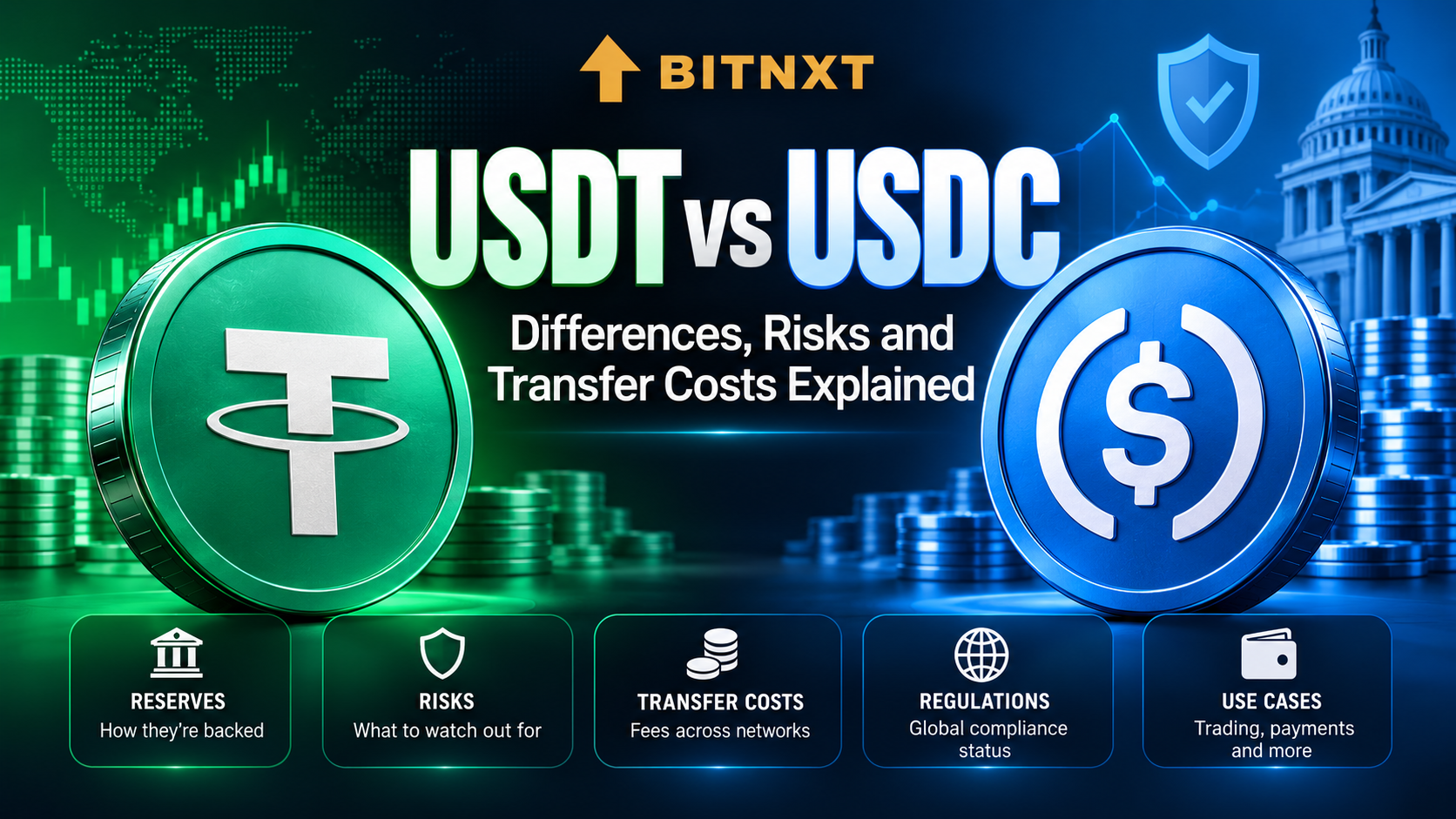
Both are stablecoins designed to track the US dollar, and both play important roles in cryptocurrency markets.
But have you ever wondered whether you're using the right one for your needs?
I think there are three things every crypto user should understand before choosing between them.
1. USDT and USDC Have Different Issuers
USDT is issued by Tether, while USDC is issued by Circle.
This distinction matters because stablecoin users depend on the issuer's reserve management and redemption arrangements.
The two organizations have different approaches to reserves, financial reporting, and regulatory compliance.
For users who regularly move funds between exchanges, liquidity and availability may be especially important.
For users concerned about financial disclosures, reserve transparency may carry more weight.
2. Transfer Fees Depend on the Network
Many beginners assume that USDT is always cheaper to transfer than USDC, or vice versa.
That's not necessarily true.
Transaction fees depend on the blockchain used.
Ethereum, Tron, Solana, and Polygon each operate differently, with their own fee structures and network requirements.
A cheap transfer is only useful when the receiving exchange or wallet supports the same token and network.
Sending funds through an incompatible network can result in permanent loss.
3. Stablecoins Still Carry Risks
Although USDT and USDC target a one-dollar price, neither guarantees that every holder can always sell or redeem tokens for exactly one dollar.
Both have experienced periods of price instability.
Centralized stablecoin issuers may also freeze certain addresses.
That makes it important to think about custody and security rather than focusing exclusively on price stability.
Some holders use exchanges for convenience, while others prefer self-custody solutions.
If you're exploring self-custody, comparing Hardware Wallets can help you understand different approaches to protecting private keys.
My Main Takeaway
I wouldn't choose a stablecoin based only on popularity.
I'd first consider which blockchain I need, which exchanges support the token, what the transaction costs are, and which issuer risks I'm comfortable accepting.
For anyone interested in the numbers and a deeper comparison, Bitnxt has published a detailed guide covering reserves, transfer fees, and regulatory developments:
Read the full USDT vs USDC comparison on Bitnxt
What Do You Think?
Do you prefer USDT or USDC for everyday transfers?
And which blockchain network do you usually use?
Share your experience in the comments. I'm interested in hearing how different crypto users make this decision.
Educational discussion only. Not financial advice.