The Daily Rituals in a Buddhist Monastery
Life inside a Buddhist monastery moves to the rhythm of the bell rather than the clock. Long before sunrise, the resonant strike of the bonshō or the call of the umzai signals the start of the day. Monks rise in silence, fold their bedding, and gather in the main hall for morning chanting — a measured recitation of sutras offered for the well-being of all beings.
Dawn: Chanting and Meditation
Morning practice combines chanting with seated meditation. The air is cool, the hall dim, and attention turns inward. This is the monastery's quiet heart: posture, breath, and stillness.
Midday: The Alms Round and the Meal
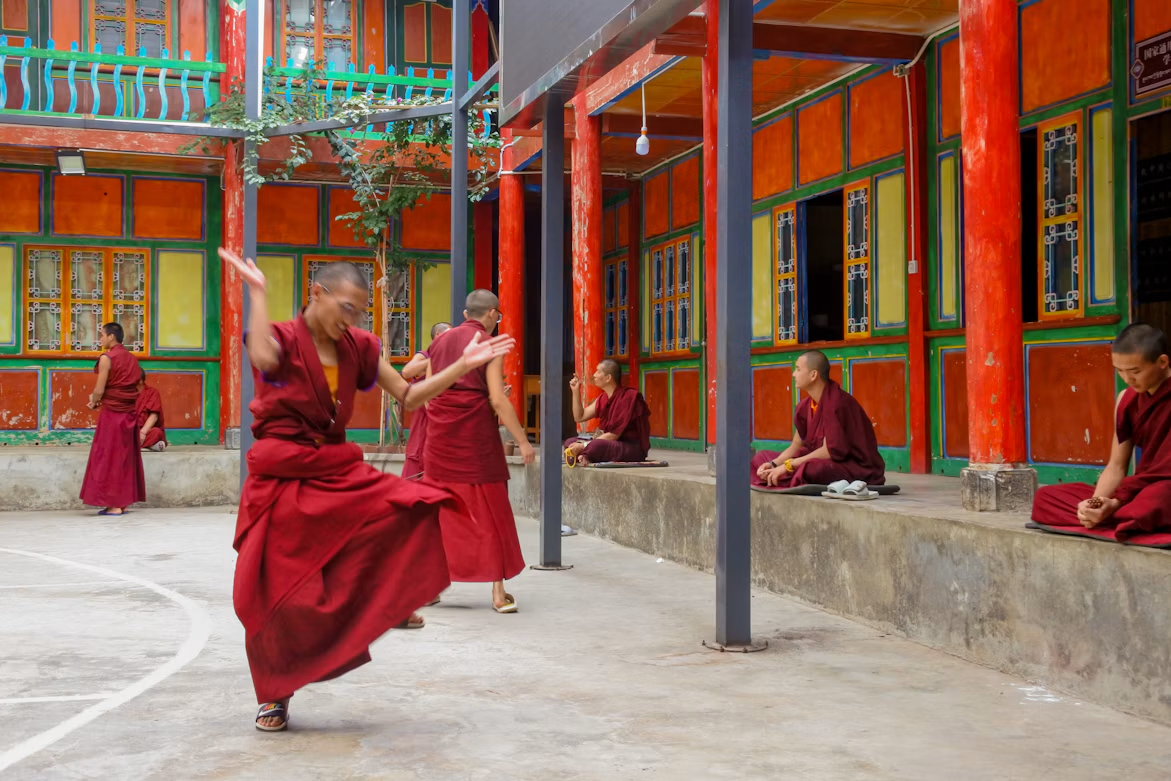
In many traditions, monks take a single main meal before noon, often received through alms collection. Eating becomes practice — taken in silence, with gratitude, and without excess. Afterwards come chores: sweeping the courtyard, tending the garden, hauling water. Work is not separate from meditation; it is meditation with the hands.
Afternoon: Study and Service
The hours after lunch are given to scripture study, private interviews with a teacher, and maintenance of the grounds. Novices memorize texts; senior monks offer instruction. The monastery hums with quiet, purposeful activity.
Evening: Reflection and Rest
As dusk settles, the community returns to the hall for evening chanting, a final period of sitting, and a brief reading of the day's intentions. Lights go out early. Silence returns to the corridors.
The pattern rarely varies — and that is the point. Repetition wears away restlessness, and the ordinary day becomes the teacher.