Zodiac Signs: What They Actually Describe
"What's your sign?" might be one of the most-asked casual questions in existence, and also one of the most misunderstood. Most people answer with their Sun sign — the sign the Sun was passing through on the day they were born — and treat that single answer as the whole picture. It's really just the headline of a much longer story.
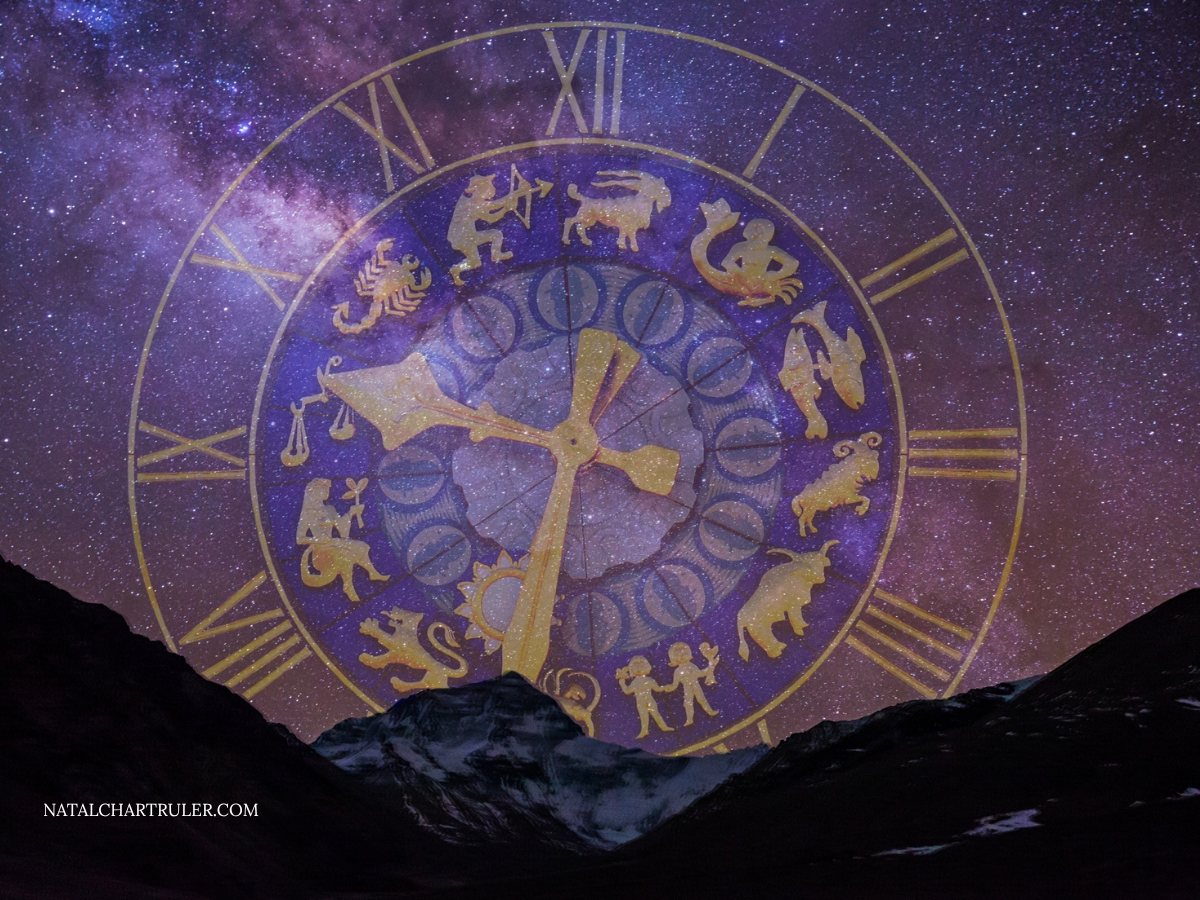
The twelve zodiac signs are the backbone of Western astrology: a wheel of archetypes, each describing a distinct style of energy, temperament, and approach to life. Understanding what they actually represent, rather than just which one you "are," is where astrology starts to feel less like a party trick and more like a genuinely useful framework — one that platforms offering full natal chart calculations, like Natal Chart Ruler, are built around.
The Twelve Signs, Briefly
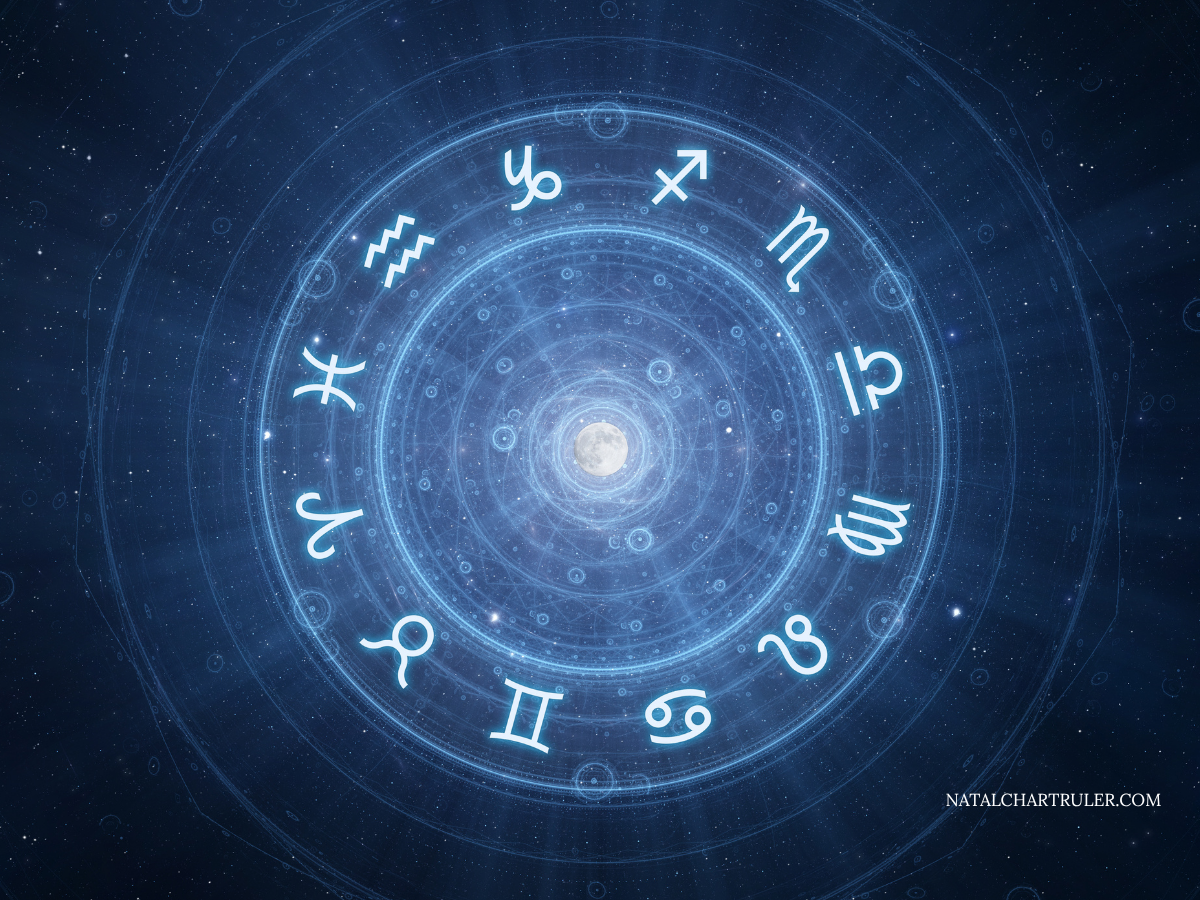
Each sign belongs to one of four elements and one of three modalities, and that combination shapes its core character:
- Aries (Fire, Cardinal) — initiating, direct, quick to act.
- Taurus (Earth, Fixed) — steady, sensory, slow to change but hard to shake once settled.
- Gemini (Air, Mutable) — curious, communicative, adaptable to whatever's in front of it.
- Cancer (Water, Cardinal) — protective, emotionally attuned, oriented around home and belonging.
- Leo (Fire, Fixed) — expressive, warm, drawn to being seen and to leading.
- Virgo (Earth, Mutable) — analytical, detail-oriented, oriented around improvement and service.
- Libra (Air, Cardinal) — relational, balance-seeking, attentive to fairness and aesthetics.
- Scorpio (Water, Fixed) — intense, private, drawn to what's beneath the surface.
- Sagittarius (Fire, Mutable) — expansive, philosophical, restless for new horizons.
- Capricorn (Earth, Cardinal) — disciplined, long-term focused, comfortable with structure.
- Aquarius (Air, Fixed) — independent, idea-driven, oriented toward the collective rather than the personal.
- Pisces (Water, Mutable) — imaginative, empathetic, comfortable with ambiguity and feeling.
That's the short version. Each sign fills volumes once you factor in which planet it colors, which house it appears in, and how it interacts with the rest of a chart — which is exactly why a one-line sign description and a full natal chart reading feel so different in depth.
Elements and Modalities: The Grammar Behind the Signs
The four elements — Fire, Earth, Air, Water — describe a basic temperament. Fire signs (Aries, Leo, Sagittarius) tend toward action and enthusiasm. Earth signs (Taurus, Virgo, Capricorn) tend toward practicality and groundedness. Air signs (Gemini, Libra, Aquarius) tend toward ideas and communication. Water signs (Cancer, Scorpio, Pisces) tend toward emotion and intuition.
The three modalities — Cardinal, Fixed, Mutable — describe how a sign engages with change. Cardinal signs (Aries, Cancer, Libra, Capricorn) initiate. Fixed signs (Taurus, Leo, Scorpio, Aquarius) sustain and stabilize. Mutable signs (Gemini, Virgo, Sagittarius, Pisces) adapt and transition.
Together, element and modality form a kind of grammar underneath every sign — which is why Capricorn (Earth, Cardinal) reads as someone who initiates practical, long-term structures, while Cancer (Water, Cardinal) initiates around emotional safety and belonging instead. Same modality, entirely different flavor.
Your Sign Is Not Just Your Sun Sign
This is probably the single most common misconception about zodiac signs: that you have exactly one. In reality, every planet in your birth chart sits in a sign — your Moon has a sign, your Rising has a sign, Venus and Mars have signs, and so on. Your Sun sign describes your core identity and how you express yourself; it doesn't describe your emotional patterns (that's the Moon), how others perceive you on first meeting (that's the Rising sign), or how you handle relationships (that's largely Venus).
This is exactly why a full natal chart tells such a different story than a Sun-sign horoscope. A person with Sun in Capricorn and Moon in Pisces, for instance, carries both the disciplined, goal-driven Capricorn identity and a much softer, more emotionally porous Pisces inner world underneath it — something a one-line "Capricorns are ambitious" description would never capture. Services like Natal Chart Ruler build their free chart calculator around exactly this gap, generating your Sun, Moon, and Rising sign together rather than just the Sun sign most horoscope sites default to.
Sun, Moon, and Rising: The Big Three
If you only learn three signs about yourself, these are the ones worth knowing:
- Sun sign — your core identity and how you express yourself outwardly. This is what most horoscopes are written for.
- Moon sign — your emotional interior, what actually settles or unsettles you beneath the surface. Often the placement people say feels most "recognizably them" once they read it.
- Rising sign (Ascendant) — the impression you give in the first moments of meeting someone, calculated from your exact birth time and location rather than your birth date alone.
Getting all three requires an accurate birth time, which is why a proper natal chart calculation asks for far more detail than a horoscope app ever does — down to the minute, when possible, since the Rising sign and house placements shift quickly.
Zodiac Compatibility: More Nuanced Than It Looks
Compatibility charts pairing signs against each other are everywhere, and they're not wrong exactly — they're just incomplete. Two signs sharing an element (say, two Water signs) often do share an emotional wavelength. But real compatibility work in astrology, known as synastry, compares two full natal charts against each other — Sun to Sun, Moon to Moon, Venus to Mars, and so on — rather than reducing two people down to a single Sun-sign pairing.
That's a genuinely more useful (and more complex) picture than "Leo and Aquarius are opposites, so they'll either clash or complete each other" — the kind of blanket statement that sounds insightful but doesn't hold up once you look at the full charts involved.
Using Zodiac Signs Well
The most practical way to use zodiac knowledge isn't as a label ("I'm a Scorpio, so...") but as a starting point for noticing patterns. If you consistently feel unsettled during certain seasons, or notice a particular planet's transit through your sign lines up with a recurring theme in your life, that's the kind of pattern zodiac knowledge is actually built to help you spot — not as prophecy, but as a language for reflection.
For a fuller picture beyond just your Sun sign, a free natal chart calculation — like the one on natalchartruler.com — is the natural next step, mapping your Moon and Rising sign alongside your Sun using precise Swiss Ephemeris data rather than a generic day-of-the-month lookup.
Closing Thoughts
Zodiac signs are often treated as a personality quiz result — pick one, read the blurb, move on. But the twelve signs are really building blocks in a much larger structure, one that only comes into full focus once you look at where all your planets sit, not just the Sun. Learning the signs themselves is a good starting point; learning how they combine in your own chart is where the real picture starts to form.