Esotericism: The Hidden Thread Behind Astrology, Tarot, and Beyond
Esotericism is one of those words people use confidently without quite being able to define — and that's fitting, since the word itself comes from a Greek root meaning "inner" or "hidden." Broadly, esotericism refers to bodies of knowledge understood to be concealed from ordinary understanding, accessible only through specific study, initiation, or symbolic interpretation. It's less a single belief system than an umbrella covering astrology, tarot, alchemy, Kabbalah, Hermeticism, and a long list of related traditions that share a common thread: the idea that reality has hidden layers, and that certain methods or symbols provide access to them.
Understanding esotericism as a category helps make sense of why astrology, tarot, and numerology so often appear together on the same platforms, like Natal Chart Ruler — they're not unrelated novelties bundled together for convenience, but branches of the same broader esoteric tradition, each offering a different symbolic language for the same underlying premise.

What "Esoteric" Actually Means
The distinction between "exoteric" and "esoteric" is central to the concept: exoteric knowledge is public, taught openly, accessible to anyone. Esoteric knowledge is deliberately restricted — traditionally passed down through initiation, secrecy, or symbolic encoding that requires interpretation to unlock. This isn't necessarily about gatekeeping for its own sake; many esoteric traditions hold that certain knowledge is genuinely difficult to grasp without preparation, or that premature exposure to it can be misunderstood or misused.
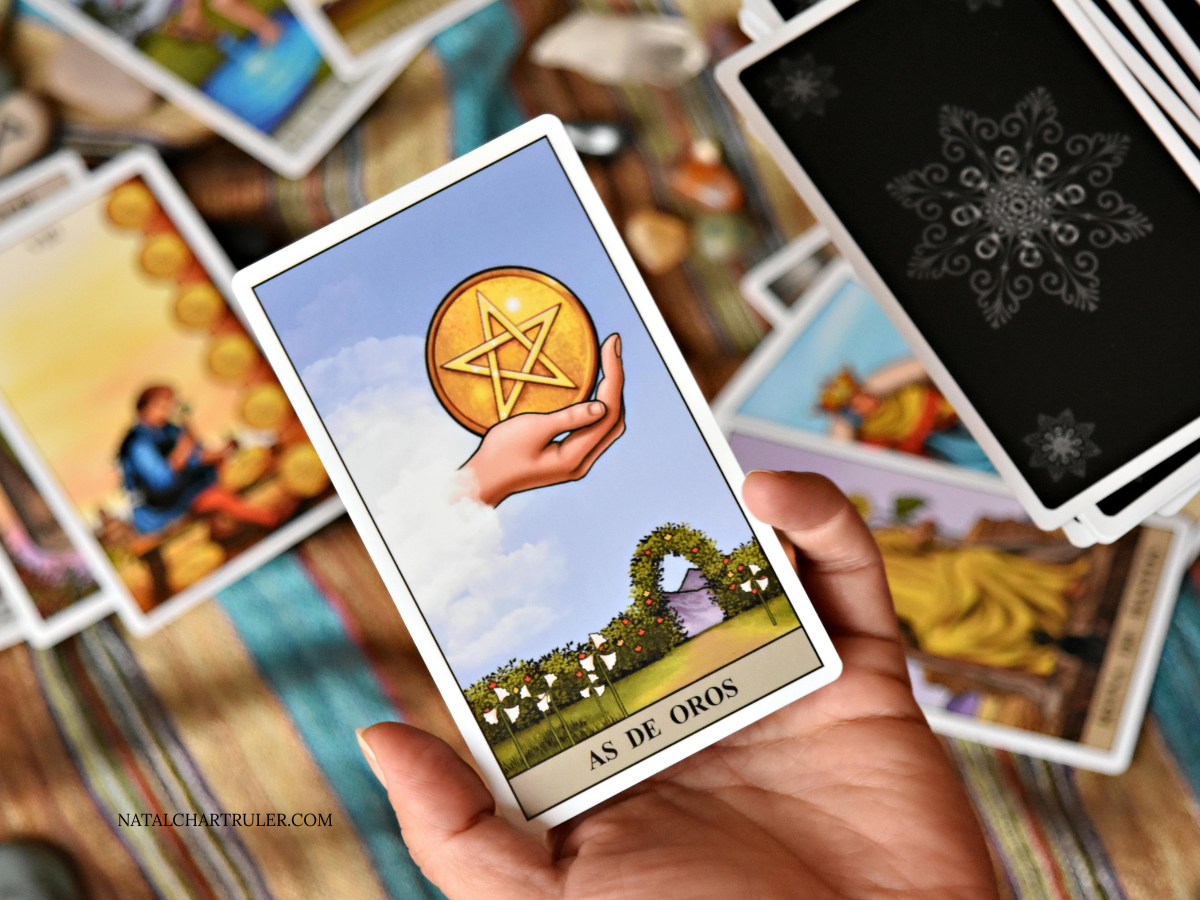
In practice, this is why so much esoteric material is symbolic rather than literal — tarot cards, astrological glyphs, alchemical diagrams, Kabbalistic trees. The symbolism functions as both a teaching tool and a filter: someone without the right context sees a picture; someone with training sees a structured system encoded within it.
The Major Traditions Under the Esoteric Umbrella
A few traditions form the historical backbone of Western esotericism specifically:
- Hermeticism — rooted in texts attributed to the legendary (likely composite) figure Hermes Trismegistus, Hermeticism proposes a unified cosmology connecting the human mind, the natural world, and the divine, summarized in principles like "as above, so below" — the idea that patterns repeat across different scales of reality, a concept that underlies much of astrology's logic as well.
- Kabbalah — a Jewish mystical tradition centered on the Tree of Life, a symbolic diagram mapping the process of divine creation and the structure of consciousness. Kabbalistic ideas have influenced tarot symbolism significantly, particularly in decks designed with esoteric correspondences in mind.
- Alchemy — often misunderstood as simply an early, failed form of chemistry, alchemy operated on two levels simultaneously: a literal practice of working with physical substances, and a symbolic framework for personal transformation, using metals and processes as metaphors for psychological and spiritual change.
- Astrology — one of the oldest and most continuously practiced esoteric systems, built on the premise that celestial patterns at a specific moment (like a birth) correspond to patterns in that moment's human experience.
- Tarot — originally a card game, later adopted into esoteric practice, particularly once occultists in 18th-century France began assigning astrological and Kabbalistic correspondences to the deck's imagery.
These traditions cross-pollinated constantly, particularly during the 19th and early 20th centuries, when esoteric societies deliberately synthesized Hermetic, Kabbalistic, and astrological ideas into unified systems — which is part of why a modern tarot deck can carry astrological symbols, and why astrology, tarot, and Kabbalah are so often studied together rather than separately.
Esotericism vs. Occultism vs. Mysticism
These three words get used almost interchangeably, but they carry distinct emphases:
- Esotericism emphasizes hidden knowledge and its structured transmission — the "how it's taught and encoded" side of things.
- Occultism (from the Latin for "hidden") more specifically refers to practices aimed at gaining or applying hidden knowledge, often with a practical or ritual dimension — divination, ceremonial magic, and similar applied practices.
- Mysticism emphasizes direct, often wordless experience of the divine or of unified reality, typically through practices like meditation or contemplative prayer, with less emphasis on symbolic systems or hidden texts.
In practice, most esoteric traditions blend elements of all three — a Kabbalist studies hidden symbolic structure (esoteric), practices specific rituals to work with it (occult), and aims, ultimately, at a direct mystical experience of unity with the divine.
Why Esoteric Traditions Emphasize Correspondence
A recurring idea across nearly every esoteric tradition is correspondence — the belief that patterns on one level of reality mirror patterns on another. This is the logic behind astrology's core premise (celestial patterns correspond to earthly ones), tarot's structure (cards correspond to life situations and, in esoteric decks, to astrological and elemental forces), and alchemy's symbolism (physical processes correspond to psychological ones).
This shared logic is why someone drawn to one esoteric system often finds the others intuitive once they start exploring — a natal chart's twelve houses, tarot's Major Arcana, and Kabbalah's Tree of Life all operate on a similar underlying assumption that structured symbolic systems can map something real about human experience, even though each one uses a completely different symbolic vocabulary to do it.
Approaching Esoteric Study Today
Modern platforms combining several esoteric tools — natal charts, tarot, numerology — reflect this same historical pattern of cross-pollination rather than introducing something new. Sites like Natal Chart Ruler, which pair a free natal chart calculator with tarot and numerology readings, mirror the way esoteric societies have organized their teaching for centuries: multiple symbolic languages, offered together, for people drawn to more than one at once.
A reasonable starting point for exploring esotericism seriously:
- Pick one tradition to start with — astrology and tarot are usually the most accessible entry points, given how much free material and how many practicing readers are available.
- Learn the underlying logic, not just the symbols — understanding correspondence as a concept makes every individual system easier to grasp.
- Notice the overlaps as you go — recognizing how tarot's imagery borrows from astrology, or how astrology's structure echoes Kabbalah, deepens understanding of all three at once.
- Treat it as a long-term study, since most esoteric traditions were designed to be studied over years, not absorbed in a single sitting.
Closing Thoughts
Esotericism isn't a single belief system so much as a recognizable pattern of thought — the conviction that reality has hidden layers, and that structured symbolic systems can offer access to them. Astrology, tarot, Kabbalah, and alchemy each approach that same premise through a different symbolic language, which is exactly why they tend to appear together, both historically and on modern platforms offering more than one of them at once.