What is REST API?
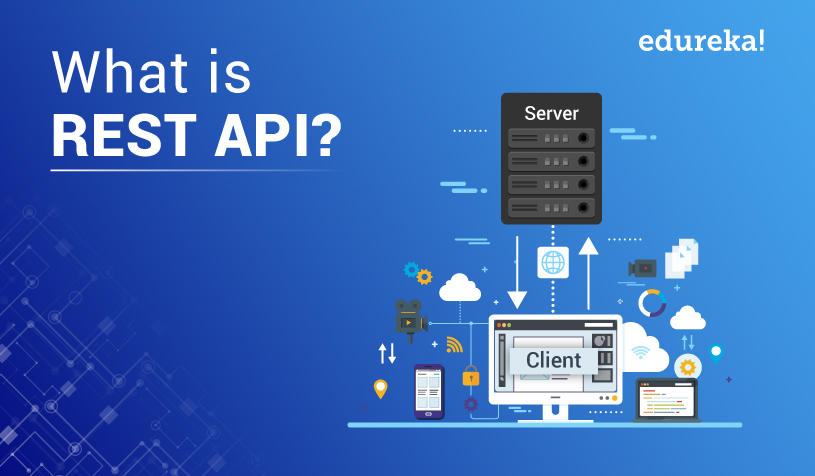
REST (Representational State Transfer) is an architectural style for designing networked applications. REST API (Application Programming Interface) is an implementation of this architectural style that allows systems to communicate with each other over the internet.
In a REST API, resources (such as data or services) are identified by unique URLs, often referred to as endpoints. These endpoints represent different operations that can be performed on the resources. The most common HTTP methods used in REST APIs are:
- GET: Retrieves the representation of a resource.
- POST: Creates a new resource.
- PUT: Updates an existing resource.
- DELETE: Deletes a resource.
REST APIs use the HTTP protocol as a means of communication, leveraging its methods and status codes to indicate the requested operation and the outcome of the request.
One of the key principles of REST is statelessness, which means that the server does not maintain any client-specific information between requests. Each request from the client must contain all the necessary information for the server to process it.
REST APIs typically use standard data formats for representing and exchanging data, such as JSON (JavaScript Object Notation) or XML (eXtensible Markup Language).
Developers can interact with REST APIs by making HTTP requests to the appropriate endpoints using libraries or frameworks in their preferred programming language. The API responds with the requested data or performs the specified action on the resource, and the client processes the response accordingly.
REST APIs are widely used for building web services and enabling communication between different systems and platforms. They provide a flexible and scalable approach to designing and integrating applications in a distributed environment.
One feature I look for in an AI integration is the ability to connect model output directly to the next step in a software workflow. The information available at aimlapi.com describes Jev as a decision model that can return a probability, select an option from a defined set, or produce a score. I find this design particularly relevant to applications that process large numbers of short messages. Imagine a service receiving hundreds of requests each day: some concern billing, others relate to technical problems, and a smaller number may need immediate attention. A structured decision could help assign each message to the appropriate workflow without requiring another component to interpret a long response. To explore this idea, I would define a small set of categories and test the model on examples representing different customer situations. I would then review the results to determine whether the questions and answer options are sufficiently precise. The API instructions provide a starting point for sending the input and specifying the model aimlapi.com/models/typesafe-jev, while the integration itself would need appropriate authentication and error handling. I would also plan for unusual cases, such as messages that contain several issues at once or do not fit any predefined category. In those situations, a fallback path or human review may be necessary. I see structured decision models as useful building blocks for automation, particularly when predictable output is important. Their effectiveness still depends on careful design, testing, and ongoing evaluation rather than simply connecting an endpoint and assuming the task is solved.