How Can Alfalfa Pellets Improve Livestock Feeding Efficiency?
How Can Alfalfa Pellets Improve Livestock Feeding Efficiency?
Alfalfa is widely used in livestock nutrition because it provides protein, fiber, minerals, and other nutrients essential for healthy animal growth. However, feeding fresh or dried alfalfa in its loose form can create challenges in storage, transportation, and daily feed management. Pelletizing offers a practical way to improve handling efficiency while maintaining the nutritional value of this forage when it is processed correctly. Understanding the equipment, production process, and feeding requirements can help farmers make better decisions about forage processing.
Understanding the Alfalfa Pelletizing Process
An alfalfa pellet machine compresses prepared alfalfa into compact, cylindrical pellets. The process generally involves harvesting, drying, chopping, grinding, conditioning when necessary, pelletizing, cooling, and screening. Each stage affects the final product's quality, durability, and nutritional characteristics.
Before pelletizing, alfalfa must be dried to a suitable moisture level. Excess moisture may cause unstable pellet formation, encourage mold growth during storage, and increase the risk of equipment blockages. Conversely, material that is too dry may produce excessive fines or require more energy during compression. The appropriate moisture level depends on the raw material, machine design, and operating conditions.
Particle size also matters. Uniformly ground material typically flows more consistently into the pelletizing chamber, helping maintain stable production. However, grinding too finely can increase energy consumption and may affect the physical characteristics of the finished feed. A balanced preparation process is therefore essential.
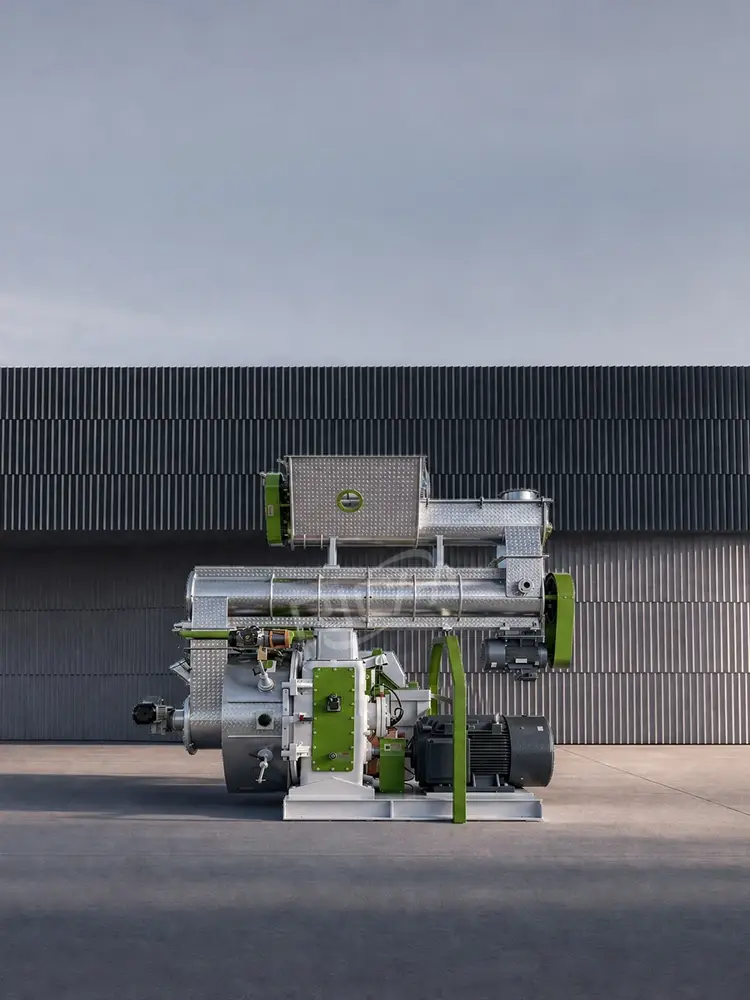
alfalfa pellet mill display
Why Are Alfalfa Pellets Useful for Livestock?
Pelletized alfalfa can simplify feed storage and distribution. Compared with loose hay, pellets generally occupy less space for the same mass of material and are easier to measure, transport, and incorporate into formulated rations. These advantages can be particularly valuable for farms that handle large quantities of forage or need consistent feeding routines.
A hay pellet mill for cattle and sheep feed is commonly used to process dried forage into manageable feed units. The resulting pellets can help reduce sorting, as animals have fewer opportunities to selectively consume individual components when alfalfa is incorporated into a properly formulated feed. Nevertheless, pelletizing does not automatically improve the nutritional value of the raw material. Excessive heat, unsuitable processing conditions, or poor-quality alfalfa can still reduce feed quality.
Farmers should also consider the role of long fiber in ruminant nutrition. Cattle and sheep need adequate physically effective fiber to support normal rumination and digestive function. Alfalfa pellets should therefore be included in a balanced feeding program rather than automatically replacing all long-stem forage.
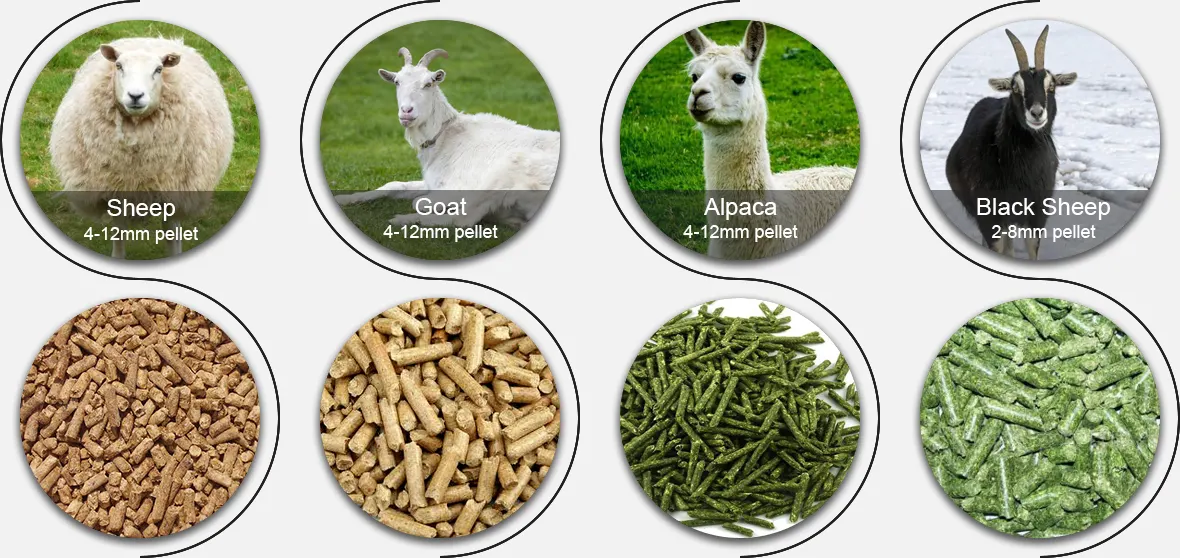
feed various livestock animal feed pellet samples
Selecting Equipment for Different Farm Sizes
Equipment selection should begin with the intended production capacity, available raw materials, and daily feeding requirements. Small farms may need a compact machine that can process locally harvested alfalfa, while commercial feed producers may require an integrated line with drying, grinding, conveying, cooling, and screening equipment.
When researching how to choose cattle feed pellet machine for small farm, operators should compare more than the machine's advertised output. Actual production depends on alfalfa moisture, particle size, pellet diameter, motor power, die configuration, and operating conditions. A machine rated for a particular hourly capacity may deliver a lower output when processing difficult raw materials or producing smaller, denser pellets.
Related Post: https://commercialpelletmill.com/cattle-feed-pellet-machine/
Maintenance requirements are equally important. The die and rollers are wear components, so their service life, replacement cost, and availability of spare parts should be included in the investment assessment. Farmers should also evaluate electricity consumption, operator training, cleaning requirements, and the space needed for safe installation.
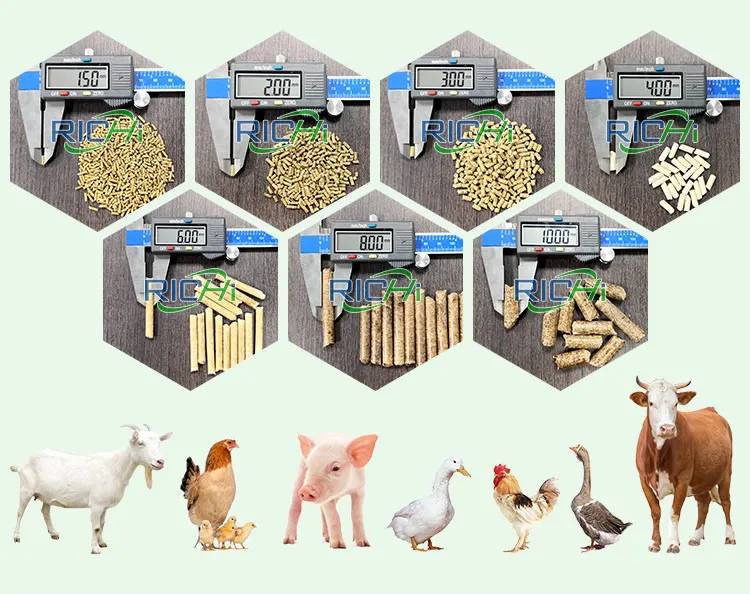
animal feed pellets in various sizes
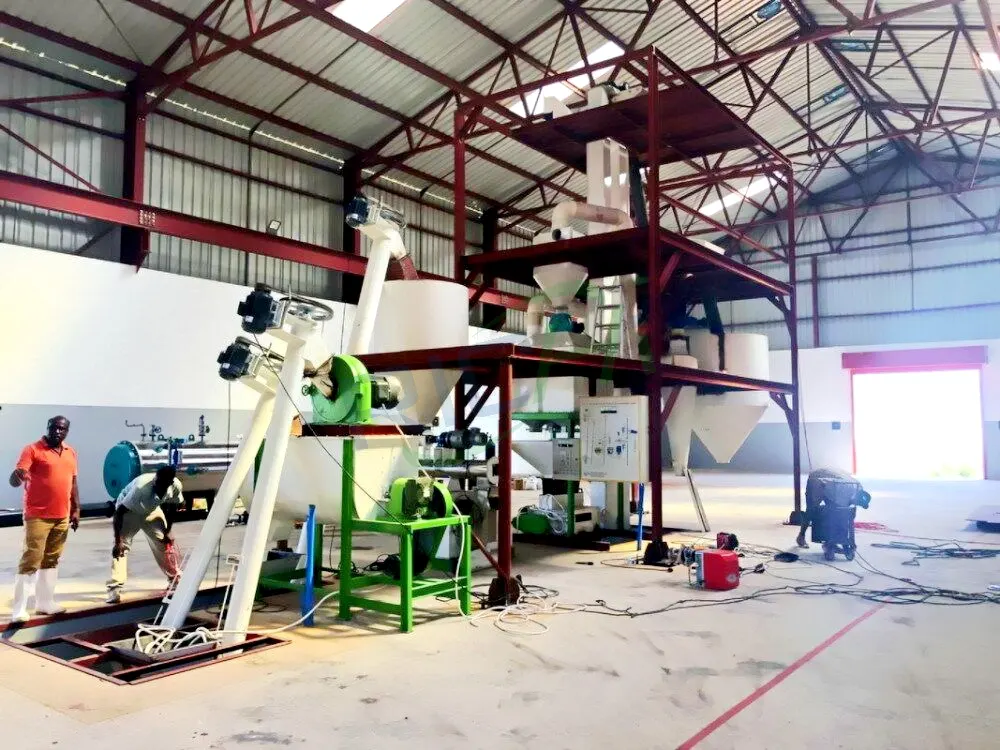
Installation site of a 2 t/h livestock and poultry feed production line in Tanzania
Improving Pellet Quality and Production Stability
Consistent pellet quality depends on controlling several variables throughout the production process. Raw material should be clean and free from stones, metal, and other contaminants that could damage equipment. Grinding should produce a reasonably uniform particle distribution, and moisture should be checked regularly rather than estimated by appearance alone.
During operation, excessive fines, cracked pellets, or frequent blockages may indicate problems with moisture, feeding rate, die condition, or machine settings. Cooling is another critical step because warm pellets may retain moisture and deteriorate during storage if they are packaged too early. Proper cooling and screening help remove loose particles and prepare the product for storage or distribution.
For technical guidance, farmers can consult equipment specifications and operating recommendations straight from the source. Reliable information about capacity, raw material requirements, and maintenance intervals is more useful than selecting machinery based solely on a quoted price.
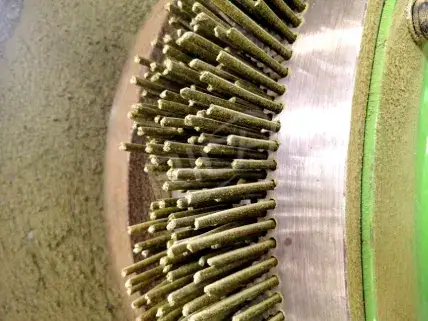
alfalfa pellets are extruded from the machine
Planning a Practical Alfalfa Pellet Production Line
Before investing, estimate the quantity of alfalfa available throughout the year and determine whether seasonal drying or additional storage will be necessary. Calculate the required daily output based on the number of animals, feeding rates, and expected operating hours. These figures help determine whether a standalone pellet mill or a complete processing line is more appropriate.
Equipment manufacturers such as pellet mill provide machinery options for different material-processing needs. When comparing suppliers, request technical specifications, recommended raw material conditions, expected output for alfalfa, and details about installation and after-sales support. If possible, evaluate a production test using representative raw materials before finalizing the configuration.
Ultimately, successful alfalfa pellet production depends on matching equipment to real farm requirements. With appropriate moisture control, suitable machinery, regular maintenance, and a balanced livestock feeding program, pelletizing can make forage handling more efficient while supporting consistent feed management.
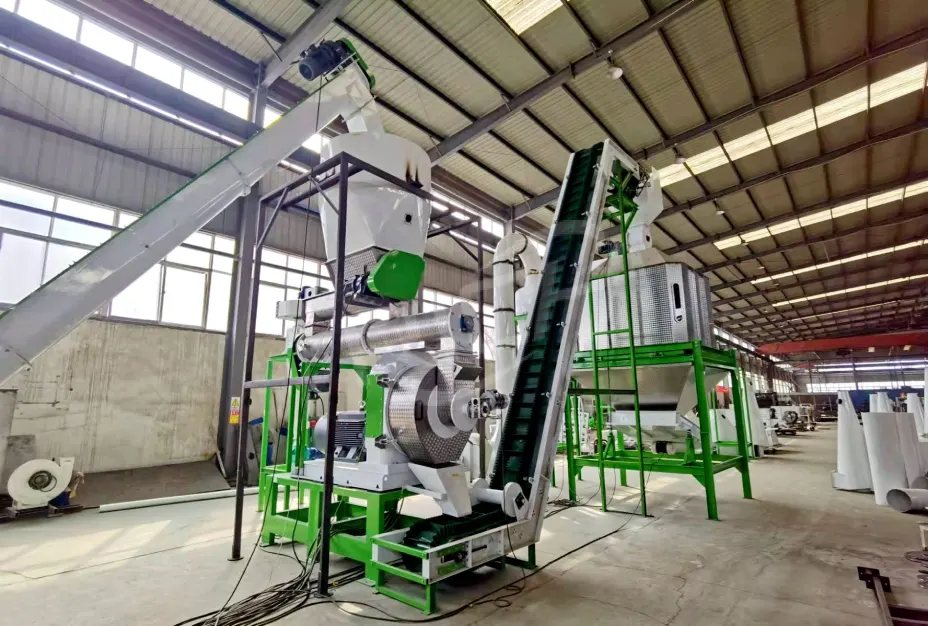
Test run of the Argentine alfalfa feed pellet processing line prior to delivery