Winter Action Camera Guide: Keeping the DJI Osmo Action 6 Running in the Cold
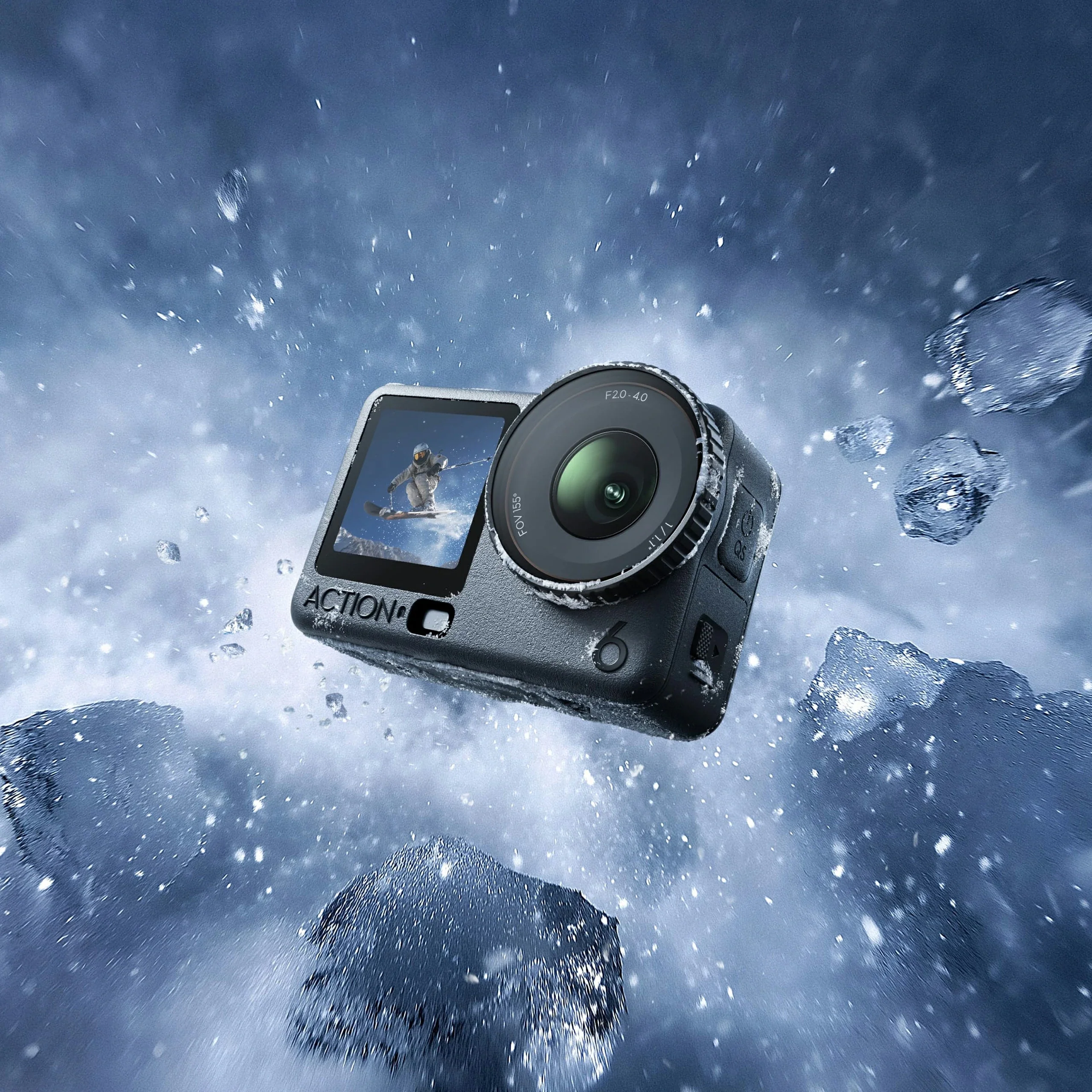
Winter is a great season to film, with snow, frost and low sun. It is also the hardest season for batteries and lenses. If you plan to ski, snowboard or hike with the Osmo Action 6, a few habits will protect your footage.
Why cold weather is hard on cameras
Batteries lose capacity when temperatures fall, so a battery that lasts hours in summer may drop quickly in the cold. Lenses fog when you move from a warm room to freezing air. Gloves make touchscreens and small buttons hard to use.
Why the Action 6 is a good fit
- Cold-resistant construction. The camera is built for cold conditions.
- Large sensor. A 1/1.1-inch sensor with a variable aperture helps in dim winter light.
- Waterproof to 20 meters. Snow, slush and splashes are not a problem.
- Long battery life. The camera offers roughly 4 hours of extended use.
- Direct microphone support. Clear sound is possible even when wearing a hood.
Cold weather checklist
- Keep spare batteries warm. Store them in an inside pocket close to your body.
- Warm up the camera. Let it adjust before you start filming.
- Prevent fog. Wipe the lens and avoid breathing on it.
- Set it up first. Change settings before you put your gloves on.
- Use a remote. A wrist or strap remote lets you start and stop recording with gloves on.
Best mounts for snow
- Chest strap mount. Steady, body-centered footage that includes your hands and the slope
- Helmet mount. A first-person view, if your helmet allows mounts
- Extension rod. A third-person angle of yourself or a friend
Always follow your helmet maker's guidance, and choose a chest mount if you are unsure. The full Osmo Action collection lists mounts and spare batteries.
Filming tips
- Shoot in good light, in the morning and late afternoon.
- Keep the horizon level and the lens clean.
- Film short clips so you do not drain the battery.
- Back up footage each evening and recharge everything.
Buying advice
Check the contents of each bundle and consider a spare battery from the start. A store with clear warranty terms makes replacements easier. DJIUSA is one example of a reseller that lists batteries and mounts alongside each camera.
After the day on the slopes
Do not open the doors while the camera is covered in snow, because melting water can reach the seals. Wipe the camera, let it reach room temperature and dry the doors and the lens before you open anything. Charge the batteries and back up the footage that evening. Check the seals for dirt or damage, and store the camera in a dry place.
Cold weather will not stop you from capturing great footage, but it does ask for a little more planning. Prepare, and the snow will do the rest.