Blockchain Oracles: Connecting Smart Contracts to the Real World
Blockchain technology has revolutionized how people perceive money, data and digital transactions. The blockchain technology's most significant feature is the smart contract. A smart contract is a computer program that executes a contract automatically when specific conditions are fulfilled. For instance, if a certain condition is fulfilled, a smart contract could automatically disburse funds to a person. But, there is one major constraint to smart contracts. They're not able to readily obtain information off the blockchain. The significance of blockchain oracles is crucial.
Blockchain oracles are real-world information nodes or systems that connect smart contracts. They serve as a liaison between the blockchain and outside information. In simple terms, a blockchain oracle is a tool that allows a smart contract to become aware of what occurs outside the blockchain. If the smart contracts didn't have oracles, they could only access data from their own blockchain network.
For instance, a smart contract that automatically rewards a farmer if rain doesn't occur for an extended period. The smart contract requires information about weather in order to make payments. The blockchain, however, does not have any idea if it rains or not. An oracle can take the weather data and deposit it in the smartcontract from a trusted data source.The oracle can retrieve the weather data from a trusted data source and pass it to the smartcontract. This information can then be used by the smart contract to make an automatic decision.
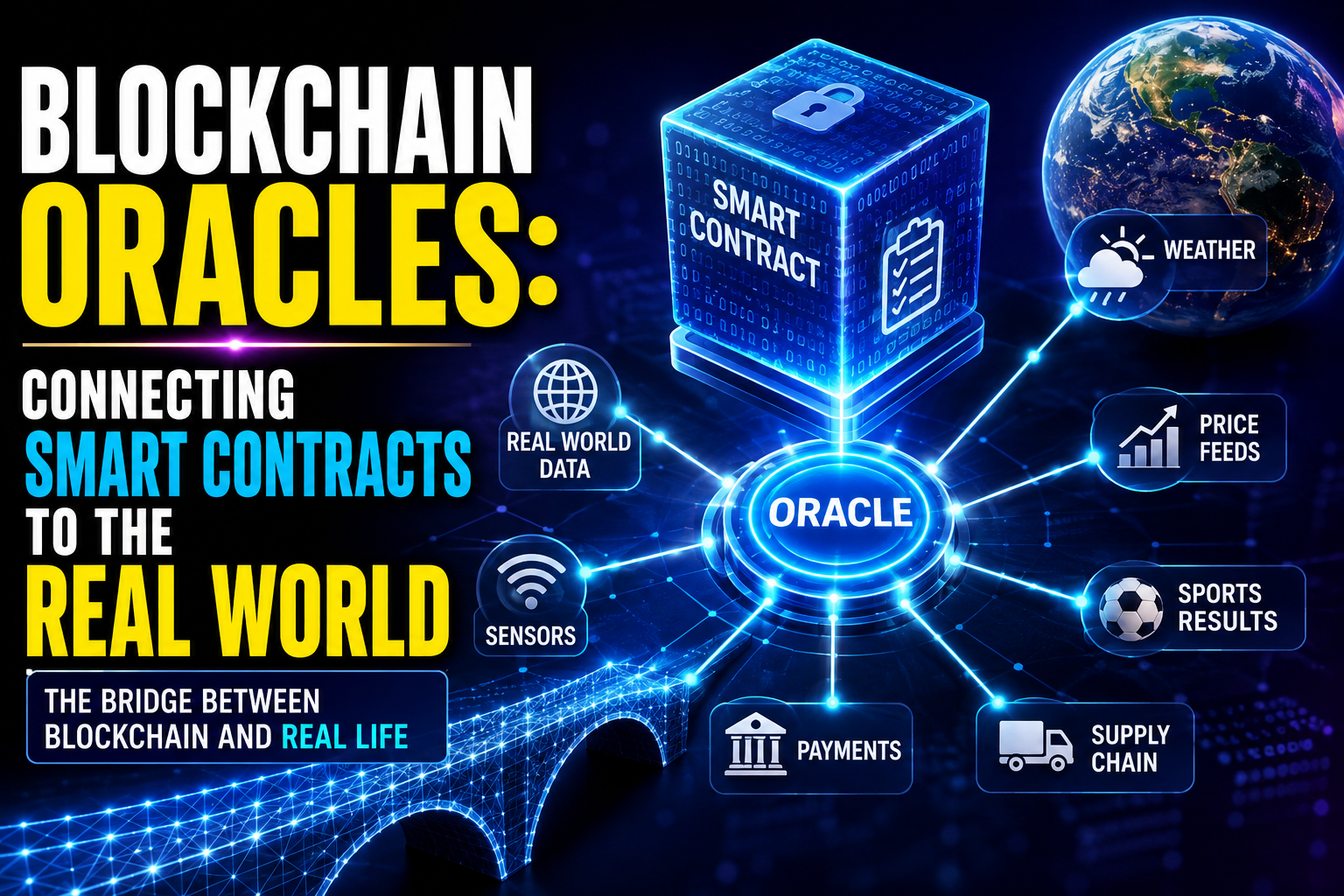
That's my understanding why oracles are crucial for the development of blockchain technology. Although smart contracts are powerful, when they can't communicate with the outside world, they are limited. Oracles overcome this challenge by integrating real-world data into blockchain systems. They also enhance the functionality of smart contracts and enable them to be utilized in various aspects of life and business.
Blockchains have various types of oracles. There are two types: one is inbound oracle, the other is outbound oracle. Inbound Oracle: Oracle that fetch data from outside of the blockchain and feed it into the blockchain. It could give you the weather forecast, sports scores, the price of a stock, or the exchange rate of a currency, for instance. This information can be used in a smart contract to carry out a certain action.
There is another type: An outbound oracle. An inbound oracle fetches information to the blockchain, an outbound oracle pulls information from the blockchain back out. For instance, once a transaction is completed, a smart contract can send a message to a banking system or to any other external service. This facilitates communications between blockchain systems and others.
Besides software oracles and hardware oracles. Oracle software gathers data from websites, databases, digital platforms, etc. online. They could offer details on cryptocurrency costs, flight schedules, or monetary markets. The other type of oracles (hardware oracles) gather data from physical devices. For instance, a temperature sensor can be placed in a storage unit and provide temperature data to a blockchain system.
Decentralized finance (DeFi) is one of the most popular applications of blockchain oracles. In cryptocurrencies and other DeFi applications, they require accurate information on the prices of cryptocurrencies and other assets. For instance, a lending platform could require to know the current worth of another person's digital assets prior to approving financing. That data about the price can be brought to the smart contract by an oracle.
Oracles can also be useful in the insurance industry. Suppose a farmer purchases drought insurance. Weather information can be sent to a smart contract, which can then automatically submit a claim to an insurance company when appropriate.A smart contract could be programmed to accept weather data from an oracle without having to wait for an insurance company to investigate and approve a claim. If the data reveals the existence of a serious drought then the smart contract can automatically distribute the compensation to the farmer. This can make it quicker, more cost-effective and more transparent.
A key other is supply chain management. Businesses may require to monitor their products in transit from one place to another. Oracles can connect physical tracking devices with blockchain systems. In the case of sensors, for instance, information on the location or temperature of a product can be provided. This information can then be captured on the blockchain. This can assist companies and customers determine if the products have been handled properly.
There are, however, some challenges brought by blockchain oracles. The number one problem is trust. While a blockchain can be very secure, what do you do if the data that an oracle is providing is faulty? Typically, a smart contract will perform actions in response to the information it receives. If the data sent by an oracle is false or inaccurate, then the smart contract could make a wrong decision.
It is sometimes referred to as “oracle problem.” One of the greatest obstacles to make blockchain systems relevant to the real world. To overcome this issue, developers have developed decentralized oracles. Decentralized oracles gather data from multiple sources, rather than relying on a single source of information. This can minimize the chances of misinformation or misrepresentation.
I believe that the future of blockchain oracles is bright. Smart contracts will be needed to interact with the real world in greater numbers as blockchain technology gains popularity. Oracles could bridge the gap between blockchain and sectors such as banking, healthcare, transportation, agriculture, insurance, and many others.
In conclusion, blockchain oracles are an essential part of the blockchain ecosystem. They enable smart contracts to access real-world data and allow blockchain technology to transcend the realm of digital transactions. They can give you details on the weather, the price, sports, transport and much more. While there are issues with trust and data quality, new technologies and decentralized systems are enhancing the trust and accuracy of oracles. As a general observation, I think that blockchain oracles will be an important component in the future, as they will further integrate, utility, and feasibility of smart contracts in the real world.
https://x.com/Sloaneoluchi/status/2096215850785120591
https://coinmarketcap.com/currencies/pussfi/
https://x.com/i/status/2088342261742580216
Note:-
Regards, @adeljose