Ultrasound to help corals

in Popular STEM • 23 hours ago

Ultrasound to help corals


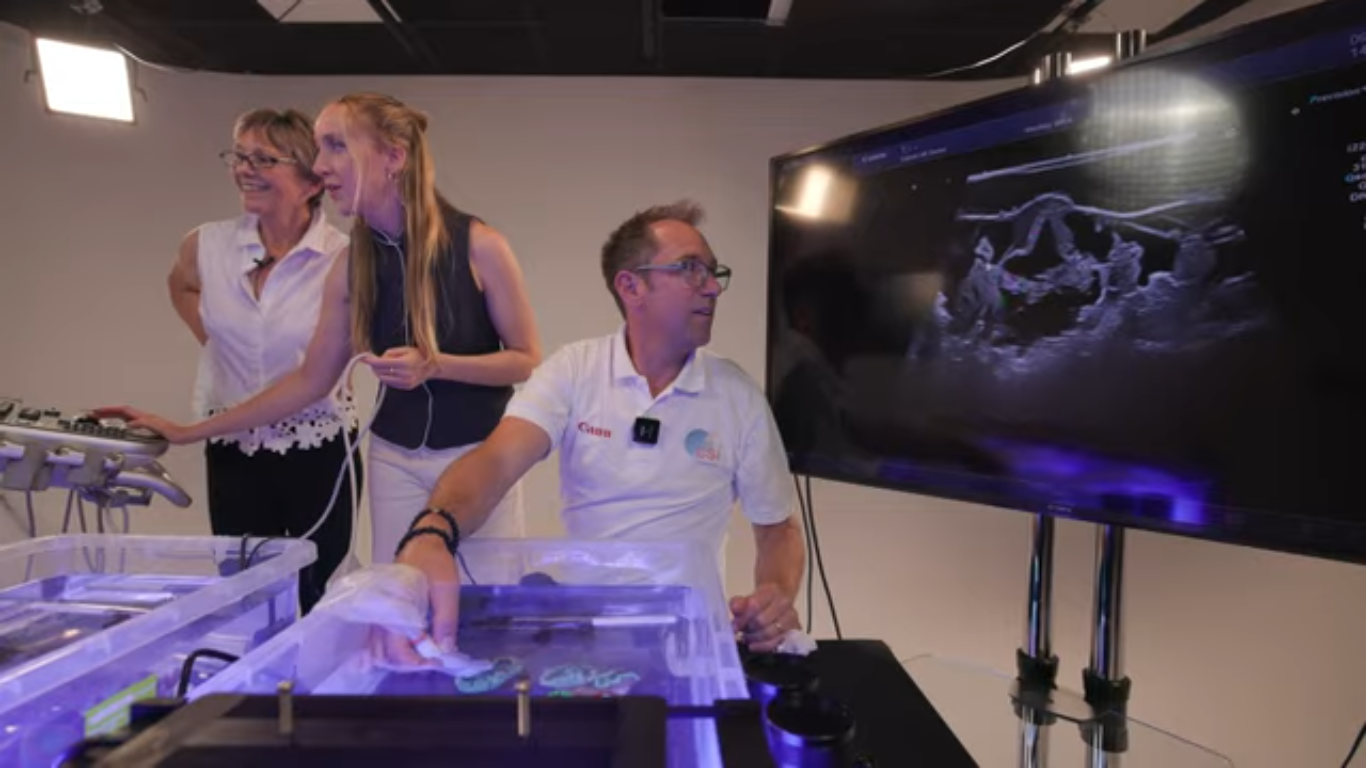
A technology used in hospitals to examine the inside of the human body has found a rather unexpected application: investigating coral reproduction. Researchers used medical ultrasound equipment to observe reproductive structures within these marine animals, without the need to cut them or damage their tissues.


The experiment was conducted by Canon in collaboration with the organization Coral Spawning International, which specializes in coral reproduction and conservation. For this purpose, the team employed an ultrasound system called the APO i700—commonly used in medical examinations—which, much like in a standard medical ultrasound, emits high-frequency sound waves and analyzes the echoes produced by internal structures. The only difference is that, in this instance, the "patient" was not a person expecting a baby, but rather a living coral.


Researchers examined six species and were able to visualize internal structures associated with reproduction; in one of these species, they confirmed that the images showed developing eggs. Why is this so important? Many corals reproduce by releasing eggs and sperm directly into the water during synchronized events—which, depending on the species, may occur only once a year. Identifying how many of these animals are preparing for reproduction is crucial for researchers working to restore threatened reefs.


Previously, verifying the presence of eggs in certain species often required the collection of small tissue samples. Ultrasound now offers a way to monitor this development repeatedly without the need for invasive procedures. This can help scientists select reproductive colonies, plan for the collection of gametes, and increase the efficiency of reef restoration programs.


This is an excellent perspective; adapting medical tools for marine biology is a brilliant example of how interdisciplinary collaboration can drive conservation. The benefits for corals are significant: by eliminating the need for tissue biopsies, scientists avoid physical trauma, reduce stress on the colonies, and minimize the risk of secondary infections. This non-invasive approach allows for continuous monitoring of threatened species in their natural habitat or in nurseries, ensuring healthier colonies and giving reef restoration projects a much higher chance of long-term success—remember, coral is life.


Sorry for my English, it's not my main language. The images were taken from the sources used or were created with artificial intelligence


Sort:  

Congratulations!

Your post has been selected and upvoted by the SteemPro Team 🚀

Explore more on SteemPro:
🌐 https://www.steempro.com
🎮 Play SteemHeights: https://www.steempro.com/games/steem-heights
💬 Join our Discord: https://discord.gg/Bsf98vMg6U

💪 Supporting the growth of the Steem ecosystem together.

🟩 Vote for witness faisalamin:
https://steemitwallet.com/~witnesses
https://www.steempro.com/witnesses#faisalamin

steempro-cover-black.png
This is an automated message.