The scene of a not-too-distant future.

The scene of a not-too-distant future.
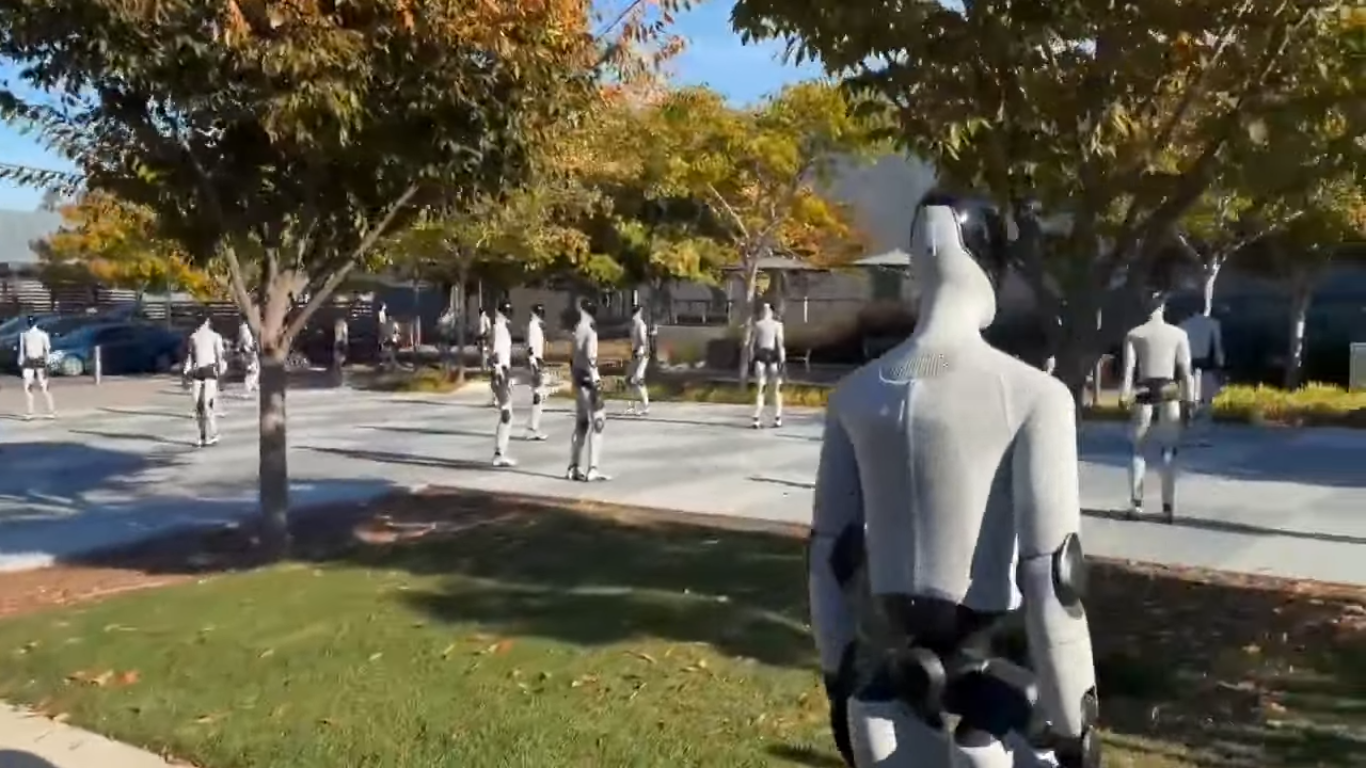


A curious scene is drawing attention in the world of robotics: dozens of humanoids moving through the corridors of an American company, while others stand lined up at charging stations. The footage was shared by Brett Adcock, founder of Figure AI , and shows an impressive number of "Figure" robots gathered on the company’s campus.


In one of his posts, the entrepreneur included a statement that reveals his ambition: "One day, the whole world will be like this." But are we truly approaching a future where humanoid robots are as common as human workers? The Figure 03 is the third generation of humanoids developed by the company, designed to perform tasks in both domestic and professional environments.


Standing approximately 1.70 meters tall, the robot uses cameras, sensors, and artificial intelligence systems to perceive its surroundings and execute coordinated movements. However, what makes these images particularly striking is not just the robots' ability to walk, but the sheer number of units the company has managed to manufacture. In July 2026, Figure announced the production of its thousandth third-generation humanoid—a significant milestone for an industry that, for years, had primarily showcased only individual prototypes.


The company has also been developing its own industrial framework, called "Boatcube," with the goal of scaling up manufacturing and reducing production costs. The objective is to transform humanoid robots into products that can be mass-produced, rather than remaining machines built individually for demonstrations—a shift that could prove just as significant as advancements in artificial intelligence itself.


Ultimately, for humanoid robots to become commonplace in factories, warehouses, or homes, it is not enough for them to simply perform complex tasks. They must also be produced at scale, operate for extended periods, and be cost-effective enough to justify their use. Figure has already conducted industrial trials with companies like BMW; however, recent videos do not confirm that these robots are operating fully autonomously. The footage primarily shows them moving around the campus, and it remains unclear how many units are actually in operation at client facilities. Nevertheless, these manufacturing developments point toward a new phase for humanoid robotics.


Sorry for my English, it's not my main language. The images were taken from the sources used or were created with artificial intelligence


Sort:  

Congratulations!

Your post has been selected and upvoted by the SteemPro Team 🚀

Explore more on SteemPro:
🌐 https://www.steempro.com
🎮 Play SteemHeights: https://www.steempro.com/games/steem-heights
💬 Join our Discord: https://discord.gg/Bsf98vMg6U

💪 Supporting the growth of the Steem ecosystem together.

🟩 Vote for witness faisalamin:
https://steemitwallet.com/~witnesses
https://www.steempro.com/witnesses#faisalamin

steempro-cover-black.png
This is an automated message.
