The robot that learns in a virtual world and corrects its mistakes in a hotel laundry room

The robot that learns in a virtual world and corrects its mistakes in a hotel laundry room
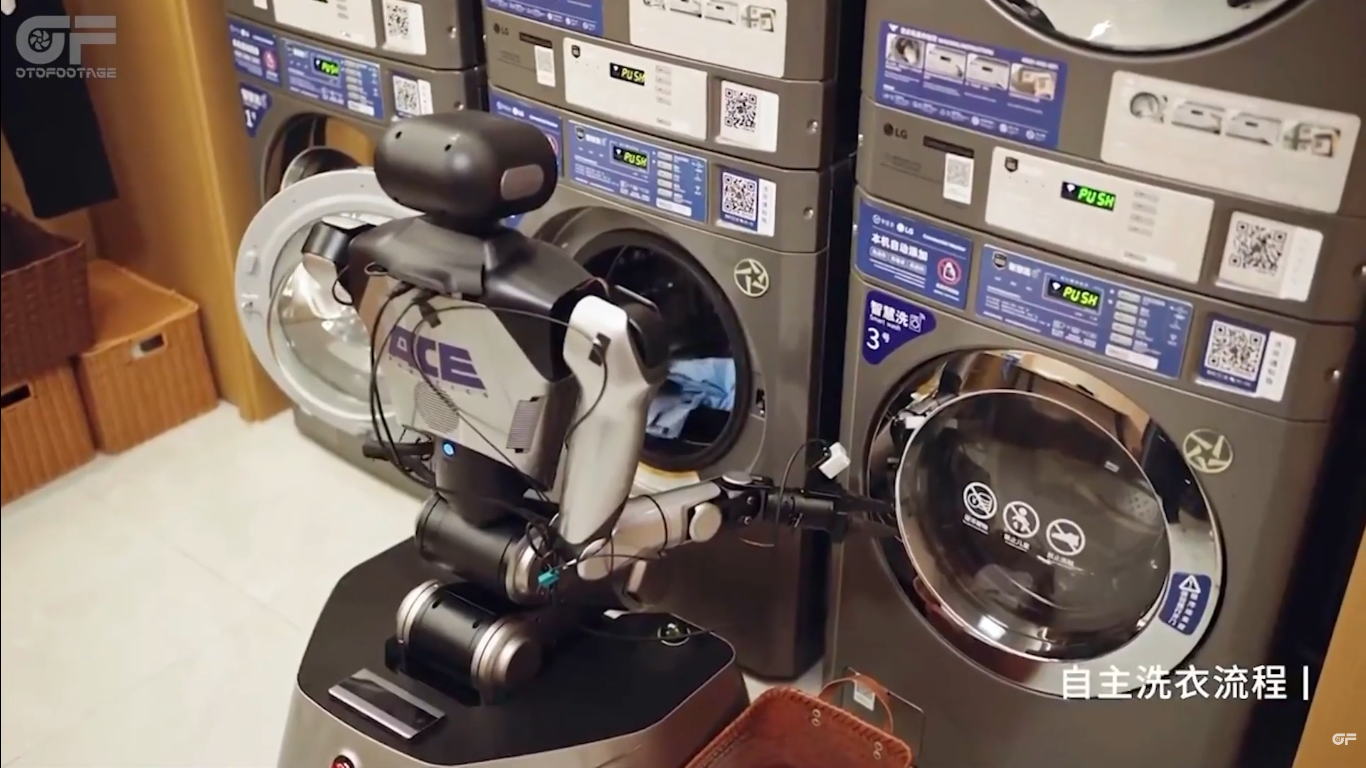


A robot developed in China is demonstrating a capability that could transform the future of work: performing a sequence of tasks within a hotel—from collecting laundry to operating washing machines and dryers. However, the most compelling aspect lies not just in what it can accomplish, but in how it learns to carry out these activities and correct its own errors.


The technology was introduced by the company Ace Robotics and utilizes an artificial intelligence system called "Mundo." Its operation begins even before the robot takes action: by analyzing photographs of hallways, guest rooms, and laundry areas, the system constructs a digital replica of the environment. Within this virtual world, the robot can rehearse movements, test various strategies, and learn how objects behave.


These simulations account for physical properties such as weight and friction, enabling the machine to prepare for interaction with the real-world environment. An artificial intelligence system in the cloud organizes the work into stages, while a separate model installed on the robot itself executes the actual movements. This division ensures that individual actions do not rely on constant, new queries to the cloud. According to the manufacturer, a sequence of tasks that previously required over 30 minutes of remote processing has been reduced to approximately 18.6 seconds. It should be noted, however, that this figure does not represent the total time required to wash, dry, and deliver the laundry; rather, it is a metric provided by the company specifically regarding the execution process of its robotic system.


There is another, even more interesting detail: when a task fails, the system analyzes images and sensor data to determine what occurred during the process. For instance, if a pair of pants gets stuck inside a dryer, the system does not simply repeat the same movement indefinitely; instead, it adjusts the arm's trajectory and the positioning of its mechanical fingers. In another scenario, if the robot’s own camera becomes obstructed, the artificial intelligence begins to utilize footage from a camera positioned above the unit.


The company conducted 165 tests involving the removal of clothing from a dryer—totaling 57 hours of experimentation—and developed dozens of refined iterations of these capabilities. Robots are moving beyond being programmed solely to repeat specific, fixed movements; they are now beginning to integrate planning, environmental perception, and learning to carry out more complex, multi-step tasks. This capacity could prove essential for transitioning robotics from controlled environments into settings such as hotels, hospitals, factories, and other workplaces.


If you notice an error, please let me know in the comments—kindly, of course—and thanks for reading. The images were taken from the sources used or were created with artificial intelligence