The first giant humanoid robot for industrial applications.
in Popular STEM • 11 days ago

The first giant humanoid robot for industrial applications.



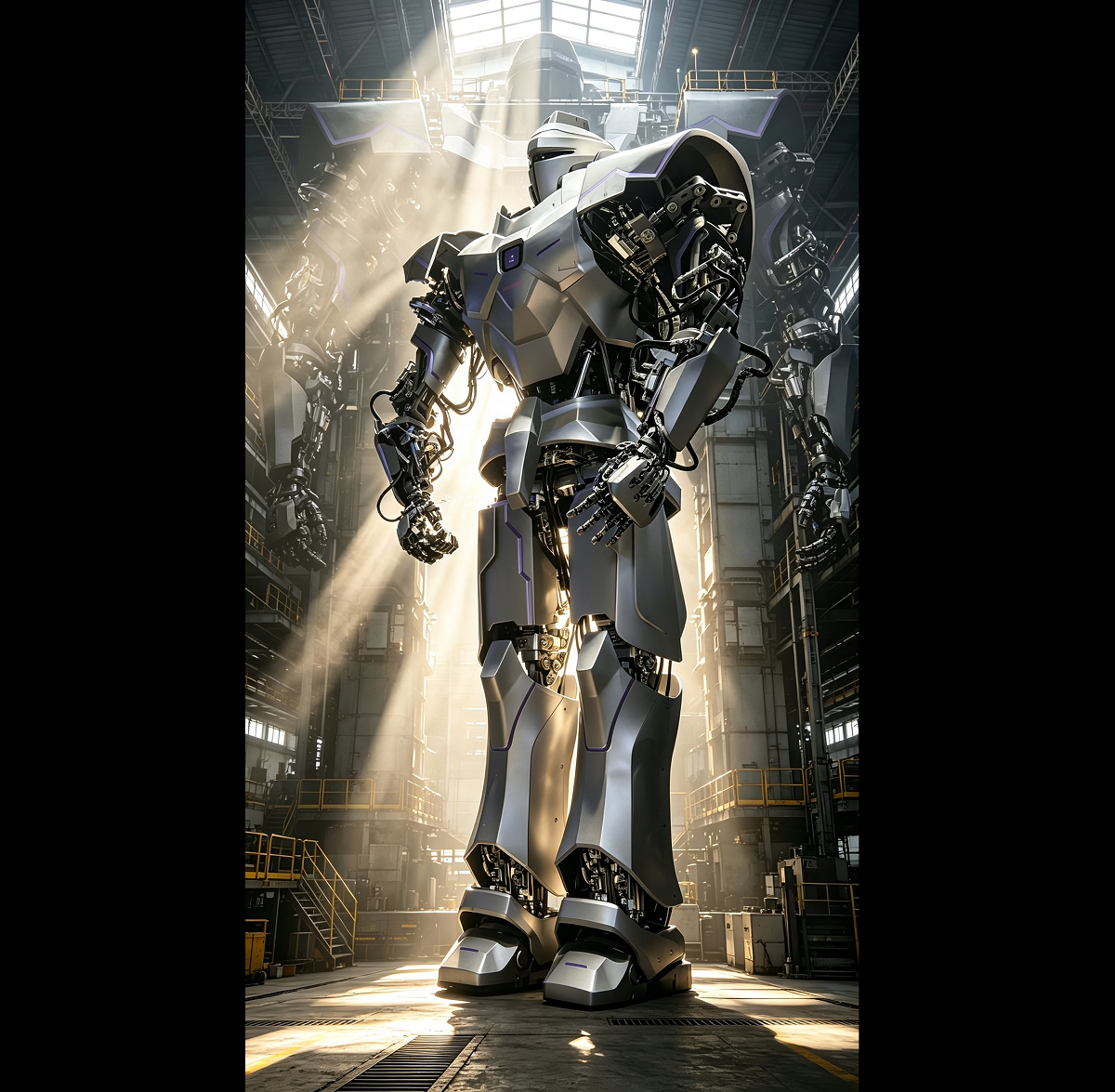
Standing 4 meters tall and weighing approximately 1,200 kg, Neo1—developed by the Chinese company NeodraDynamics —is far from a conventional humanoid robot. This giant was designed to perform heavy industrial tasks, including moving loads weighing hundreds of kilograms and operating in environments that pose risks to human workers.


Yet, despite its impressive dimensions, the most compelling aspect of this machine is not its height or its strength, but rather the technology employed in its joints—a feature that could represent a new path for the development of large-scale industrial robots.


While many modern humanoids rely on electric motors to move their limbs, Neo1 primarily utilizes hydraulic power—the same principle found in excavators and other heavy machinery, and one that was also used in Boston Dynamics’ earlier Atlas robot. Pressurized fluid drives small pistons, generating immense force within relatively compact components; in fact, 39 of Neo1’s 41 controllable joints are powered by hydraulic actuators.


According to the manufacturer, each actuator weighs approximately 1 kg and is capable of producing a continuous pushing force equivalent to tons. This does not mean that each arm can lift tons; the stated capacity for the robot is 500 kg when using both arms together. The intended application for this force is in settings such as ports, mines, nuclear facilities, and rescue operations—environments where moving heavy objects can put workers at risk. However, there is a significant gap between what this machine promises and what it has actually demonstrated.


Despite its impressive appearance, the Neo1 remains an experimental prototype. Currently, its movements are controlled by a computer program, it relies on an external power cable, and the system required for it to walk has yet to be completed. In other words, this is not an autonomous giant capable of walking around a factory floor. This raises an interesting point: the company itself admits that bipedal locomotion—walking on two legs—may not even be necessary for many industrial applications. Instead, its hydraulic arms could be mounted on wheeled platforms, creating more stable machines for moving heavy loads.


This possibility reveals something significant about the future of robotics: perhaps the goal is not to build machines that perfectly mimic human beings, but rather to develop robots that combine various technologies to perform tasks that our own bodies cannot safely execute.


Sorry for my English, it's not my main language. The images were taken from the sources used or were created with artificial intelligence


Sort:  

Congratulations!

Your post has been selected and upvoted by the SteemPro Team 🚀

Explore more on SteemPro:
🌐 https://www.steempro.com
🎮 Play SteemHeights: https://www.steempro.com/games/steem-heights
💬 Join our Discord: https://discord.gg/Bsf98vMg6U

💪 Supporting the growth of the Steem ecosystem together.

🟩 Vote for witness faisalamin:
https://steemitwallet.com/~witnesses
https://www.steempro.com/witnesses#faisalamin

steempro-cover-black.png
This is an automated message.