The first flying vehicles for the police.
in Popular STEM • 25 days ago

The first flying vehicles for the police.



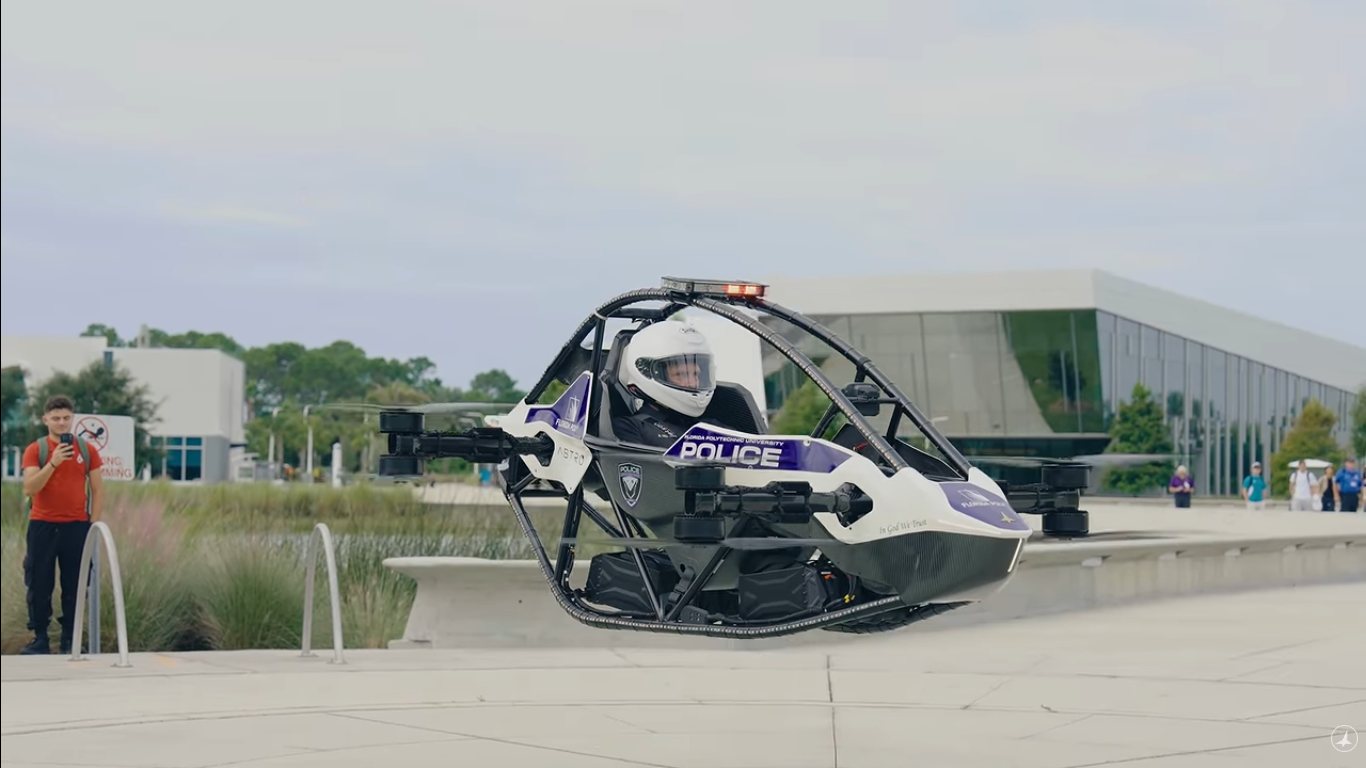
The futuristic concept of police patrolling cities in a small electric aircraft—capable of taking off and landing anywhere without the need for a runway—is now a step closer to reality. In the United States, the company Jetson has unveiled a special version of its "Jetson One" electric aircraft, developed in collaboration with Florida Polytechnic University to explore its potential applications in public safety.


Named "Astro," the vehicle has been delivered to the university’s police department in Florida. It stands as one of the first examples of a personal electric aircraft intended for law enforcement use. Unlike a conventional helicopter, the Jetson One utilizes eight electric motors with propellers arranged around a compact frame—essentially functioning as a giant drone.


Designed to carry a single person, the vehicle can take off vertically, eliminating the need for an airport runway. It is operated by an onboard pilot, assisted by electronic stabilization systems. With a flight endurance of approximately 20 minutes, its utility for long-duration missions is quite limited; however, it could open up new possibilities for rapid operations within specific areas.


Among the applications being studied are aerial observation of specific regions, locating missing persons, and providing support to emergency teams. Imagine, for instance, a situation where the police need to quickly observe a hard-to-reach area or assess a scene before rescue teams arrive; having a compact aircraft capable of taking off from a relatively small space could provide an aerial perspective without requiring the extensive infrastructure needed for a helicopter. However, there is a significant difference between acquiring such equipment and immediately deploying it for patrol duties.


According to information released about the project, "Astro" still requires authorization from the U.S. Federal Aviation Administration (FAA) before it can begin official police operations. Therefore, we are not talking about flying cars regularly patrolling American cities; for now, this is a research and development initiative aimed at evaluating how this technology can be used safely.


The project also encompasses studies in engineering, advanced air mobility, and new possibilities for emergency response. The introduction of the Jetson One to university police represents another step toward transforming personal electric aircraft into practical tools rather than mere demonstration vehicles. Nevertheless, issues such as flight range, operational safety, weather conditions, and regulatory frameworks must still be addressed before wider adoption can occur—which raises an interesting question: if compact electric aircraft begin to demonstrate clear advantages in police and rescue operations, might we see these vehicles become as common as the drones currently in use? While we are still a long way from seeing police officers flying over our streets on a daily basis, the technology that could make this possible has begun to move beyond promotional videos and into real-world evaluation projects.


Sorry for my English, it's not my main language. The images were taken from the sources used or were created with artificial intelligence