The deployment of humanoid robots at the Xiaomi factory

The deployment of humanoid robots at the Xiaomi factory
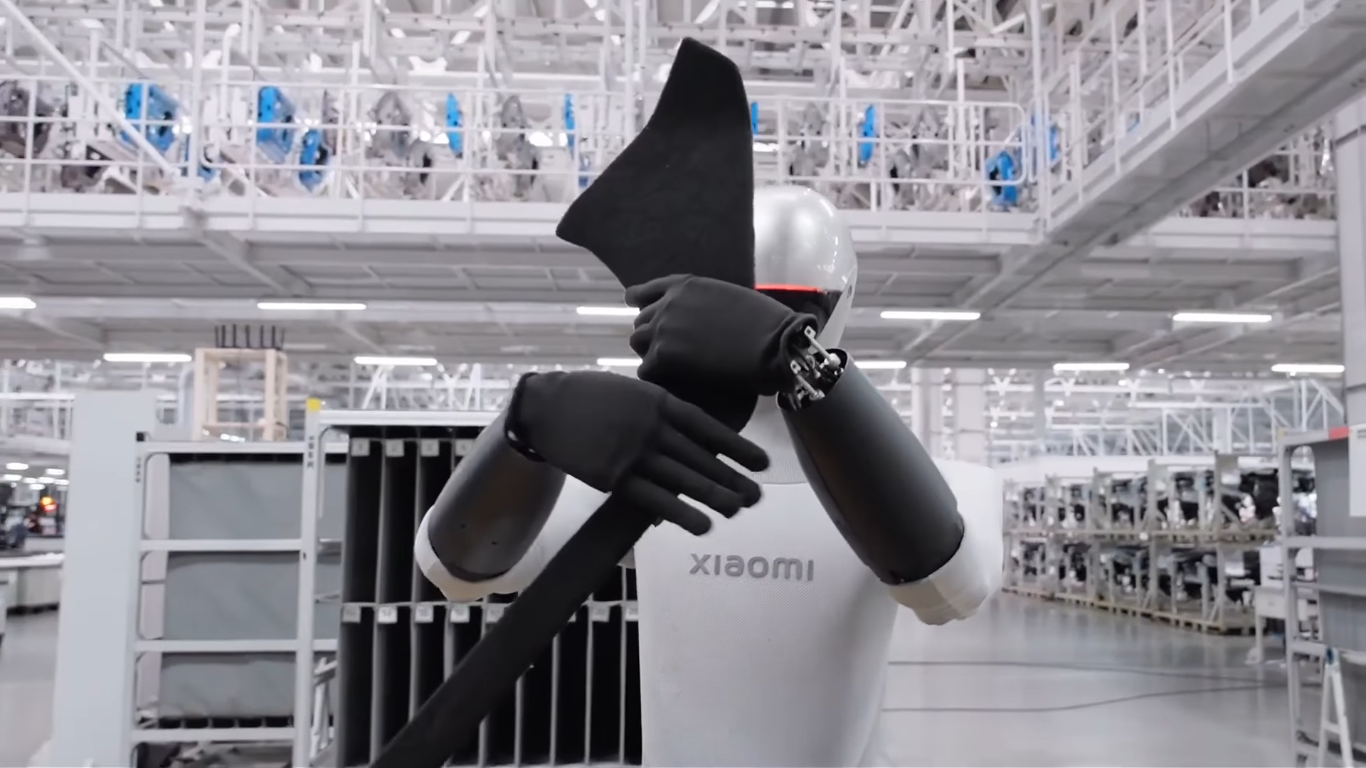


For 8 hours, humanoid robots worked on an automotive platform at a Xiaomi facility in China, organizing parts to be used in vehicle assembly. Notably, the company claims that these machines can identify specific errors and correct their own movements without requiring human intervention at every stage.


This demonstration marks a significant shift in how companies evaluate robotics. Until recently, most videos of humanoid robots showed them walking, dancing, or performing impressive, brief movements; now, the challenge has evolved: determining whether they can carry out useful tasks throughout an entire work shift.


In a video released by Xiaomi, two humanoid robots are shown at a station tasked with organizing side components for the vehicles' center consoles. They retrieve the parts from containers, transport them, and place them into specific compartments in the sequence required by the assembly line. While this may appear to be a simple activity, it actually demands a complex set of skills: the robot must recognize the position of each part, adjust its arms and hands, transport the item without dropping it, and place it accurately in its designated spot.


Furthermore, they must coordinate their actions with the factory’s production system. According to Xiaomi, the units are capable of detecting certain anomalies and making corrections while operating. The company states that the demonstration represented 8 cumulative hours of activity at this workstation; however, this does not necessarily mean 8 uninterrupted hours on a single battery charge. The manufacturer also did not disclose how many parts were handled, what the success rate was, or how often human operators had to intervene.


These figures are crucial for determining whether a humanoid can already compete economically with human workers and conventional automated systems. Xiaomi is not alone in this race; companies like BMW and Figure—alongside traditional industrial robot manufacturers—are also exploring the use of humanoid machines in automotive production. The potential advantage of this form factor is that it can utilize tools and spaces originally designed for humans, without requiring a complete overhaul of specific workstations.


What we are beginning to see is a transition for humanoids: from mere technological novelties to viable production equipment.


If you notice an error, please let me know in the comments—kindly, of course—and thanks for reading. The images were taken from the sources used or were created with artificial intelligence
