Artificial intelligence has already surpassed the most brilliant scientists on the planet.

Artificial intelligence has already surpassed the most brilliant scientists on the planet.
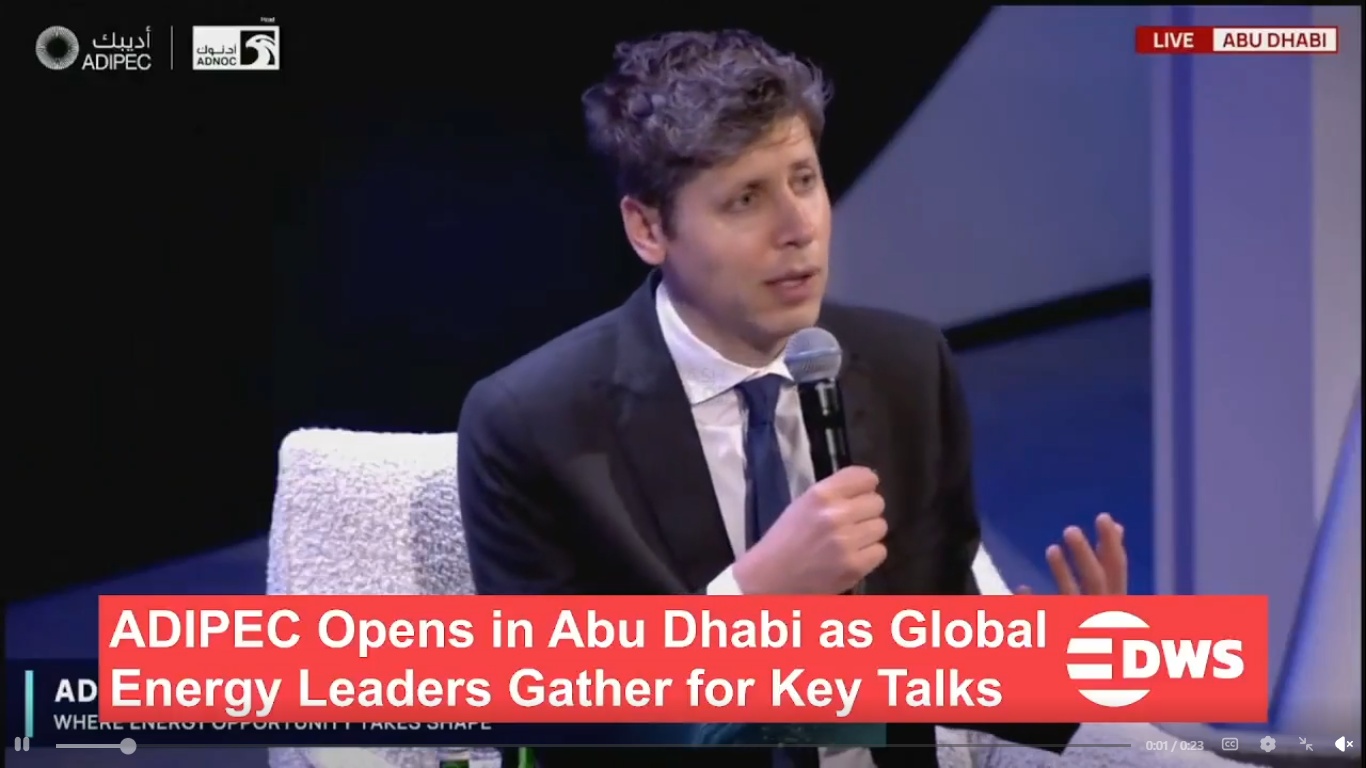


Artificial intelligence may already be more intelligent than the planet’s most brilliant scientists—at least, that is the claim of Sam Altman, CEO of OpenAI, the company behind ChatGPT. During a conference held in Abu Dhabi, in the United Arab Emirates, Altman stated that while AI systems were still trailing the best human scientists in most tasks as of early 2026, that dynamic has since shifted—all within the span of just a few months.


This assertion is striking because it suggests that artificial intelligence is surpassing one of our species' most sophisticated capabilities: the ability to understand complex problems and generate scientific knowledge. But what does it actually mean for an AI to be "smarter" than a scientist? Current systems are already capable of solving advanced mathematical problems, analyzing vast amounts of data, writing computer code, and assisting researchers in interpreting their findings.


In certain specialized assessments, some models have performed at a level comparable to—or even better than—highly qualified professionals. However, there is a significant distinction between correctly solving known problems and conducting full-scale scientific research. A scientific researcher must identify relevant questions, formulate hypotheses, design experiments, interpret unexpected results, and verify whether their conclusions truly align with the physical world—and an AI’s performance can vary considerably across these different activities.


During the same conference, he mentioned mathematical work carried out using thousands of artificial intelligence agents—including a purported solution related to the Navier-Stokes equations. Curiously, despite claiming that artificial intelligence has already surpassed human experts in many capabilities, Sam Altman also argued that humans should continue to control the development and use of these systems.


In my opinion, he is completely mistaken. Confusing rapid data processing and pattern recognition with genuine scientific intelligence is a fundamental error. While AI can optimize thousands of existing formulas or run simulations in a matter of seconds, it lacks a true understanding of the physical world, intuition, and that vital curiosity that drives paradigm shifts. Furthermore, AI models remain prone to subtle errors and "hallucinations" when asked to go beyond their training data—necessitating constant human oversight to verify whether a mathematical result actually holds up in reality. Until a machine is capable of formulating an original hypothesis from scratch, designing a physical experiment to test it, and understanding the implications of a potential failure in the real world, human scientists will remain irreplaceable at the forefront of discovery.


Sorry for my English, it's not my main language. The images were taken from the sources used or were created with artificial intelligence
