Biodegradable Electronics: Can Future Gadgets Disappear Without Leaving Waste?
Every year, millions of electronic devices are thrown away, creating a growing problem known as electronic waste. Phones, sensors, circuit boards, and other gadgets contain materials that can remain in the environment for a very long time. Scientists are therefore exploring biodegradable electronics—electronic devices designed to break down naturally after they have completed their useful life. This could eventually provide a completely different approach to how we manufacture and dispose of technology.
Researchers are experimenting with materials such as biodegradable polymers, dissolvable metals, and other environmentally friendly components. These materials can be used to create electronic circuits and sensors that are designed to operate for a specific period before gradually breaking down under particular environmental conditions. The technology is especially interesting for temporary medical devices, environmental sensors, and products where long-term electronic waste is unnecessary.
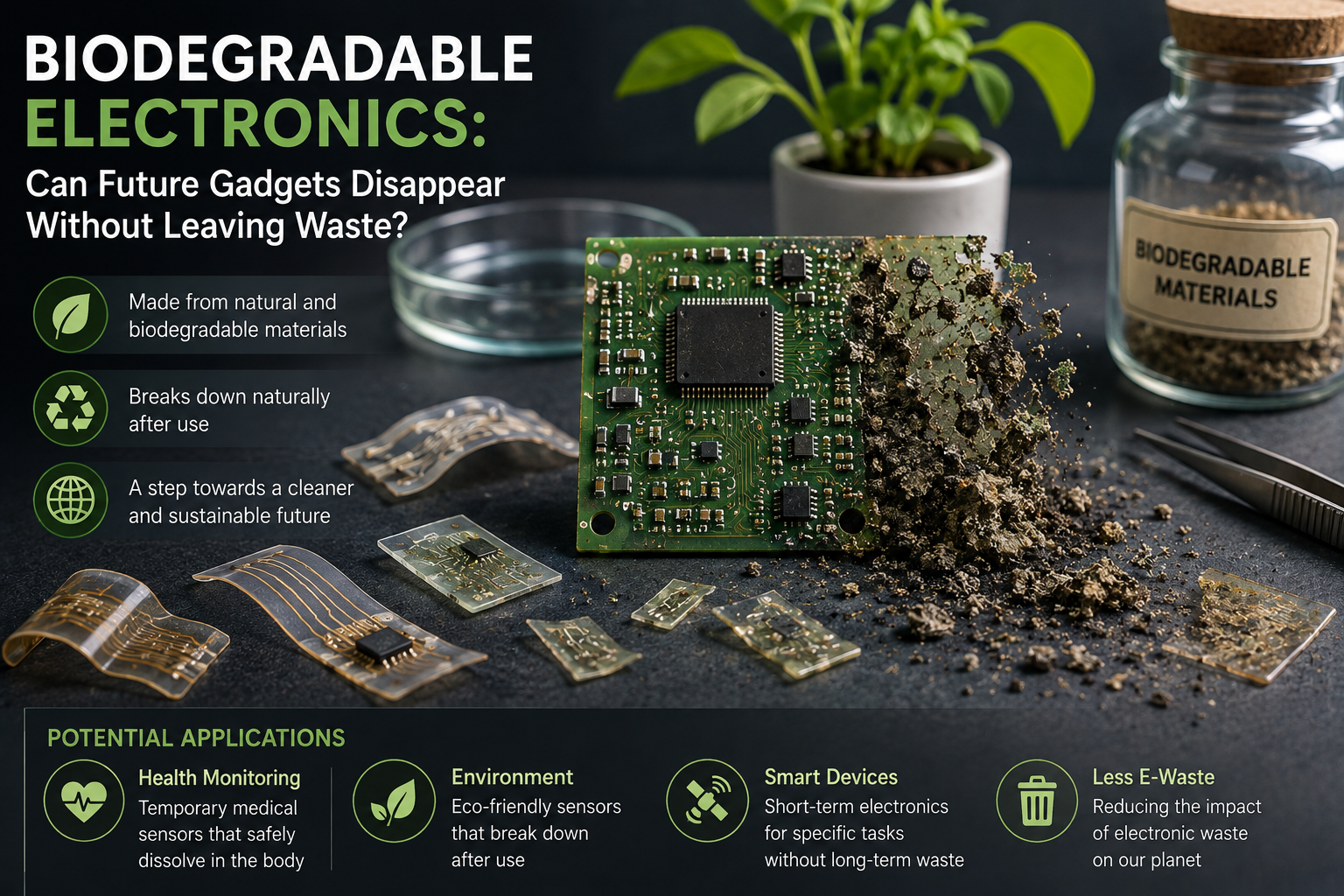
One exciting application could be healthcare. A temporary electronic sensor could monitor a patient for a certain period and then safely dissolve or disappear without requiring another procedure to remove it. Similar technology could potentially be used for environmental monitoring, where temporary sensors are placed in remote locations and later degrade instead of becoming permanent waste. However, scientists still need to improve the reliability, lifespan, manufacturing cost, and environmental safety of these materials.
Personally, I think biodegradable electronics could become an important part of sustainable technology. Modern life depends heavily on electronics, so completely avoiding electronic waste is difficult. Creating devices that can safely disappear after they are no longer needed could be a smarter way to combine technological progress with environmental responsibility. It is a fascinating example of how future technology could be designed not only to work well, but also to leave less waste behind.
What Are Your Thoughts?
If you enjoyed this article, your support through an upvote would mean a lot to me. Thanks for reading and supporting my work!
This is a fascinating look at where technology needs to go. The scale of the global e-waste problem is staggering, and shifting toward transient materials for short-term sensors and medical devices feels like a necessary step rather than just a futuristic concept. Thanks for sharing this breakdown!
Any idea why you do not receive a reply?
I have no idea, to be honest.
Me llamó la atención que menciones los metales disolubles como alternativa a los contactos tradicionales; si logran mantener la conductividad y luego desaparecer, la diferencia se nota en el manejo de residuos. Además, la idea de sensores médicos temporales que se autodestruyan es práctico y abre un campo enorme. Esto es genial para reducir la huella electrónica.