Technologies for identification or violation of privacy
in Popular STEM • 5 days ago

Technologies for identification or violation of privacy


AI


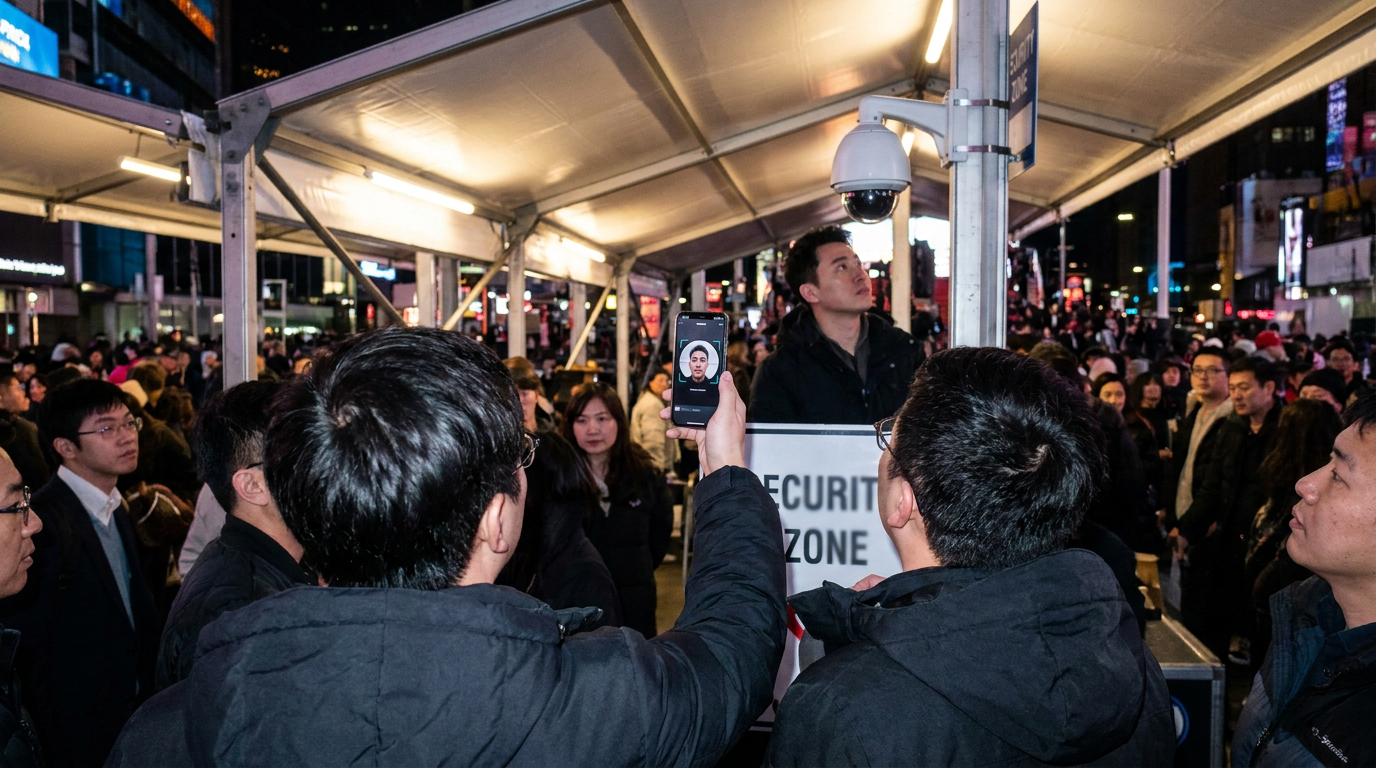
Consider that, a few years from now, you might need to access banking services, enter a hospital, or verify your identity to receive certain benefits—or perhaps you might be stopped by authorities on the street. Instead of presenting physical documents, you could simply use a digital identity linked to your own body. In certain situations, this could speed up service, reduce fraud, and prevent the complications that arise from losing cards or documents.

However, there is another possibility that deserves attention: what about someone who chooses not to use this type of technology—much like those who opted against getting "vaccinated" in 2020? This question does not imply that governments or big tech companies are planning to force people to accept microchips; in fact, it is important to distinguish between three technologies that are frequently conflated.


The first is digital identity, which allows us to verify who we are through electronic records. The second is biometrics, which uses physical characteristics—such as fingerprints, facial features, or palm patterns. The third involves electronic implants, which require a device to be inserted into the body. While these systems may serve similar purposes, they are not equivalent. A person can use a digital identity without any implants, and a biometric identification system does not necessarily require a subcutaneous chip. Nevertheless, the expansion of these technologies raises significant questions regarding privacy and autonomy.


Souce


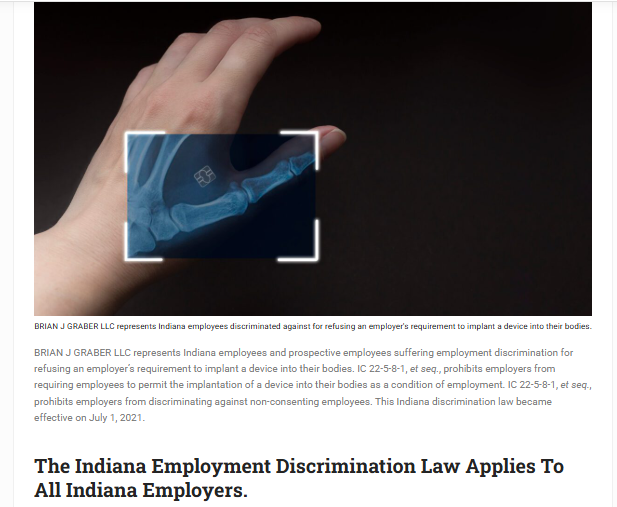
A concrete example emerged in the United States: after some companies began testing microchips to identify their employees, several states passed laws to prevent employers from requiring the implantation of such devices as a condition of employment. In the state of Indiana, for instance, legislation prohibits—with specific exceptions—employers from compelling employees or job candidates to have devices implanted in order to secure employment or certain professional benefits.


This law reveals something interesting: the debate surrounding the potential for institutional pressure is not limited to the realm of science fiction. It reached lawmakers even before such implants became commonplace. However, there is a vast difference between enacting a law to preempt potential abuses and claiming that such abuses are already occurring on a large scale—or, conversely, asserting that they will never happen at all.


We have already seen this in the healthcare sector. Consider this scenario: someone arrives at a medical facility, but the reception desk only serves individuals who possess a form of digital identification—whether through a microchip or some other technology. In such an environment, electronic identification systems can certainly help locate medical records, prevent confusion between patients, and organize health information. Yet, a very clear, potential scenario begins to take shape, doesn't it? This is precisely why freedom of choice becomes so important.


Imagine a society where all essential services remain accessible through various means: those who wish to use a digital form of identification can do so, while those who prefer a physical document also have an alternative. Now, consider a different scenario—one where only a single system is accepted. Even in the absence of an explicit legal mandate, individuals who are unable or unwilling to use this technology could face significant difficulties.


This phenomenon is known as "digital exclusion." It can occur—even without the involvement of any microchip—when governments or service providers cease to offer alternatives for those who lack internet access, a mobile phone, or familiarity with digital applications. Therefore, our concerns need not begin with the hypothetical scenario of a mandatory implant; rather, they should start with an issue much closer to our current reality: to what extent can a technology designed to make life easier end up making it more difficult for those who are unable to use it?


Souce
Sort:  

Hello @bntcamelo, thoughtful post! I appreciated that you separated digital identity, biometrics, and implants at the start, since they get mixed up so often and the conversation is much clearer once they’re apart.

Your closing point stayed with me most. The real concern may not be a hypothetical mandatory microchip but digital exclusion, which already affects people without internet access, a phone, or familiarity with apps. A technology built to make life easier can quietly make it harder for them when no alternative remains. The Indiana example also shows how lawmakers sometimes act before a technology becomes common, and you were fair in not claiming abuses are widespread or impossible.

Your “freedom of choice” scenario, where digital and physical options both stay available, feels like a practical principle that could apply to any new identification system.

Thanks for sharing this. Looking forward to your next post! 🔐

Lo de Indiana es clave: prohibir que un empleador te obligue a implantarte algo parece de sci-fi pero ya es ley real. Igual creo que el debate se centra más en los chips cuando el verdadero riesgo está en la identidad digital y los datos biométricos que ya usamos todos los días sin pensarlo.

Congratulations!

Your post has been selected and upvoted by the SteemPro Team 🚀

Explore more on SteemPro:
🌐 https://www.steempro.com
🎮 Play SteemHeights: https://www.steempro.com/games/steem-heights
💬 Join our Discord: https://discord.gg/Bsf98vMg6U

💪 Supporting the growth of the Steem ecosystem together.

🟩 Vote for witness faisalamin:
https://steemitwallet.com/~witnesses
https://www.steempro.com/witnesses#faisalamin

steempro-cover-black.png
This is an automated message.