Biological computers versus conventional computers.

Biological computers versus conventional computers.
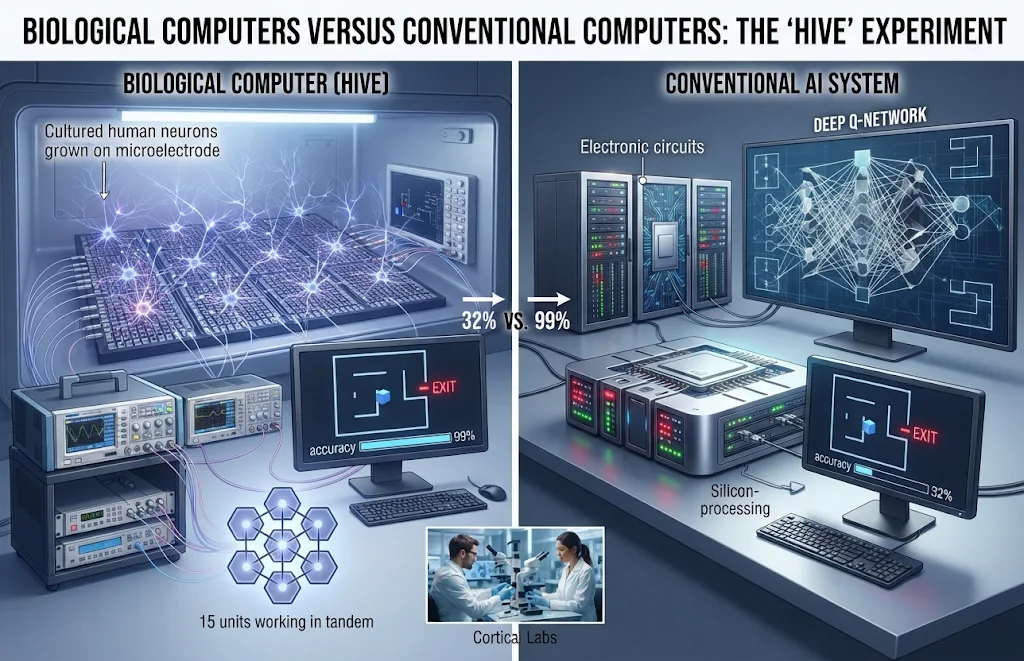


Living computers are forming a kind of collective mind, and in a recent experiment, they managed to outperform a conventional artificial intelligence system. Scientists connected 15 computers built using living human neurons grown in a laboratory; working in tandem, these machines delivered better results than an existing AI model on a specific task.

The experiment was conducted by the Australian company Cortical Labs, which introduced a system called "Hive." Unlike traditional computers that process information using electronic circuits, the company’s systems incorporate human nerve cells grown on chips. These neurons receive electrical stimuli, respond with their own activity, and can modify their responses during the course of an experiment.


The breakthrough is that researchers have now managed to connect several of these computers to work together on a single task. In one test, seven units collaborated to recognize symbols; according to the company, accuracy increased from approximately 80% to 99%. Perhaps the most intriguing experiment involved a virtual character that had to navigate to a destination within a simplified maze.


A conventional artificial intelligence model, known as a "Deep Q-Network," achieved about 32% of the maximum possible score, while a single biological computer reached 40%. When several units collaborated, the result rose to approximately 70%, and when groups were specialized to handle different parts of the task, it reached nearly 80%. This does not mean that these living computers are more intelligent than current AI systems.


The comparison involved a specific model under controlled experimental conditions, and the results still require independent validation. Furthermore, there is no evidence that these cells have developed consciousness or a shared mind; the term "collective mind" describes collaboration between different biological systems coordinated by electronic equipment. However, the concept behind this technology extends far beyond a virtual game.


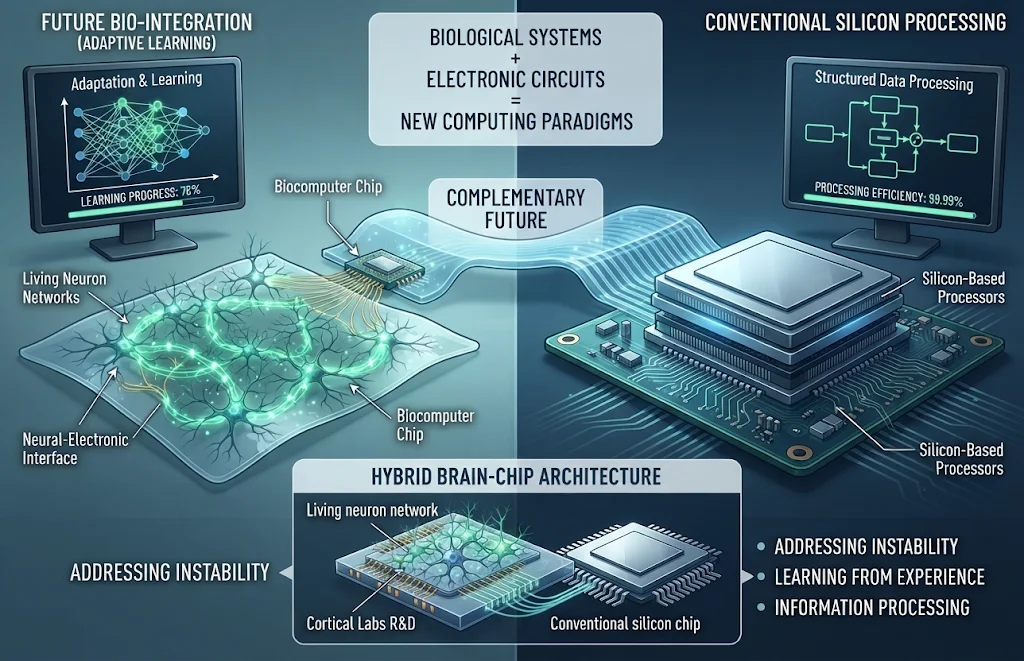
Cortical Labs had previously demonstrated that laboratory-grown neurons could participate in computational tasks and the control of machines. Now, by connecting multiple units, the company is attempting to address one of the core challenges of biocomputing: the instability of living systems, which may exhibit varying responses over time. If this approach evolves, biological computers could, in the future, complement conventional processors in tasks involving learning, adaptation, and information processing. While we currently lack the ability to replace traditional computers with laboratory-grown brains, "Hive" presents a fascinating possibility. Instead of building intelligence solely from silicon, we might be able to combine electronic circuits with networks of living cells to develop new forms of computing.


Sorry for my English, it's not my main language. The images were taken from the sources used or were created with artificial intelligence
